


Key Highlights
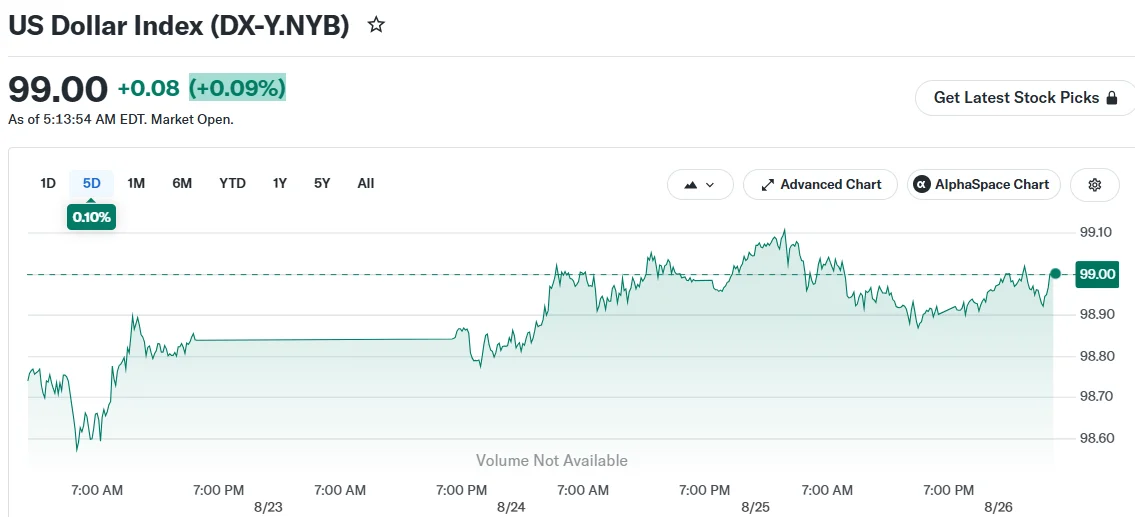
- The Dollar Index maintained its position around 99.00 as market participants awaited crucial PCE inflation figures and the Jackson Hole economic symposium
- Australia’s currency surged to three-month highs following a hotter-than-anticipated July inflation reading of 3.5%
- The loonie faced headwinds after trade negotiations between Washington and Ottawa failed, triggering reciprocal tariff measures
- Japan’s currency stabilized around the 159.00 mark amid growing speculation of a September interest rate increase from the BoJ
- Precious metals retreated from recent peaks near $4,700 while crude oil dropped over 2% as geopolitical tensions in the Middle East showed signs of cooling
The greenback maintained a narrow trading band on Wednesday as market participants positioned themselves ahead of the Personal Consumption Expenditures price gauge, which serves as the central bank’s favored inflation metric. The Dollar Index remained anchored near 99.00, not far from the three-month trough recorded last week.
Consensus forecasts point to a 0.2% monthly increase in the core PCE reading, maintaining consistency with the current annual trajectory. Currency strategists at ING noted that a result matching expectations would likely leave the dollar range-bound, with minimal upside potential.
Attention is also turning toward this weekend’s Jackson Hole economic conference. Market watchers anticipate the gathering may provide fresh insights into the Federal Reserve’s monetary policy trajectory.
While the Treasury Department’s enhanced debt repurchase initiative has provided some relief to long-term bond yields, market observers caution it falls short of addressing fundamental concerns surrounding expanding federal debt levels and mounting servicing expenses.
Aussie Dollar Jumps on Stronger Inflation Print
The Australian currency emerged as a standout performer during Wednesday’s session. The AUD/USD exchange rate advanced 0.3% to reach $0.718, marking its strongest level since the beginning of June.

Australia’s monthly consumer price index increased 1.0% during July, surpassing the consensus estimate of 0.8%. While the year-over-year rate decelerated to 3.5% from the prior 3.8%, it still exceeded market projections calling for 3.2%.
The trimmed mean gauge, a metric closely monitored by the Reserve Bank of Australia, posted a 0.5% monthly gain. Core inflation on an annual basis remained unchanged at 3.6%. The hotter-than-expected figures prompted traders to increase wagers on a potential fourth RBA rate increase before year-end.
Loonie Weakens While Yen Stabilizes
The Canadian currency continued to face selling pressure. The USD/CAD exchange rate climbed 0.2% to reach C$1.39 following the collapse of bilateral trade discussions earlier this week.
The United States implemented 50% levies on approximately $20 billion worth of Canadian exports. In response, Ottawa announced matching duties of 15%, 25%, and 50% on roughly $20 billion of American products, scheduled to become effective September 8.
Currency analysts at Danske Bank highlighted that the tit-for-tat tariff measures introduce heightened uncertainty for commercial enterprises in both nations and may create upward pressure on consumer prices while disrupting established supply networks.
Japan’s currency held steady in the vicinity of 159.00. A recent Reuters survey indicated the majority of economic forecasters now anticipate the Bank of Japan will accelerate its timeline for monetary tightening, with September emerging as a likely candidate for the next rate adjustment.
Gold slipped beneath $4,630 following Tuesday’s climb to a three-month peak approaching $4,700. Brent crude oil declined more than 2% to trade around $87 per barrel after Tehran reinitiated diplomatic discussions with Muscat regarding navigation through the Strait of Hormuz, diminishing immediate supply disruption concerns.
Nvidia is scheduled to release its quarterly financial results following Wednesday’s market close, introducing another potentially significant catalyst to an already eventful trading day.
Get 3 Free Stock Ebooks
Discover top-performing stocks in AI, Crypto, and Technology with expert analysis.
- Top 10 AI Stocks - Leading AI companies
- Top 10 Crypto Stocks - Blockchain leaders
- Top 10 Tech Stocks - Tech giants


