



TLDR
- Novartis experienced its steepest single-day decline ever, plunging more than 10% following consecutive drug trial disappointments
- The pan-European STOXX 600 declined 0.6% amid oil prices approaching the $100 per barrel threshold
- Brent crude climbed nearly 2% following Iranian warnings of potential strikes on Gulf energy facilities
- European banking sector shares retreated 1.3% amid growing recession concerns for the eurozone
- Market participants anticipate a 25 basis point rate increase from the European Central Bank this Thursday
European equity markets experienced losses on Tuesday as escalating oil prices intensified inflation concerns while Novartis endured one of its most dramatic single-day declines in company history.
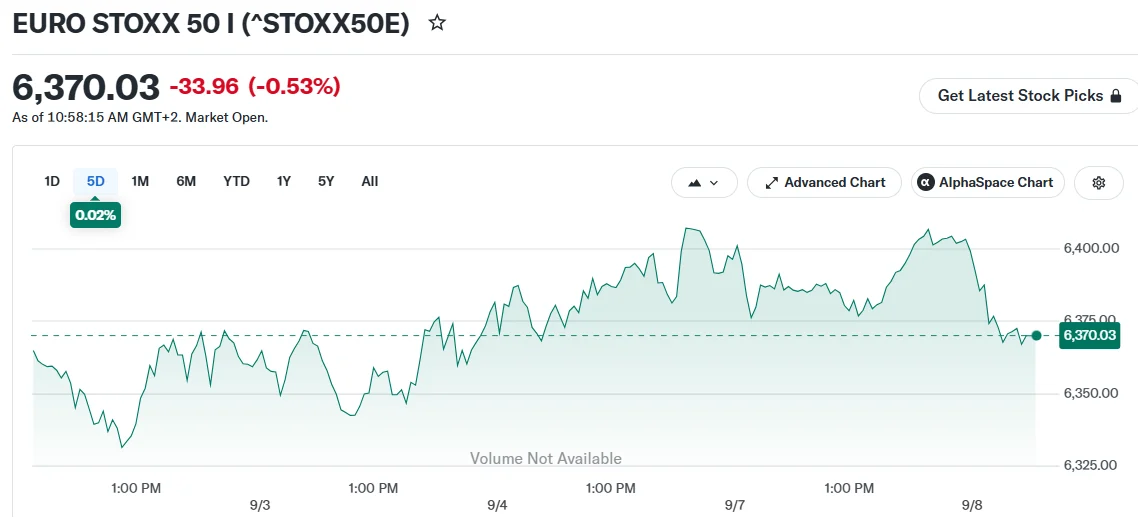
The pan-European STOXX 600 index retreated 0.6% to approximately 646 points during mid-morning trading. Major European benchmarks including Germany’s DAX, France’s CAC 40, and London’s FTSE 100 all registered declines ranging from 0.4% to 0.6%.
Novartis Suffers Consecutive Clinical Trial Setbacks
Novartis emerged as the STOXX 600’s most significant underperformer, tumbling more than 10%. The Swiss pharmaceutical corporation disclosed that del-desiran, its late-stage experimental therapy for myotonic dystrophy, failed to achieve its primary clinical objective.
This disappointing development occurred merely 24 hours after Novartis announced pelacarsen, another experimental medication targeting cholesterol management, similarly fell short in late-stage testing. The consecutive failures within 48 hours triggered a mass exodus among shareholders.
Stone-X senior market analyst Fiona Cincotta observed that despite these recent setbacks, Novartis had demonstrated substantial appreciation during the earlier portion of the year.

Meanwhile, Sandoz climbed 4.5% following the Swiss pharmaceutical firm’s announcement targeting more than double its current net sales figures between 2025 and 2035.
Poste Italiane enhanced its acquisition proposal for Telecom Italia. Telecom Italia shares appreciated 2.5% following the announcement, whereas Poste Italiane remained unchanged.
Crude Oil Approaches $100 Mark Amid Escalating Middle East Concerns
Brent crude futures hovered around $98.50 per barrel following Iranian warnings of potential attacks on Gulf region energy infrastructure, including American oil and gas facilities, in the event of military action. This development propelled energy sector shares upward by 0.6% despite broader market weakness.
Elevated crude oil valuations are intensifying inflationary pressures throughout Europe and internationally. Bond markets witnessed significant selloffs during the previous week, prompting expectations that central banks will maintain elevated interest rates for extended periods.
Market consensus strongly anticipates the European Central Bank will implement a 25 basis point interest rate increase during Thursday’s scheduled meeting.
Market participants are simultaneously monitoring upcoming U.S. inflation statistics scheduled for release later this week. This data follows unexpectedly robust U.S. employment figures, which strengthened predictions of another Federal Reserve rate hike this month.
European banking stocks declined 1.3%. Market analysts note that financial institutions typically reflect economic slowdown concerns earliest, and rising energy costs are amplifying recession anxieties within the eurozone.
The euro maintained stability around $1.16. United Kingdom 10-year government bond yields increased 2 basis points to 5.19%, while Germany’s corresponding 10-year yield advanced to 3.39%.
Germany announced a trade surplus totaling €21.27 billion, whereas France’s trade deficit expanded to €6.7 billion during July.
The downward pressure affecting European markets follows an uneventful Monday trading session, during which American markets remained closed observing the Labor Day holiday.
Get 3 Free Stock Ebooks
Discover top-performing stocks in AI, Crypto, and Technology with expert analysis.
- Top 10 AI Stocks - Leading AI companies
- Top 10 Crypto Stocks - Blockchain leaders
- Top 10 Tech Stocks - Tech giants


