



TLDR
- European STOXX 600 declined 0.6% amid intensifying U.S.-Iran conflict
- Brent crude oil surged more than 2.6% to reach $85 per barrel, adding to a 9.6% gain from Monday
- President Trump declared a naval blockade targeting Iranian vessels and imposed a 20% tariff on Strait of Hormuz shipments
- European carriers Air France and Lufthansa each declined approximately 2% on elevated fuel expense concerns
- Fed official Waller cautioned interest rates could climb if inflation persists above 2%, ahead of today’s CPI release
European equity markets experienced broad declines on Tuesday following renewed U.S. military operations against Iran and the implementation of a shipping blockade that propelled crude oil prices to their highest point in four weeks, shaking investor sentiment throughout the continent.
The benchmark STOXX 600 index shed between 0.4% and 0.6% during morning trading hours. Germany’s DAX index decreased 0.3%, while France’s CAC 40 retreated 0.6%. Meanwhile, both London’s FTSE 100 and Italy’s FTSE MIB registered modest losses.
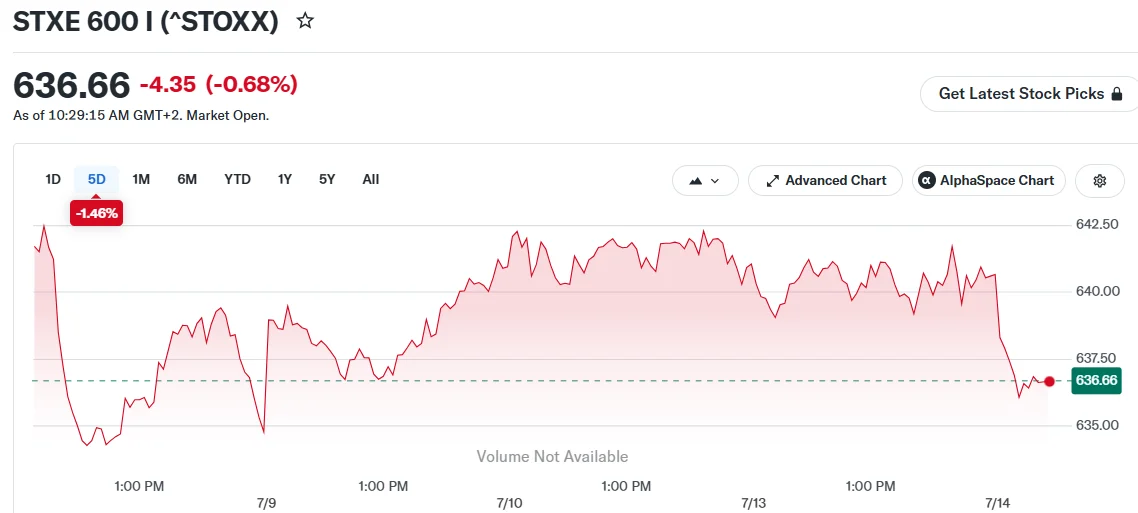
The widespread selling pressure originated from heightened geopolitical uncertainty following President Donald Trump’s announcement of a naval blockade targeting Iranian maritime operations in the Persian Gulf. Additionally, the administration revealed plans to levy a 20% charge on all commercial vessels transiting the strategically vital Strait of Hormuz.
These developments followed a third straight evening of American military operations targeting Iranian positions. The escalation represented a sharp reversal from what appeared to be easing tensions just weeks earlier, when a regional diplomatic breakthrough seemed to have defused hostilities in the Middle East.
Crude Prices Climb, Aviation Sector Takes Hit
Brent crude futures climbed more than 2.6% to trade at $85 per barrel. This advance built upon Monday’s substantial 9.6% rally, pushing the international benchmark to its strongest level in roughly 30 days.

Energy sector equities provided one of the session’s few positive developments, advancing 1.4% as the rally in petroleum prices buoyed the industry. BP shares gained 3% following the energy giant’s announcement that its oil trading division anticipates delivering marginally improved results in the second quarter versus the first three months of the year.
Airline stocks bore the brunt of the market downturn. Both Air France and Lufthansa witnessed declines of approximately 2% as investors priced in the impact of elevated jet fuel expenses on profitability forecasts. The broader travel and leisure segment tumbled 2%, representing the worst-performing sector across European markets.
Inflation Concerns Compound Market Anxieties
Beyond Middle Eastern developments, market participants remained attuned to emerging signals regarding U.S. monetary policy direction. Federal Reserve Governor Christopher Waller issued a cautionary statement suggesting the central bank might be compelled to implement rate increases should inflation metrics continue registering above the institution’s 2% objective.
This commentary directed attention toward the U.S. Consumer Price Index data scheduled for release later Tuesday. Compounding the uncertainty, recently appointed Federal Reserve Chair Kevin Warsh was preparing to commence two days of congressional testimony before lawmakers.
Financial markets are navigating the opening phase of second-quarter corporate earnings season with a notably defensive posture. Several prominent American banking institutions were scheduled to unveil quarterly results later in the trading day.
Stock Movers
Among individual corporate developments, telecommunications equipment manufacturer Ericsson plummeted 8% following quarterly revenue figures that fell short of analyst projections and management commentary highlighting escalating component expenses.
German pharmaceutical research company Evotec suffered a dramatic 30% collapse after slashing its 2026 financial outlook, attributing the revision to critical partnership agreements being delayed until 2027.
Shipping company Hapag-Lloyd represented a notable exception to the prevailing weakness, climbing nearly 6% after providing an updated full-year forecast.
Get 3 Free Stock Ebooks
Discover top-performing stocks in AI, Crypto, and Technology with expert analysis.
- Top 10 AI Stocks - Leading AI companies
- Top 10 Crypto Stocks - Blockchain leaders
- Top 10 Tech Stocks - Tech giants


