


TLDRs :
- Firefly surges after SpaceX IPO pricing triggers renewed space sector investor excitement.
- Space stocks rally broadly as capital flows back into aerospace growth names.
- Firefly remains volatile despite gains, still trading below recent offering price levels.
- Analysts stay mostly bullish as revenue growth and contracts support long-term outlook.
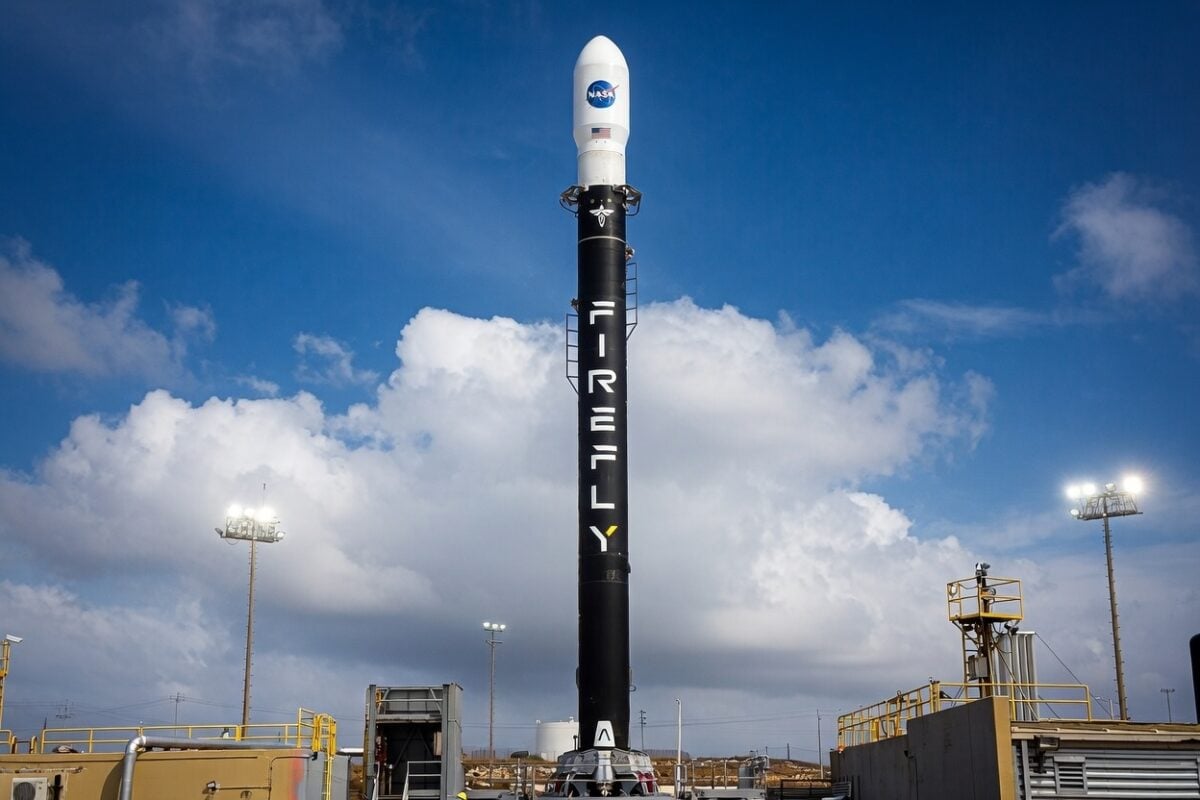
Firefly Aerospace Inc. (NASDAQ: FLY) surged sharply in Thursday trading, climbing nearly 18% as excitement around SpaceX’s blockbuster IPO reignited investor appetite for space-related equities.
The move placed Firefly among the day’s strongest performers in the aerospace and defense-linked technology segment, reflecting renewed optimism across the broader space industry.
The stock last traded around $39.37, marking a gain of $5.96 from the previous session. Intraday volatility remained elevated, with shares swinging between $34.37 and $41.88 as trading volume surpassed 10 million shares. The sharp upside move followed a broader risk-on shift across U.S. equities, with both the Nasdaq Composite and S&P 500 posting strong gains.
SpaceX IPO Sparks Rotation
The catalyst behind the rally was the pricing of SpaceX’s long-awaited IPO, which valued the company at approximately $1.77 trillion after raising $75 billion. The offering, priced at $135 per share, has been widely interpreted as a liquidity and sentiment catalyst for the entire space sector.
As attention turned to the upcoming Nasdaq debut, capital rotated into listed space peers, including Firefly, Rocket Lab, and other emerging aerospace firms. Market participants viewed the IPO as a validation of long-term commercial space expansion, sparking renewed interest in both early-stage and established players.

Analysts noted that while the immediate impact is sentiment-driven, sustained momentum will depend on post-IPO trading performance and whether institutional inflows continue beyond initial enthusiasm.
Volatility Persists Post-IPO
Despite Thursday’s rally, Firefly Aerospace continues to trade in a volatile range following its own recent market activity. The stock remains below its $48 follow-on offering price, highlighting ongoing debate over valuation and dilution risk among investors.
Firefly has experienced wide price swings since going public, with its 52-week range stretching from $16.00 to $73.80. Market observers point out that while momentum has improved, the stock is still in a price discovery phase typical of newly listed high-growth aerospace companies.
The recent follow-on offering included 4 million primary shares and 8 million secondary shares, with an additional 1.8 million shares available through an underwriter option. Proceeds are being directed toward general corporate purposes, expansion initiatives, and new program development.
Defense And Lunar Expansion
Beyond market movements, Firefly continues to build operational momentum through its defense and space exploration portfolio. Earlier this month, the company’s SciTec division secured a selection from the U.S. Department of the Air Force to support the Cloud-Based Command and Control program, reinforcing its position in national security infrastructure.
Firefly also recently reported record first-quarter revenue of $80.9 million, representing a 40% sequential increase. Management credited growth to progress in its Blue Ghost lunar program, continued development of Alpha Flight missions, and expanding government contracts.
CEO Jason Kim described the period as one defined by accelerating operational execution and strengthening demand across multiple segments of the business.
Analysts Remain Cautiously Positive
Wall Street sentiment toward Firefly remains broadly constructive despite near-term volatility. The average 12-month price target sits around $48, with estimates ranging from $35 to $65 depending on growth assumptions and contract execution.
Current ratings include a majority of buy recommendations, alongside several holds and no sell ratings, indicating confidence in the company’s long-term trajectory even as short-term trading remains unpredictable.
Investors are now watching whether the SpaceX IPO can sustain momentum across the broader space ecosystem or whether the current rally proves to be a short-lived sentiment spike.
Get 3 Free Stock Ebooks
Discover top-performing stocks in AI, Crypto, and Technology with expert analysis.
- Top 10 AI Stocks - Leading AI companies
- Top 10 Crypto Stocks - Blockchain leaders
- Top 10 Tech Stocks - Tech giants


