


TLDR
- Gold approaches a 3% decline for the week with an 11% monthly decrease overall
- The dollar index hovers near 13-month peak levels, pressuring gold demand internationally
- May’s PCE inflation reading reached 4.1%, marking the strongest level in more than three years
- Traders now assign 63% probability to a Federal Reserve rate increase by September
- Silver faces a 12% weekly decline; platinum extends losing streak to seven consecutive weeks
Gold prices found modest stabilization on Friday following three consecutive weeks of declines. Spot gold advanced 0.3% to reach $4,036.88 per ounce, while U.S. Gold Futures climbed 0.1% to settle at $4,051.30. However, despite this marginal recovery, the yellow metal remains positioned for approximately a 3% loss over the week.
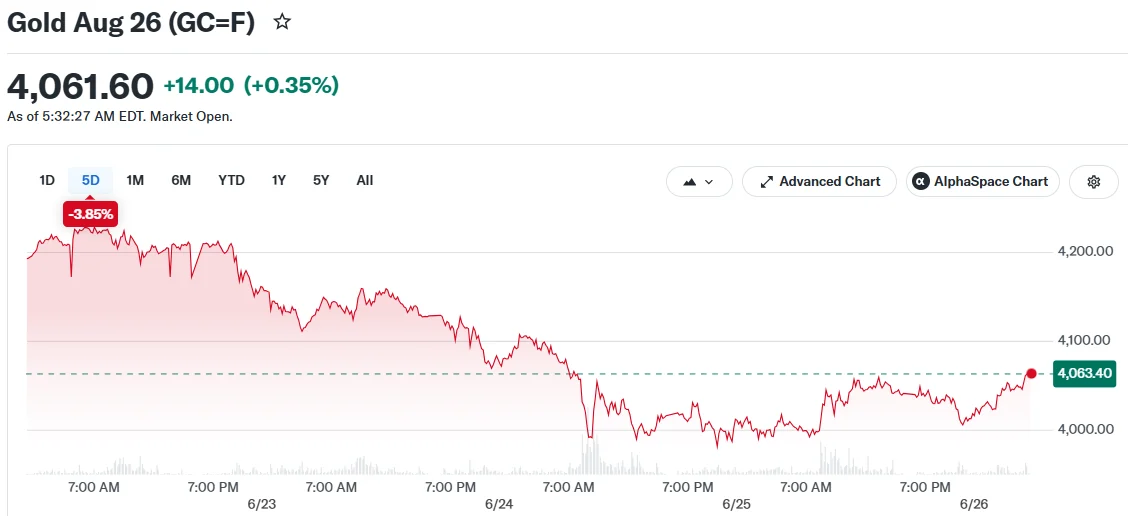
The precious metal has experienced an approximately 11% decline throughout the month. This downturn correlates directly with an increasingly robust U.S. dollar and mounting speculation that the Federal Reserve will implement additional interest rate increases.
The dollar index maintained its position near a 13-month peak on Friday, advancing toward its second consecutive weekly gain. An appreciating dollar elevates gold costs for international buyers holding alternative currencies, typically dampening overall demand.
As borrowing costs increase, gold loses appeal among investors since the asset generates no income or dividends. With rates potentially climbing higher, capital has been flowing toward yield-generating investments.
Inflation Data Fuels Rate Hike Expectations
Thursday’s personal consumption expenditures report intensified selling pressure on gold markets. The PCE price index climbed 4.1% year-over-year in May—the strongest reading in over three years and the first breach of the 4% threshold since 2023.

The PCE index serves as the Federal Reserve’s primary inflation gauge. Such an elevated figure strengthens the case for continued monetary policy tightening by the central bank.
According to the CME FedWatch tool, market participants now price in a 63% probability of a Fed rate increase by September. This heightened expectation has emerged as a primary catalyst behind gold’s recent deterioration.
Saxo Bank analysts observed that gold is approaching its fourth consecutive weekly decline. They indicated that investor confidence remains fragile following the recent selloff as financial markets recalibrate to accommodate hawkish Federal Reserve policy and dollar appreciation.
Nevertheless, Saxo Bank analysts highlighted that declining energy costs and softer bond yields might ultimately alleviate pressure on the Fed to maintain its tightening trajectory. This scenario could provide fundamental support for gold in coming months.
Geopolitical Risks Offer Brief Support
Reports of an attack on a cargo vessel near the Strait of Hormuz temporarily boosted gold prices. The incident rekindled safe-haven demand, as regional tensions persist despite preliminary diplomatic progress between the U.S. and Iran.
The geopolitical support proved transient. Dollar momentum and rate hike anticipation continued to overshadow security concerns.
Other precious metals encountered similar headwinds. Silver inched up 0.1% to $57.96 per ounce but remained on course for a 12% weekly decline. Platinum gained 1% to reach $1,618.23 per ounce, although it continues tracking toward its seventh straight weekly loss.
Copper prices also retreated. London Metal Exchange Copper Futures declined 0.4% to $13,249.33 per ton. U.S. Copper Futures slipped 0.2% to $6.06 per pound.
Gold traded around $4,053 per ounce during early Friday sessions, maintaining a nearly 5% weekly decline.
Get 3 Free Stock Ebooks
Discover top-performing stocks in AI, Crypto, and Technology with expert analysis.
- Top 10 AI Stocks - Leading AI companies
- Top 10 Crypto Stocks - Blockchain leaders
- Top 10 Tech Stocks - Tech giants


