


Key Points
- Gold plunged through $4,000 per ounce, marking its lowest point since November 2025
- The precious metal has surrendered nearly 30% from its January peak of $5,595.46
- The U.S. dollar climbed to a 13-month peak, increasing gold costs for international purchasers
- Trading activity reflects a 66% probability of a Federal Reserve rate increase by September
- Declining geopolitical risks have diminished gold’s appeal as a safe-haven asset
The precious metal market is experiencing significant pressure as gold prices settle near seven-month lows, driven by an ascending U.S. dollar and mounting speculation surrounding Federal Reserve interest rate policy.
Spot gold declined 0.2% to reach $3,984.83 per ounce during Thursday’s trading session. U.S. Gold Futures remained relatively stable, hovering around the $4,008 level.
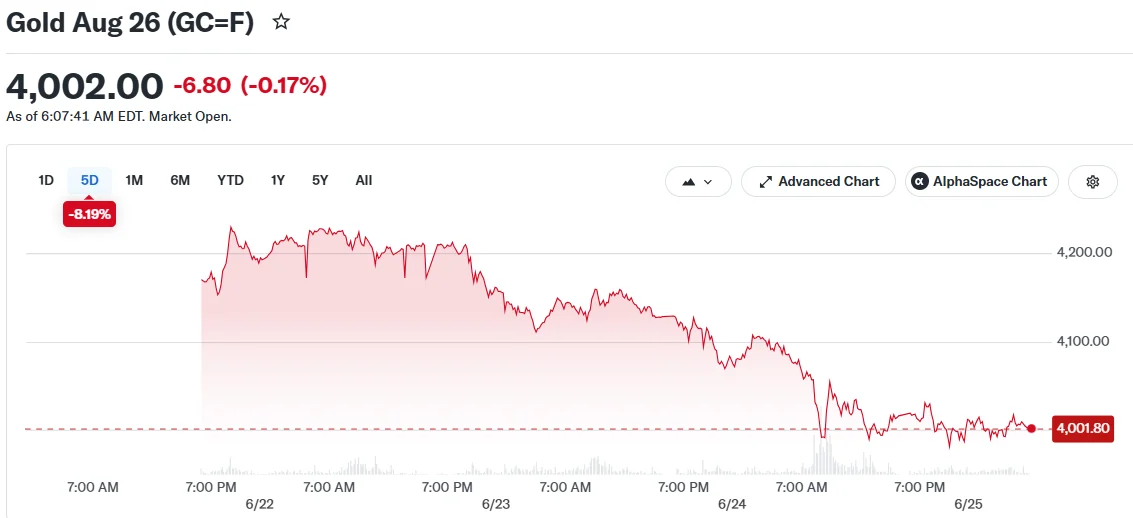
The yellow metal breached the psychologically important $4,000 threshold on Wednesday, representing the first time prices dipped below this level since November 2025. Market participants had been monitoring this price point as a critical support zone.
Since reaching its all-time peak of $5,595.46 in January 2026, gold has experienced a dramatic decline of approximately 30%. This represents a substantial correction over a relatively compressed timeframe.
The U.S. dollar’s performance has emerged as a primary catalyst behind the precious metal’s selloff. The currency has climbed to a 13-month zenith following six consecutive sessions of appreciation.

An appreciating dollar increases the cost of gold for international buyers operating in alternative currencies. This dynamic typically suppresses demand for the commodity.
Monetary Policy Expectations Pressure Precious Metals
Current market positioning suggests approximately a one-third probability of an interest rate increase in July. These odds escalate to 66% for policy tightening by September, based on CME FedWatch analytics.
Elevated interest rates create headwinds for gold since the asset generates no income stream. As rates climb, investors can capture superior returns from fixed-income securities and cash instruments, diminishing gold’s relative appeal.
Analysts from ANZ noted that worries regarding sustained elevated inflation have triggered a “re-rating of monetary policy expectations.” They emphasized that the Federal Reserve’s hawkish posture seems to have “derailed the debasement trade” that previously supported gold valuations.
ING’s research team highlighted that gold’s underperformance demonstrates how market sentiment has pivoted away from safe-haven considerations toward the ramifications of higher borrowing costs and restrictive financial conditions.
Diminishing Geopolitical Premium
Abating tensions across the Middle East have contributed to the metal’s decline. Advancement in diplomatic negotiations between the U.S. and Iran has stripped away some of the risk premium that underpinned gold valuations earlier in the year.
Declining oil prices have reinforced this trend. Investors demonstrate reduced inclination to purchase gold as a protective hedge when geopolitical uncertainties appear to be subsiding.
Market observers are now concentrating on Friday’s release of U.S. Personal Consumption Expenditures figures. The PCE represents the Federal Reserve’s favored inflation gauge and could significantly influence expectations regarding future monetary policy adjustments.
Silver registered a modest 0.1% gain to $57.50 per ounce on Thursday, recovering slightly after plummeting more than 6% in the prior session. ING observed that several of silver’s most robust demand catalysts are showing signs of weakening support.
Platinum retreated 0.3% to settle at $1,581.60 per ounce. Copper futures advanced approximately 1.7% on the London Metal Exchange, reaching $13,255.95 per ton.
Gold continues facing downward pressure with limited visible catalysts to reverse the current trajectory ahead of the PCE data release.
Get 3 Free Stock Ebooks
Discover top-performing stocks in AI, Crypto, and Technology with expert analysis.
- Top 10 AI Stocks - Leading AI companies
- Top 10 Crypto Stocks - Blockchain leaders
- Top 10 Tech Stocks - Tech giants


