



TLDR
- The precious metal advanced 0.7% to reach $4,184.68 per ounce following September’s 6% decline, the steepest monthly loss since June
- Core PCE, the Federal Reserve’s favored inflation metric, increased 0.2% in August, falling short of market forecasts
- Probability of a Federal Reserve rate increase in October declined to approximately 34% from nearly 70% at the week’s start
- Robust consumer expenditure maintained Treasury yields close to multi-decade peaks, limiting the precious metal’s upside
- Market participants await Friday’s employment figures for additional insight into the central bank’s monetary policy trajectory
Gold prices experienced an upward movement on Thursday, recovering from September’s challenging performance. The yellow metal appreciated as fresh inflation figures provided market participants with a measure of reassurance.
As of 01:44 ET, spot gold increased 0.7% to $4,184.68 per ounce. December gold futures similarly advanced 0.7% to settle at $4,214.
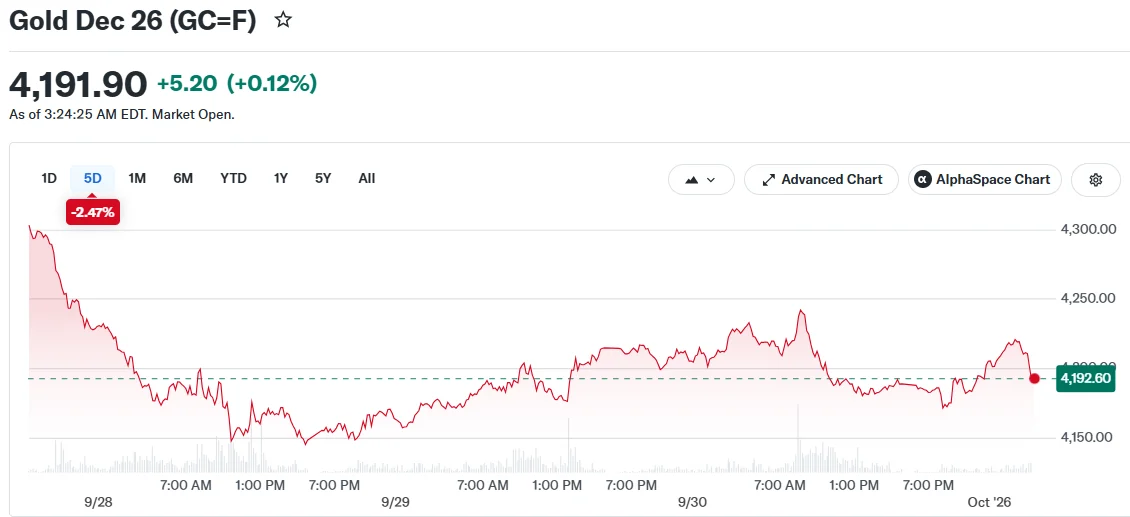
Other precious metals followed suit, with silver advancing 1.4% to $61.27. Platinum registered a 0.5% increase to $1,725.77.
PCE Figures Alter Market Rate Projections
The central bank closely monitors the personal consumption expenditures price index as its primary inflation indicator. This metric, excluding volatile food and energy components, registered only a 0.2% increase in August.
The figure came in below analyst expectations. Additionally, the prior month’s data underwent a downward revision.

These milder inflation readings prompted market participants to reassess the Federal Reserve’s policy trajectory. The likelihood of an additional rate increase in October experienced a significant decline.
At the week’s beginning, futures markets priced in approximately a 70% probability of tightening. Following the inflation release, that figure tumbled to roughly 34%.
Reduced expectations for rate increases typically benefit gold. Since the precious metal yields no interest, elevated rates diminish its appeal relative to interest-bearing instruments.
Resilient Consumer Activity Supports Elevated Yields
Despite the encouraging inflation data, gold confronts ongoing obstacles. Personal spending in the United States accelerated in August at the quickest rate in more than twelve months.
This vigorous consumer activity indicates the economy’s capacity to withstand elevated borrowing costs. Consequently, Treasury yields remained anchored near multi-decade elevated levels.
Elevated bond yields exert downward pressure on gold valuations. They raise the opportunity cost associated with maintaining a non-yielding asset.
The U.S. Dollar Index maintained its strength, edging up 0.2% to 101.66. A firmer greenback generally increases the precious metal’s cost for international purchasers.
September witnessed a 6% decline in gold prices. This represented the metal’s poorest monthly showing since June.
The downturn followed the Federal Reserve’s first rate increase since 2023. The monetary authority additionally indicated potential further policy tightening.
Throughout September, sovereign bond yields climbed globally. Market participants expressed heightened concern regarding escalating public debt levels and fiscal deficits.
These anxieties elevated the term premium component of yields. This represents the additional compensation investors require for bearing longer-duration debt exposure.
The broad-based yield increase complicated gold’s ability to maintain value throughout the previous month.
Moving forward, market attention centers on Friday’s employment statistics release. This dataset could provide crucial indicators regarding the Federal Reserve’s interest rate intentions.
The labor market report will likely influence near-term gold price expectations. Financial markets continue to exhibit heightened sensitivity to indicators of economic vigor or fragility.
Presently, gold has achieved a degree of stabilization following a challenging period. However, sustained elevated yields indicate the metal continues to face considerable pressure.
Get 3 Free Stock Ebooks
Discover top-performing stocks in AI, Crypto, and Technology with expert analysis.
- Top 10 AI Stocks - Leading AI companies
- Top 10 Crypto Stocks - Blockchain leaders
- Top 10 Tech Stocks - Tech giants


