


Key Takeaways
- Gold advanced more than 1% Monday amid optimism surrounding US-Iran peace negotiations
- Trump confirmed a framework agreement was “largely negotiated” between the two nations
- Reopening the Strait of Hormuz through a deal could alleviate energy costs and inflationary pressures
- Both the US dollar and Treasury yields declined, supporting gold’s advance
- Despite Monday’s rally, gold remains approximately 13% below levels seen before the Iran crisis escalated in late February
Precious metals markets experienced a notable uptick Monday as diplomatic developments between Washington and Tehran boosted market optimism and weakened the US dollar.
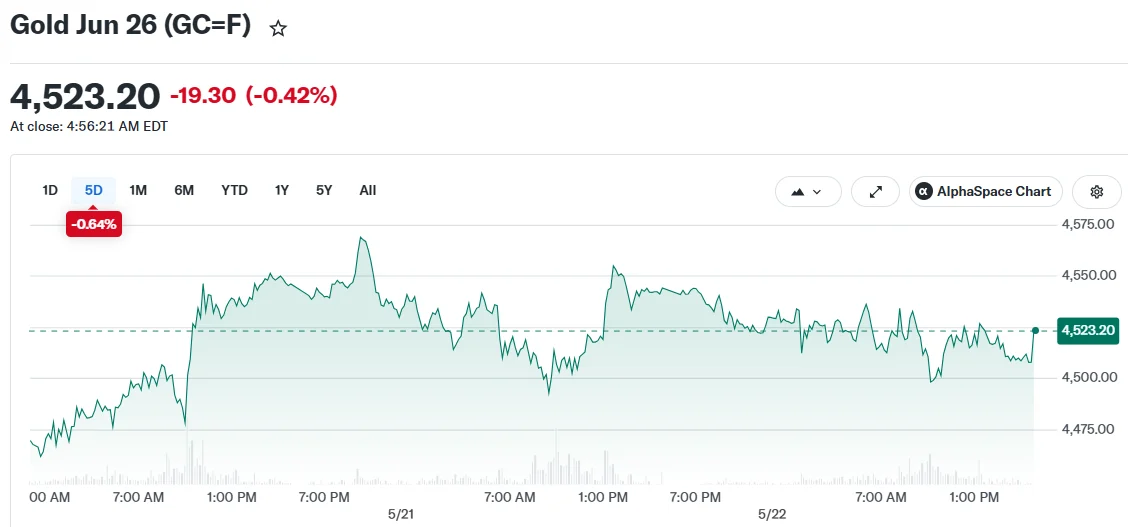
Spot gold increased 1.2% to reach $4,561.41 per ounce during London trading hours. Gold futures contracts advanced 0.8% to $4,593.34 per ounce. Silver posted impressive gains of 3.1% to hit $77.86, with platinum and palladium also recording positive movements.
The rally followed weekend statements from President Donald Trump indicating that a peace framework with Iran had been “largely negotiated.” Trump emphasized he wouldn’t “rush” into finalizing any agreement.
Secretary of State Marco Rubio characterized the framework for reopening the Strait of Hormuz as “pretty solid,” noting that the administration awaited Tehran’s official response.
Rubio cautioned that military operations could resume if Iranian leadership declined the proposed terms. The US maintains its naval blockade around Iran pending a signed agreement.

Reports indicate significant disagreements persist regarding Iran’s nuclear enrichment activities. Tehran has reportedly rejected American demands concerning enriched uranium stockpile transfers.
The Strategic Importance of the Hormuz Agreement
The Strait of Hormuz represents a critical artery for international petroleum transport. Successfully reopening this waterway could significantly reduce energy costs, which have emerged as primary inflation catalysts since hostilities erupted in late February.
Elevated inflation readings have prompted speculation about tightening monetary policy. Futures markets currently indicate overwhelming probability of a Federal Reserve rate hike by year-end.
Since gold generates no yield, rising interest rates typically create headwinds for the metal. Gold has declined roughly 13% since the Iran confrontation began, partially attributable to shifting rate expectations.
Monday witnessed retreats in both dollar strength and Treasury yields on diplomatic optimism, creating favorable conditions for gold appreciation.
Analysts Express Measured Optimism
Market observers highlighted that the precious metals recovery remained “relatively muted.” Justin Lin from Global X ETFs in Sydney explained that markets have witnessed previous Trump announcements fail to translate into policy, making investors hesitant to commit without tangible evidence.
Christopher Wong at Oversea-Chinese Banking Corp suggested traders might be reluctant to aggressively pursue gains while critical aspects of Iran’s nuclear program remain contentious.
Wong additionally pointed out that reduced liquidity from holiday closures in the US, UK, Hong Kong, and South Korea markets on Monday contributed to thinner trading conditions.
Newly appointed Federal Reserve Chair Kevin Warsh has assumed leadership of the central bank. Market participants are closely monitoring his communications regarding economic outlook and interest rate trajectory.
The Bloomberg Dollar Spot Index dropped 0.2% Monday. Spot silver climbed 2.9%, while spot platinum rose 2% to $1,968.12 per ounce.
Gold prices remain substantially below previous peak levels. Future price action hinges largely on whether comprehensive Iran negotiations conclude successfully and their subsequent impact on energy markets and inflation dynamics.
Get 3 Free Stock Ebooks
Discover top-performing stocks in AI, Crypto, and Technology with expert analysis.
- Top 10 AI Stocks - Leading AI companies
- Top 10 Crypto Stocks - Blockchain leaders
- Top 10 Tech Stocks - Tech giants


