


Key Highlights
- HTZ shares jumped over 20% in premarket Friday trading after climbing 29.49% the day before
- Second-quarter revenue reached $2.4 billion, surpassing the $2.28 billion Wall Street forecast
- Company posted an adjusted loss of 11 cents per share versus analyst expectations of a 24-cent loss
- Daily revenue climbed 9% compared to last year, achieving the best Q2 performance in company history
- Chief Executive Gil West described the current stock price as difficult to justify given operational improvements
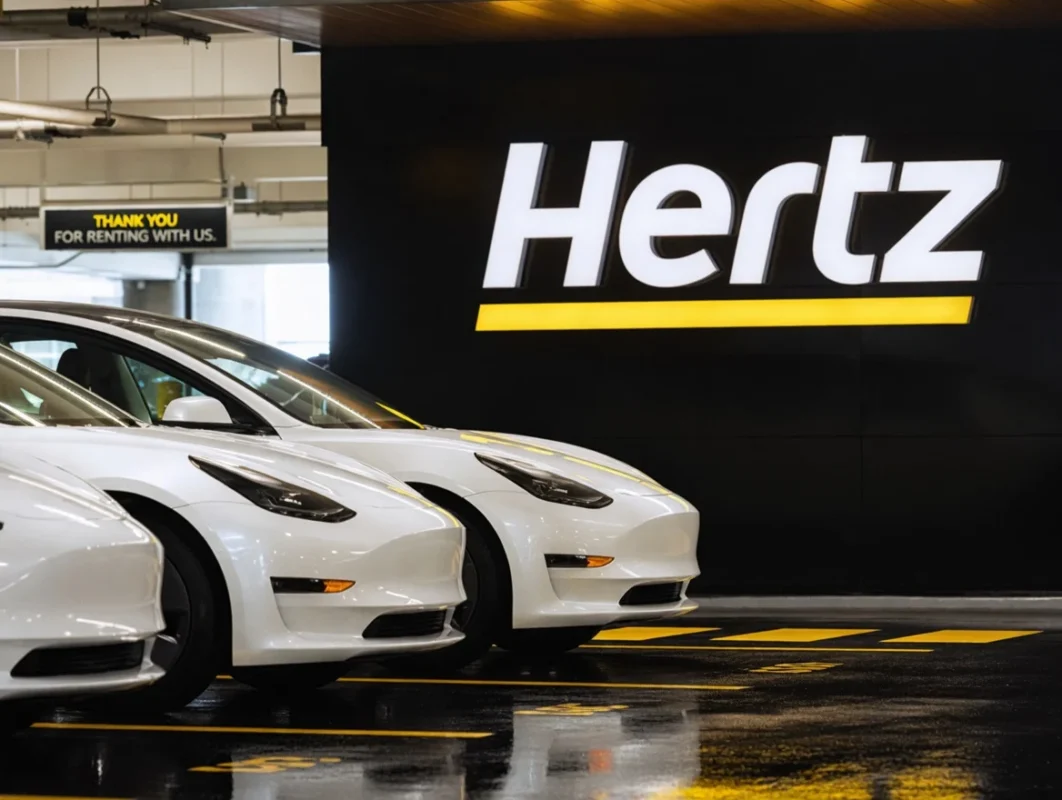
Shares of Hertz Global (HTZ) climbed more than 20% during Friday’s premarket session to $2.42, building on the previous day’s impressive 29.49% rally. The rental car company’s stock surged after delivering second-quarter financial results that exceeded expectations across key metrics.
Hertz Global Holdings, Inc., HTZ
The company reported quarterly revenue of $2.4 billion, representing a 10% increase from the same period last year and surpassing the analyst consensus of $2.28 billion. Hertz’s adjusted per-share loss of 11 cents came in significantly better than the anticipated 24-cent loss.
The company’s adjusted corporate EBITDA hit $81 million, substantially exceeding Oppenheimer’s $40 million projection and the broader market estimate of $59 million. This figure represented a $63 million improvement compared to the prior year period.
Daily Revenue Metrics Hit All-Time High
The rental car company saw its revenue per day climb 9% year-over-year, delivering its strongest second-quarter showing ever recorded. Revenue per unit jumped 8% to reach a record $1,542, beating even the company’s internal long-term projections.

Approximately 6 to 7 percentage points of the revenue per day increase stemmed from commercial strategies, with 2 to 3 points attributed to broader industry pricing trends, and a minor contribution of less than half a point from the FIFA World Cup.
The company’s fleet utilization rate improved by 80 basis points to reach 79%, despite facing a 300% year-over-year surge in recall volume that impacted roughly 15,000 vehicles monthly. These vehicle recalls negatively affected EBITDA by over $55 million during the first six months of 2026.
Revenue per day at U.S. airport locations increased 12% from the previous year, contributing to a second consecutive quarter of double-digit global revenue expansion.
Leadership Questions Market Valuation
Chief Executive Gil West didn’t mince words when discussing the company’s market performance. He noted that Hertz’s market capitalization had dropped to approximately one-third of its level from three months prior, despite enhanced liquidity and superior operational performance.
West characterized the stock’s present valuation as difficult to justify and maintained it doesn’t accurately represent the company’s strengthening fundamentals. Following the earnings release, Oppenheimer maintained its Perform rating, though InvestingPro noted the stock appears overvalued at present levels.
Despite this week’s dramatic gains, the stock remains down 60% for the year-to-date period.
The company closed the second quarter with $984 million in available liquidity following the successful completion of a $350 million exchangeable senior secured notes offering. Hertz currently maintains a total debt load of $20.6 billion.
Looking ahead to the third quarter, the company projected adjusted corporate EBITDA between $275 million and $325 million with anticipated positive earnings per share. For the complete 2026 fiscal year, Hertz forecasts EBITDA ranging from $225 million to $275 million and year-end liquidity between $1 billion and $1.4 billion.
Company leadership anticipates EBITDA growth exceeding $500 million in 2026, coming on the heels of a $1.2 billion improvement achieved in 2025.
Hertz confirmed its 2027 objective of reaching $1 billion in adjusted corporate EBITDA and indicated expectations to achieve full-year GAAP profitability while generating positive free cash flow.
The company also highlighted that its ORO Mobility division, operating on Uber’s platform across Atlanta, Los Angeles, San Francisco and Northern New Jersey, is projected to deliver over $600 million in revenue during 2026.
Get 3 Free Stock Ebooks
Discover top-performing stocks in AI, Crypto, and Technology with expert analysis.
- Top 10 AI Stocks - Leading AI companies
- Top 10 Crypto Stocks - Blockchain leaders
- Top 10 Tech Stocks - Tech giants


