


TLDR
- Kroger revealed plans to purchase Giant Eagle in a $1.65 billion transaction — consisting of $1.25B cash and $400M in assumed debt.
- The acquisition adds approximately $9 billion in yearly revenue, 197 grocery stores, and 11 independent pharmacy locations.
- KR shares declined 2.12% during Wednesday’s session, adding to a year-to-date loss of 12.11%.
- The transaction is anticipated to finalize in 2027, subject to regulatory clearance.
- According to Wolfe Research, the acquisition demonstrates Kroger’s shift to “more offensive” strategy, with projected revenue increase of approximately 6%.
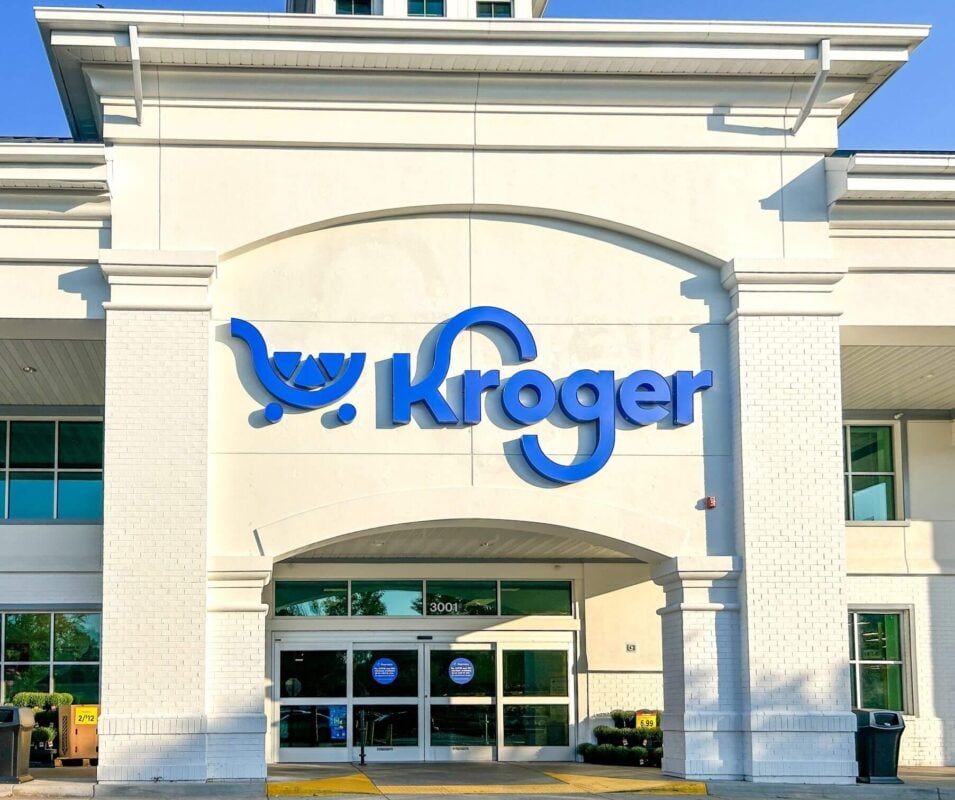
Shares of Kroger (KR) fell 2.12% during Wednesday’s trading session following the company’s announcement of its plan to purchase the family-owned grocery chain Giant Eagle in a $1.65 billion transaction.
The financial structure includes $1.25 billion in cash payment alongside $400 million in liabilities that Kroger will assume. Company executives stated the purchase won’t push their net total debt to adjusted EBITDA ratio beyond the target band of 2.3 to 2.5 times.
Giant Eagle’s footprint encompasses 197 grocery stores and 11 independent pharmacy units spread throughout northern Ohio, western Pennsylvania, West Virginia, Maryland, and Indiana — regions where Kroger maintains established operations.
The regional chain generates approximately $9 billion in yearly sales. This represents a substantial expansion for the grocery retailer.

Kroger’s Chief Executive Officer Greg Foran characterized the transaction as an obvious “strategic fit,” highlighting Giant Eagle’s customer rewards program, pharmacy network, and proprietary brand lineup as valuable assets.
What the Numbers Look Like
Wolfe Research’s analyst Greg Badishkanian noted the purchase aligns with Kroger‘s leadership team’s “increased openness to do M&A” and will enable the grocer to strengthen its market density while expanding into neighboring territories.
Wolfe’s analysis suggests Giant Eagle’s EBIT margins fall between 2.0–2.5% — comparable to Albertsons — and anticipates an additional EBIT contribution ranging from $200–250 million.
With Kroger’s sales expected to reach $151 billion by 2027, this acquisition would increase total revenue by roughly 6%, bringing it to approximately $160 billion. Badishkanian projects modest single-digit EPS accretion during the second complete year following the deal’s completion.
The addition of 197 locations would expand Kroger’s total store portfolio by roughly 7% from its present count of 2,739 stores.
When Does the Deal Close?
Kroger anticipates completing the Giant Eagle purchase in 2027, contingent upon obtaining regulatory approval and meeting standard closing requirements.
The company indicated it expects the transaction to boost adjusted EPS during the second full year post-closing — not including one-time transaction expenses and integration charges.
To reassure shareholders, management confirmed it will preserve its current dividend policy and continue executing its $2 billion stock buyback initiative.
Wednesday’s trading volume reached approximately 1.86 million shares, significantly under Kroger’s three-month average daily volume of roughly 7.77 million.
KR stock has decreased 12.11% since the beginning of the year and has dropped 20.93% over the trailing twelve-month period.
The Street’s consensus rating on KR stands at Moderate Buy, derived from six Buy recommendations and seven Hold recommendations issued within the last three months. The mean price target is positioned at $69.33, suggesting potential upside of approximately 27.4% from present levels.
Get 3 Free Stock Ebooks
Discover top-performing stocks in AI, Crypto, and Technology with expert analysis.
- Top 10 AI Stocks - Leading AI companies
- Top 10 Crypto Stocks - Blockchain leaders
- Top 10 Tech Stocks - Tech giants


