


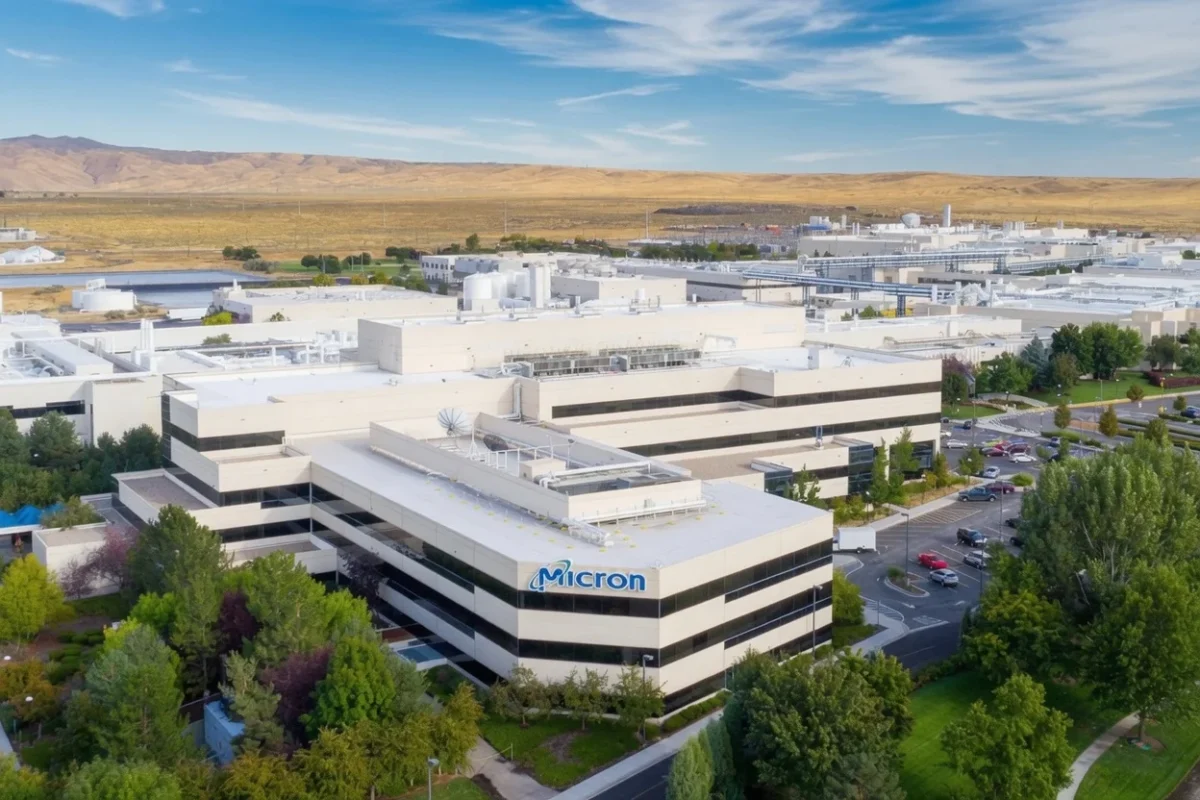
Key Takeaways
- Memory chip manufacturers experienced significant gains Friday, with Micron climbing 6.1%, SanDisk soaring 11.9%, and SK Hynix advancing 8.1%
- Robust AI infrastructure investments and constrained HBM and NAND availability are supporting elevated memory pricing
- Industry sources indicate Micron has completely booked its cutting-edge memory production capacity through late 2026
- UBS analysts upgraded their HBM pricing growth projection to 79% annually from a previous 67% estimate
- Lynx Equity analysts issued aggressive targets of $1,325 for Micron and $2,450 for SanDisk, forecasting extended memory supply constraints
The memory semiconductor sector experienced a powerful resurgence Friday, with leading manufacturers Micron, SanDisk, and SK Hynix recording substantial gains following an extended period of weakness.
Trading closed with Micron advancing 6.1%, SanDisk delivering an impressive 11.9% surge, and SK Hynix registering an 8.1% increase. Western Digital also participated in the rally with approximately 6% gains. The Roundhill Memory ETF finished 6.6% higher, demonstrating widespread buying interest throughout the memory sector.
The upward momentum reflected investor repositioning into memory and data storage companies, driven by persistent AI hardware requirements and constrained supply dynamics.
Artificial Intelligence Infrastructure Fuels Memory Consumption
Supply shortages for high-bandwidth memory and NAND flash storage persist across the industry. The rapid expansion of AI data center facilities continues unabated, maintaining significant pressure on available inventory.

Industry reports suggest Micron has exhausted allocation for its most sophisticated memory products extending through 2026’s conclusion. This capacity constraint provides leading manufacturers with considerable leverage on pricing throughout the upcoming quarters.
Dell’s staggering $95 billion backlog for AI servers serves as concrete validation that major technology corporations are purchasing every available memory wafer from manufacturers.
According to Barron’s reporting, worldwide DRAM revenues increased 57% sequentially in Q2, while NAND revenues experienced a dramatic 70% jump. Micron expanded its DRAM market position to 24% and captured 15% of the NAND market.
Mizuho analysts have characterized memory as a “key bottleneck” throughout the semiconductor ecosystem and maintained their Outperform stance on Micron shares.
Nvidia revealed $279 billion in supply chain and capacity obligations, predominantly related to memory procurement and fabrication, emphasizing the critical importance of component accessibility for AI infrastructure deployment.
Wall Street Firms Elevate Price Forecasts and Projections
Timothy Arcuri from UBS contended that worries about AI processors requiring reduced memory per device may oversimplify the situation. Should Nvidia distribute greater volumes of accelerators, aggregate HBM demand could continue expanding despite lower per-chip requirements.
UBS elevated its HBM average selling price growth estimate to 79% year-over-year from 67%, while also noting improved NAND market conditions as server and storage requirements strengthen.
Lynx Equity released optimistic research predicting a prolonged memory supply deficit and established price objectives of $1,325 for Micron and $2,450 for SanDisk.
Bernstein maintained its Outperform recommendation on SanDisk with a $3,000 target, elevated from $1,700 in late June. The firm increased its fiscal 2027 profit projections based on enhanced NAND pricing trends.
Bernstein emphasized SanDisk’s recently established long-term supply contracts, which feature enhanced price protection mechanisms and advance customer commitments.
One potential headwind under market scrutiny involves Chinese competition. YMTC’s worldwide NAND market presence expanded to 14% in Q2, climbing from 9% the previous year, while SanDisk’s share contracted to 11% from 13%.
A stronger-than-anticipated U.S. employment report initially sparked concerns about interest rate trajectory Friday morning. Nevertheless, investors quickly refocused attention toward purchasing undervalued growth equities at attractive entry points.
Get 3 Free Stock Ebooks
Discover top-performing stocks in AI, Crypto, and Technology with expert analysis.
- Top 10 AI Stocks - Leading AI companies
- Top 10 Crypto Stocks - Blockchain leaders
- Top 10 Tech Stocks - Tech giants


