


Quick Overview
- Micron shares declined approximately 7% during Thursday’s premarket session, trading near the $999–$1,005 level.
- Semiconductor sector weakness following Broadcom’s quarterly report contributed to the decline.
- Raymond James analyst Karl Ackerman projects DRAM and NAND pricing may reach peak levels by mid-2026.
- Extended pricing contracts are anticipated to help mitigate the impact of any potential price ceiling.
- Wall Street sentiment stays positive — firms including Morgan Stanley, Raymond James, and Susquehanna recently increased their price projections.
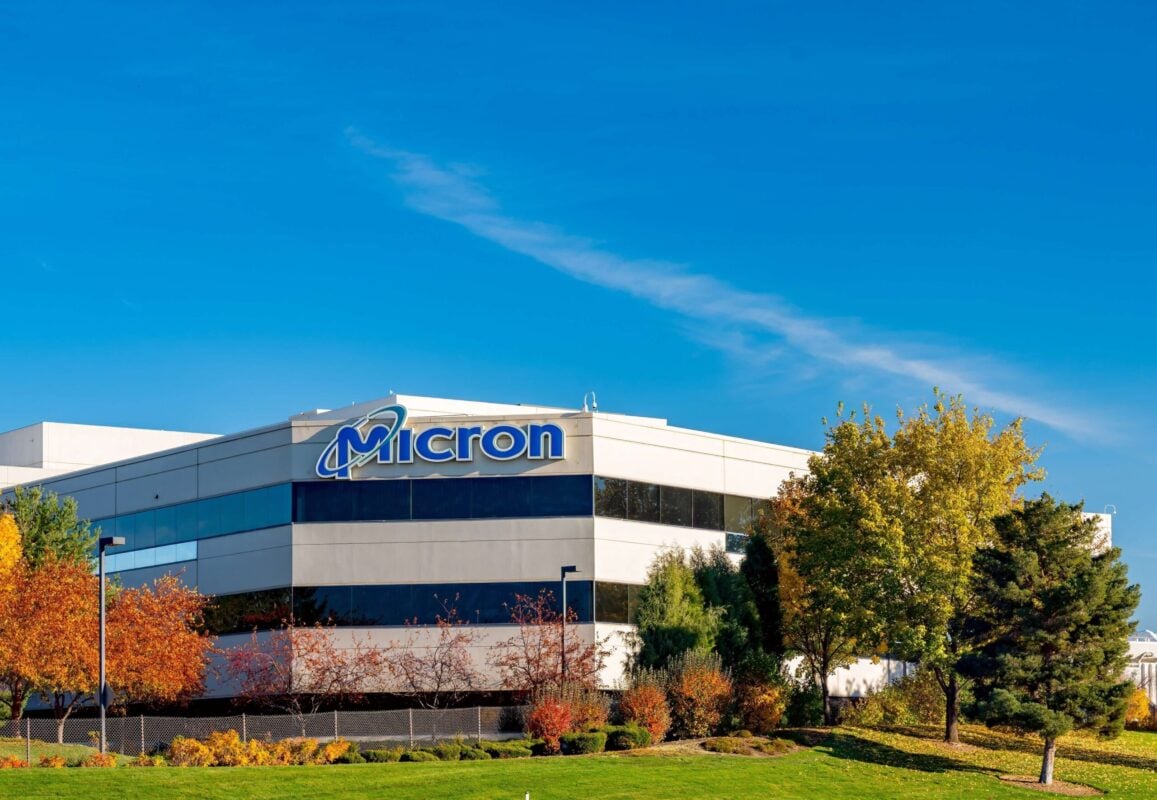
Micron Technology (MU) shares tumbled approximately 7% during Thursday’s premarket session, landing around the $999–$1,005 range, as semiconductor stocks broadly declined following investor reaction to Broadcom’s latest quarterly performance.
While Broadcom delivered solid financial results, the market reacted negatively after the company maintained rather than increased its fiscal 2027 AI revenue guidance of $100 billion. This disappointment triggered selling pressure throughout the chip industry, with Micron experiencing collateral damage.
Context matters significantly here. Despite Thursday’s pullback, Micron shares remain up an impressive 916% over the trailing twelve months. The stock has experienced an extraordinary upward trajectory.
Analysts Flag Potential Memory Pricing Ceiling
The more fundamental worry stems from a Wednesday research note by Raymond James analyst Karl Ackerman, who forecasts that average selling prices for DRAM and NAND memory chips will likely reach their zenith around mid-2026.

This timeline arrives sooner than many market watchers had projected. The consensus view on Wall Street previously pointed toward mid-2027 as the earliest moment when increased supply might begin offsetting robust AI infrastructure demand.
Historically, memory chip price peaks have marked the start of cyclical downturns — the type that have previously battered industry players like Micron, SK Hynix, and Samsung Electronics.
Despite this outlook, Ackerman maintained his Outperform rating on Micron, emphasizing that long-term contractual pricing arrangements should provide a buffer against severe impacts this cycle.
Micron’s forward price-to-earnings valuation has expanded considerably, climbing from 4.4 times in April to the current 11.7 times, based on FactSet data.
According to Ackerman’s analysis, this valuation multiple “implies moderating contract ASP growth, margin degradation, and oversupply conditions looming in the next 1-2 years.”
This represents a clear cautionary signal — though Ackerman believes the market is already beginning to factor in these dynamics.
Upcoming Earnings and Wall Street Outlook
Micron’s next significant catalyst arrives June 24, 2026, when the company reports quarterly results.
Analyst consensus calls for earnings of $19.29 per share, representing a dramatic increase from $1.91 in the year-ago quarter. Revenue expectations stand at $33.88 billion versus $9.30 billion in the prior-year period.
The stock currently carries a P/E ratio of 50.9 — elevated relative to many semiconductor industry competitors.
Thursday’s selloff hasn’t deterred Wall Street analysts from their optimistic stance.
Morgan Stanley reaffirmed its Overweight rating and lifted its price target to $1,050 on June 3. Raymond James boosted its target to $1,100 on June 1. Susquehanna took the most aggressive position, elevating its target to $1,750 on May 29 with a Positive rating.
The analyst consensus rating remains at Buy, with an average price objective of $827.61.
During Thursday’s premarket trading, Micron shares were down 7.38% at $999.86.
Get 3 Free Stock Ebooks
Discover top-performing stocks in AI, Crypto, and Technology with expert analysis.
- Top 10 AI Stocks - Leading AI companies
- Top 10 Crypto Stocks - Blockchain leaders
- Top 10 Tech Stocks - Tech giants


