


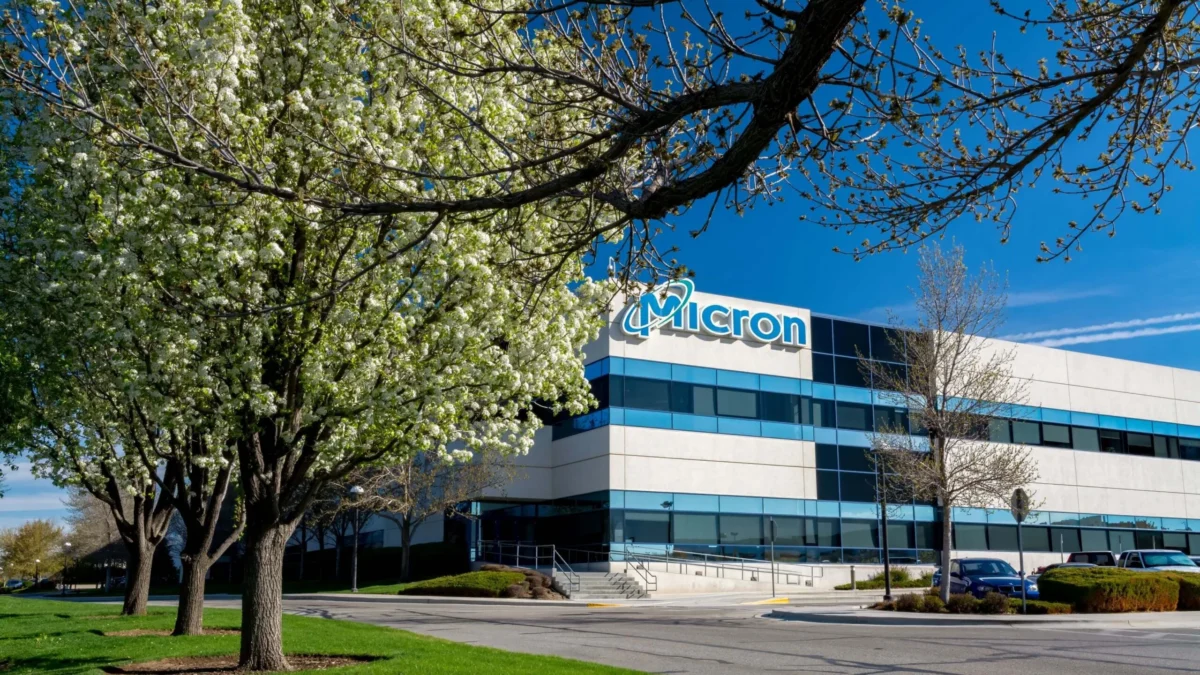
Key Highlights
- Micron shares climbed approximately 6.9% during Monday’s pre-market session following a steep 13% decline on Friday, which was driven by semiconductor sector weakness after Broadcom’s conservative AI guidance and robust employment data.
- On Sunday, June 7, Nvidia and SK Hynix revealed a long-term AI memory collaboration, but Nvidia verified that Micron, SK Hynix, and Samsung all hold HBM4 certification as approved suppliers.
- All of Micron’s HBM manufacturing capacity through the conclusion of fiscal 2026 has been secured via long-term agreements.
- Management projects record-breaking revenue of $33.5 billion for fiscal Q3, with results scheduled for announcement on June 24.
- Industry analysts expect DRAM pricing to climb 58%–63% during Q2 2026, reinforcing positive momentum for Micron’s business.
Micron Technology (MU) shares experienced a substantial recovery during Monday’s pre-market hours, climbing as much as 6.9% following Friday’s devastating session that erased over 13% of the stock’s market value.
The Friday selloff resulted from a confluence of two market-moving events. Broadcom released conservative projections regarding AI-related revenue growth, while May’s employment report revealed 172,000 nonfarm payroll additions — significantly exceeding analyst expectations by more than double. This combination sparked concerns about potential Federal Reserve interest rate increases, triggering one of the Philadelphia Semiconductor Index’s most severe single-session declines in recent months. The Nasdaq Composite tumbled 4.2%, while the S&P 500 retreated 2.6%.
Micron stock was changing hands at $896.01 during early pre-market activity, representing a 3.7% gain at the initial reporting time, suggesting investors may be reconsidering whether Friday’s dramatic movement constituted an excessive reaction.
Does the Nvidia-SK Hynix Alliance Threaten Micron’s Position?
Weekend developments introduced a headline that potentially could have intensified concerns among Micron shareholders. Sunday, June 7 brought an announcement that Nvidia and South Korean competitor SK Hynix had formed a multi-year strategic collaboration focused on developing cutting-edge AI memory solutions.

This alliance encompasses Vera Rubin supercomputing systems, the Vera CPU architecture, RTX Spark personal computers, and Jetson Thor robotics platforms — all prominent Nvidia initiatives.
At first glance, a strengthened Nvidia-SK Hynix relationship might appear to threaten Micron’s competitive standing. However, a crucial element deserves attention: the absence of exclusivity provisions. Nvidia CEO Jensen Huang stated Friday that the company has awarded certification to Micron, SK Hynix, and Samsung as qualified HBM4 suppliers — representing the most advanced generation of high-bandwidth memory technology.
This three-vendor configuration carries significant implications. With Nvidia maintaining procurement relationships across all three manufacturers, Micron retains its essential role within the AI memory ecosystem.
Upcoming Fiscal Q3 Results Draw Attention
Micron’s fiscal third-quarter financial results are scheduled for release on June 24, with market expectations running high. Company management has projected unprecedented revenue reaching $33.5 billion, a forecast that has prompted several analyst firms to raise their price targets in recent weeks.
The fundamental demand narrative continues to demonstrate strength. DRAM pricing is anticipated to advance between 58% and 63% throughout Q2 2026, which would generate direct benefits for Micron’s profit margins and revenue growth.
Additionally, Micron has committed its complete HBM manufacturing output for the remainder of fiscal 2026 through long-term supply agreements — evidence that customer demand from artificial intelligence applications continues unabated.
Western Digital, Seagate, and SanDisk similarly posted gains during Monday’s pre-market trading, indicating the recovery represents a broader sector-wide correction rather than circumstances unique to Micron.
Micron’s forward price-to-earnings multiple has expanded lately as market participants position for an AI-fueled memory industry supercycle, although the stock continues experiencing volatility characteristic of the cyclical semiconductor memory sector.
Industry analysts will closely monitor the June 24 earnings conference call for any new information regarding HBM4 supply allocation and preliminary guidance for fiscal 2027.
Get 3 Free Stock Ebooks
Discover top-performing stocks in AI, Crypto, and Technology with expert analysis.
- Top 10 AI Stocks - Leading AI companies
- Top 10 Crypto Stocks - Blockchain leaders
- Top 10 Tech Stocks - Tech giants


