


TLDR
- Crude prices declined Tuesday following robust Middle East export data that defied regional security threats.
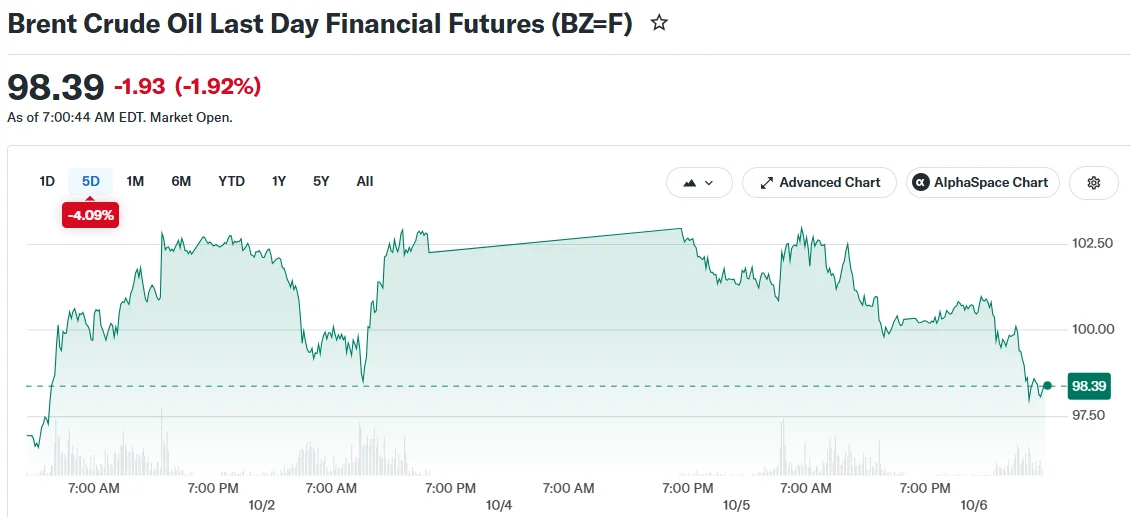
- Brent crude traded around $100.17 per barrel, with WTI crude dropping to approximately $88.67 per barrel.
- Shipping records reveal Gulf exporters exceeded pre-conflict export volumes on multiple days in late September.
- The G7 announced plans to release 100 million barrels of crude and diesel from strategic reserves.
- Refined products including gasoline and diesel face ongoing supply constraints due to regional refinery damage.
Oil prices retreated on Tuesday following fresh evidence that Middle East crude shipments have maintained robust levels despite escalating regional tensions.
Brent crude futures edged down to $100.17 per barrel during morning trading. Meanwhile, U.S. West Texas Intermediate crude experienced a steeper decline, settling near $88.67 per barrel.
Tanker tracking data compiled by Kpler revealed Gulf producers shipped higher crude volumes than anticipated throughout the previous month. The seven-day moving average for regional exports climbed to 18.3 million barrels daily by the end of September.
Export volumes from Gulf nations surpassed pre-Iran war benchmarks on 14 separate occasions during September. These strong flows persisted even amid persistent security threats targeting maritime vessels traversing critical shipping lanes.
Strait of Hormuz Remains a Flashpoint
Iranian authorities severely restricted passage through the Strait of Hormuz following the outbreak of hostilities in late February. Approximately 20% of global oil and natural gas supplies historically transited this strategic chokepoint.

Military operations have expanded beyond the initial theater, now encompassing Yemen. Houthi forces receiving Iranian support are engaged with Saudi-backed militias over control of the Bab el Mandeb Strait, an equally vital commercial passage.
Monday brought fresh reports of attempted attacks on Saudi Arabia’s east-west pipeline infrastructure. While the pipeline sustained no damage, market observers noted the episode underscores persistent vulnerability in regional energy networks.
Fuel Products Stay Tight Despite Crude Gains
The Wall Street Journal highlighted a divergence whereby crude petroleum flows have normalized while refined fuel shipments continue facing constraints. Gasoline and diesel movements remain significantly restricted.
Regional refining capacity destruction explains the persistent tightness in fuel markets. This dynamic has maintained elevated global prices for refined products, creating a disconnect from crude oil valuations.
Central banking authorities are maintaining close surveillance of energy market developments. Sustained fuel price increases carry implications for broader inflation trends, directly influencing monetary policy calibration.
Financial policymakers anticipate implementing additional borrowing cost increases in coming months should fuel prices remain elevated. Energy market conditions continue representing a critical variable in rate-setting deliberations.
A coordinated G7 commitment has provided some market reassurance. Member nations agreed to deploy 100 million barrels of crude oil and diesel from emergency stockpiles.
G7 members additionally committed to maintaining open energy export policies. This agreement followed diplomatic engagement from President Donald Trump.
Market data released Tuesday showed December WTI crude contracts declining 1.69% to trade at $87.92 per barrel. December Brent crude settlements fell 1.24%, landing at $99.08 per barrel.
Middle Eastern crude shipments surpassed pre-conflict benchmarks on four occasions during September’s final week. This performance demonstrated sustained supply chain resilience notwithstanding ongoing attacks against commercial shipping in the Strait of Hormuz.
Get 3 Free Stock Ebooks
Discover top-performing stocks in AI, Crypto, and Technology with expert analysis.
- Top 10 AI Stocks - Leading AI companies
- Top 10 Crypto Stocks - Blockchain leaders
- Top 10 Tech Stocks - Tech giants


