


TLDRs;
- Nebius stock sank 17% after Meta’s reported AI cloud expansion unsettled investors.
- Meta’s cloud strategy raises questions about long-term demand for third-party AI infrastructure providers.
- Despite the selloff, Nebius remains significantly above pre-Meta partnership trading levels this year.
- Investors now focus on contract stability, pricing power, and future financing requirements.
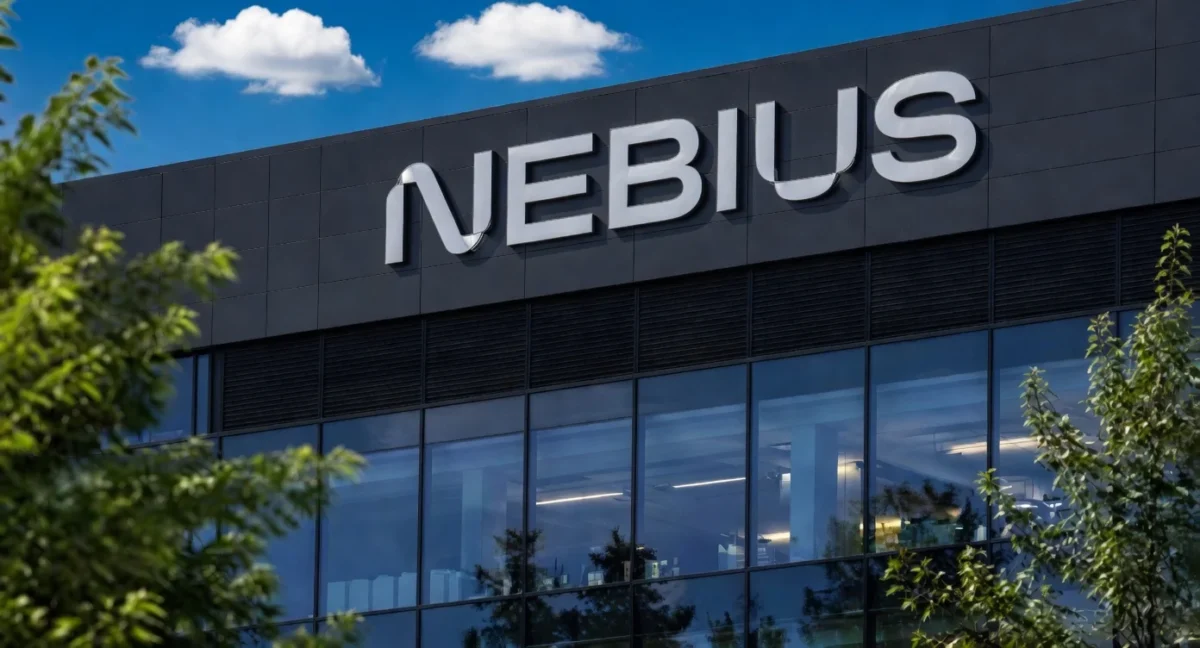
Nebius Group (NASDAQ: NBIS) suffered a sharp selloff on Wednesday after reports that Meta Platforms is exploring a cloud computing business fueled concerns about the long-term value of Nebius’ multi-billion-dollar infrastructure agreement with the social media giant.
Shares of the AI cloud infrastructure provider closed at $229.18, down 17.01% during regular trading, with more than 30 million shares changing hands. The decline came as investors reassessed the outlook for companies that lease GPU computing capacity following reports that Meta is considering commercializing its excess AI computing resources.
The market reaction contrasted sharply with Meta’s own performance. Shares of Meta climbed nearly 9%, while several AI infrastructure companies, including CoreWeave and IREN, also traded lower as investors weighed the possibility of increased competition within the rapidly expanding AI cloud market.
Meta’s Strategy Shifts Focus
The catalyst behind Wednesday’s decline was a report indicating that Meta is developing a cloud business capable of renting excess AI computing capacity to outside customers. Although the initiative remains under development and could evolve before launch, investors quickly began evaluating how such a move could reshape the AI infrastructure landscape.
Until now, companies such as Nebius have benefited from surging enterprise demand for high-performance GPU clusters needed to train and deploy large artificial intelligence models. If Meta enters the commercial cloud market with significant computing capacity, it could become both a customer and a competitor to independent AI cloud providers.

Industry analysts believe the impact would likely be felt most strongly by specialized “neocloud” providers rather than traditional hyperscale cloud operators. The concern is that companies currently purchasing dedicated AI infrastructure may eventually rely more heavily on Meta’s own platform if it becomes widely available.
These changing expectations prompted investors to reduce exposure to companies whose future growth depends heavily on long-term AI infrastructure demand.
Massive Meta Deal Under Review
The market’s reaction was amplified by the sheer size of Nebius’ existing agreement with Meta.
Earlier this year, Nebius announced a $12 billion guaranteed AI computing capacity agreement scheduled to begin in early 2027. The arrangement also includes an option that could expand the total value of the partnership to as much as $27 billion over several years.
The scale of the contract is substantial relative to Nebius’ current financial profile.
During the first quarter, Nebius generated $399 million in total revenue, with AI cloud services contributing nearly all of that amount. On an annualized basis, the company’s quarterly revenue equates to roughly $1.6 billion, meaning the guaranteed Meta commitment alone represents several years of current revenue.
While the contract remains unchanged, investors questioned whether Meta’s reported cloud ambitions could eventually influence future pricing, additional capacity purchases, or contract negotiations beyond the guaranteed commitments.
The optional portion of the agreement naturally carries greater uncertainty than the guaranteed capacity, making it particularly sensitive to changing market dynamics.
Growth Requires Heavy Investment
Nebius has aggressively expanded its AI infrastructure footprint to meet accelerating demand.
During the first quarter, the company invested approximately $2.5 billion in capital expenditures, primarily directed toward acquiring GPUs and expanding data center capacity. Management has also indicated that additional borrowing may be required as the company continues scaling its infrastructure network.
Executives have previously stated that customer prepayments remain an important component of the company’s financing strategy, helping reduce reliance on equity issuance and debt financing.
The emergence of another potential large-scale AI infrastructure supplier has therefore raised broader questions about future funding assumptions, customer commitments, and pricing power across the sector.
Investors appear increasingly focused on whether AI infrastructure providers will maintain the favorable economics that have driven rapid expansion over the past two years.
Long-Term Outlook Remains Positive
Despite Wednesday’s steep decline, Nebius continues to trade well above levels seen before announcing its Meta partnership.
The stock has more than doubled from its price before the March agreement and remains up well over 100% since then. Year-to-date gains also remain exceptionally strong despite the latest correction.
Trading activity reflected heightened investor interest, with volume significantly exceeding recent averages. The stock also continues to carry elevated short interest, suggesting that volatility may remain high as investors debate the company’s longer-term prospects.
Management has consistently maintained that demand for AI computing capacity remains robust. Chief Executive Arkady Volozh previously stated that customers continue competing aggressively for available GPU resources and that the company’s accelerated investment plans are being driven by sustained demand extending into 2027.
That underlying demand narrative has not fundamentally changed. However, Meta’s reported cloud initiative has introduced a new variable into the investment thesis.
Going forward, investors are likely to monitor whether Meta proceeds with commercial AI cloud offerings, how the existing Nebius agreement evolves, and whether demand from enterprise AI customers remains strong enough to support continued infrastructure expansion despite the prospect of another major competitor entering the market.
Get 3 Free Stock Ebooks
Discover top-performing stocks in AI, Crypto, and Technology with expert analysis.
- Top 10 AI Stocks - Leading AI companies
- Top 10 Crypto Stocks - Blockchain leaders
- Top 10 Tech Stocks - Tech giants


