


Key Takeaways
- Brent crude reached $98.73 per barrel while WTI hit $94.14 following Iranian threats against energy facilities in the Gulf region
- Tehran issued warnings about establishing a maritime exclusion zone throughout the Persian Gulf in retaliation for U.S. “economic warfare”
- Focus intensifies on the Strait of Hormuz as Iran simultaneously announces near-completion of shipping agreement with Oman
- Attack on Saudi Aramco’s Jazan facilities occurred Monday, resulting in minimal damage but heightening regional concerns
- Crude prices have surged over 30% since late February when hostilities commenced, with Brent jumping 8% in the previous week
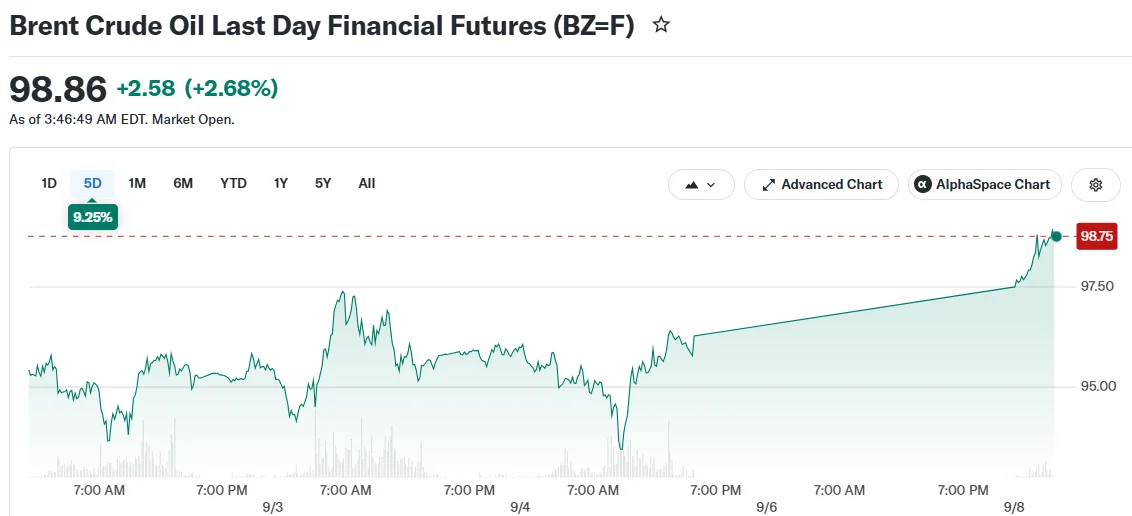
Oil prices jumped sharply on Tuesday following Iranian threats targeting energy infrastructure throughout the Gulf region, bringing Brent crude within striking distance of the $100 threshold.
Brent contracts advanced 1.6% to reach $98.73 per barrel, while West Texas Intermediate in the U.S. climbed 2.9% to $94.14. Monday had already seen Brent close almost 1% higher after momentarily reaching $98.
These price movements come after a weekend marked by reciprocal military actions between Washington and Tehran, which included strikes targeting vessels in Persian Gulf waters.
Tehran issued threats to counter what it characterized as American “economic warfare” through implementation of a maritime exclusion zone spanning the Persian Gulf. Mohammad Baqer Qalibaf, Iran’s Parliamentary Speaker, emphasized that U.S. energy corporations with regional operations face significant vulnerability.
“The infrastructure for oil and gas production throughout this area is extensive, reachable, and vulnerable,” he stated. “Attack our facilities, and expect retaliation. We have already demonstrated our capability.”
Mohsen Rezaei, who serves as secretary of Iran’s Supreme National Security Council, announced on X that Washington had been given a “definitive warning” and that continued economic aggression would result in a maritime exclusion zone extending to match the boundaries of the American blockade.

Hormuz Strait Becomes Primary Market Focus
The Strait of Hormuz, a critical passage for global oil transportation, has become the primary concern for energy traders.
Iranian officials announced intentions to establish a newly restricted maritime zone in the Gulf accompanied by an alternative shipping channel. This announcement has sparked concerns about potential delays in tanker movement through this vital corridor.
Tehran also indicated that negotiations with Oman regarding Hormuz shipping protocols are nearing conclusion, characterizing the talks as reaching their concluding phase. The proposed agreement would establish a provisional secure passage through the strait.
Nevertheless, market participants remain doubtful that diplomatic efforts will produce a rapid resolution to the underlying tensions.
Chris Wright, U.S. Energy Secretary, reported that approximately 8 million barrels per day continue to flow from the Persian Gulf on average, although vessels are routinely disabling their tracking systems to evade surveillance.
Saudi Infrastructure Targeted in Latest Attack
Monday witnessed another attack on Saudi Aramco’s energy installations at Jazan, positioned near the Red Sea coast. While the assault didn’t inflict substantial damage, it represents the most recent incident in an ongoing series of strikes that have already compelled a neighboring refinery to suspend production.
Crude prices have now climbed more than 30% since hostilities erupted in late February. Brent recorded an 8% gain last week, with WTI increasing nearly 10%.
Market participants are monitoring developments carefully for any indication of further escalation or potential diplomatic progress that could alter supply projections.
Get 3 Free Stock Ebooks
Discover top-performing stocks in AI, Crypto, and Technology with expert analysis.
- Top 10 AI Stocks - Leading AI companies
- Top 10 Crypto Stocks - Blockchain leaders
- Top 10 Tech Stocks - Tech giants


