


TLDR
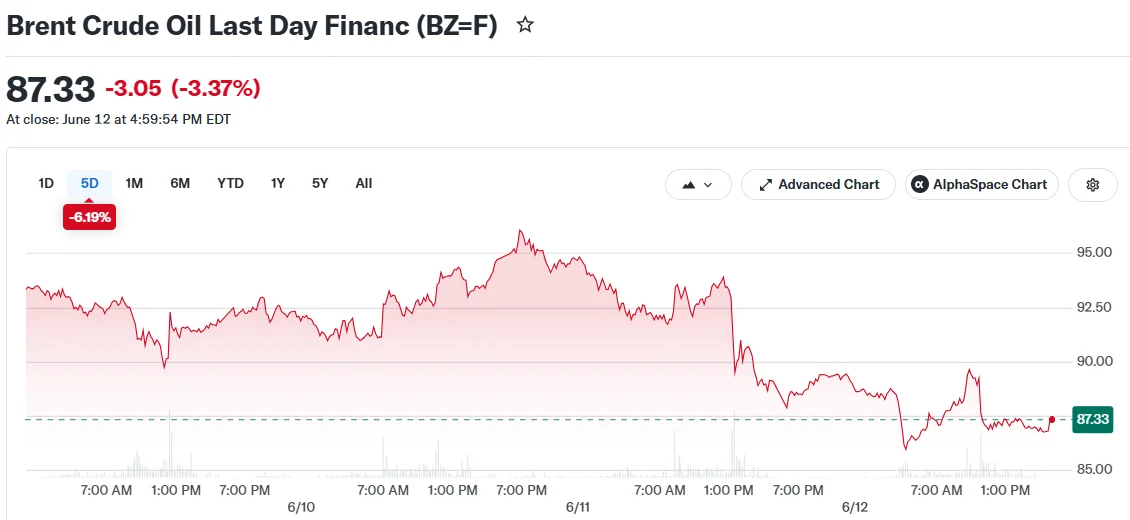
- Brent crude plummeted 3.4% to $87.33 per barrel, marking its weakest point since March 5, capping a 6.2% weekly decline
- Washington and Tehran are moving closer to an agreement that could unlock the Strait of Hormuz
- Pakistani mediators confirmed both nations have reached a finalized text and are coordinating implementation steps
- Iran’s top diplomat indicated a memorandum of understanding has reached unprecedented proximity to completion
- OPEC revised its 2026 demand growth projection downward from 1.2 million to 1 million barrels daily
Crude oil markets experienced significant downward pressure on Friday, with Brent benchmark prices sliding to levels not witnessed since the beginning of March. The decline accelerated on mounting expectations that Washington and Tehran might be nearing a diplomatic resolution to reopen the critical Strait of Hormuz.
Brent futures closed at $87.33 per barrel, representing a 3.4% single-day loss and a 6.2% weekly retreat. West Texas Intermediate experienced a similar 3.2% decline. Meanwhile, European natural gas markets saw prices tumble as much as 8.4%.
The Strait of Hormuz has remained largely inaccessible since hostilities erupted between the United States and Iran in late February. Prior to the conflict, this vital shipping channel facilitated approximately one-fifth of global petroleum and natural gas transportation.
President Trump announced Thursday that negotiators had finalized an agreement that could receive signatures imminently. According to Trump, the arrangement would restore access through the strait, terminate the U.S. naval embargo against Iran, and permanently prevent Iranian nuclear weapons development.
Yet Trump adopted a more critical tone Friday, asserting that Iran’s public commentary bore “no resemblance to the conditions that were mutually accepted in written form.” He emphasized there existed “no possibility of honorable negotiations” with the Iranian government.
Diplomatic Momentum Builds
Iranian Foreign Minister Abbas Araghchi countered the escalating rhetoric, stating that a memorandum of understanding between the nations had reached “unprecedented proximity to finalization.” He urged journalists to refrain from speculating about agreement details pending official completion.
Pakistan, serving as the primary intermediary, delivered the most definitive indication of advancement. Prime Minister Shehbaz Sharif confirmed that negotiators had achieved a mutually approved final document and that Pakistani officials were collaborating with both governments on subsequent measures. He proclaimed that “reconciliation has never been this attainable.”
Despite encouraging developments, financial markets maintain a cautious stance. Multiple previous announcements of diplomatic breakthroughs ultimately proved premature, and the ongoing rhetorical exchanges between Washington and Tehran continue to inject uncertainty.

Supply Constraints Persist
Oil values remain approximately 30% below conflict-peak levels. However, industry experts caution that prices may encounter support levels, given persistent supply limitations.
Chevron CEO Mike Wirth cautioned Friday that petroleum inventories are approaching “worrisome” thresholds. The United States continues releasing crude from strategic reserves at unprecedented rates.
Macquarie energy analyst Vikas Dwivedi attributed the recent $11-per-barrel selloff to growing confidence regarding a diplomatic settlement. He noted that crude valuations maintain underlying support mechanisms as long as the strait remains restricted.
Certain vessels have navigated the strait with tracking transponders disabled, and markets have developed alternative responses to supply disruptions. Nevertheless, analysts suggest that even following a potential reopening, purchasers may demonstrate preference for American crude over Persian Gulf supplies for an extended period.
Rob Haworth of U.S. Bank noted that tanker vessels traveling through the strait to Asian destinations require two months for complete round-trip journeys. Scott Shelton of ICAP predicted markets would likely “redistribute procurement” away from Persian Gulf sources in the immediate term.
OPEC downgraded its 2026 petroleum demand growth estimate to 1 million barrels daily, reduced from 1.2 million. The organization simultaneously elevated its 2027 projections. Alternative forecasting agencies, including the IEA and EIA, maintain more conservative outlooks, with both anticipating demand contraction in 2026.
The European Central Bank identified the Iran-related petroleum price surge as a principal factor influencing its decision to implement interest rate increases this week.
Get 3 Free Stock Ebooks
Discover top-performing stocks in AI, Crypto, and Technology with expert analysis.
- Top 10 AI Stocks - Leading AI companies
- Top 10 Crypto Stocks - Blockchain leaders
- Top 10 Tech Stocks - Tech giants


