


TLDR
- Qualcomm stock slips as Reality Elite expands its XR chip roadmap.
- Snapdragon Reality Elite targets premium mixed reality devices.
- Qualcomm boosts XR performance with stronger GPU, CPU, and NPU gains.
- XREAL Project Aura will use Qualcomm’s new flagship XR platform.
- Snapdragon START gives eyewear brands a faster smart glasses path.
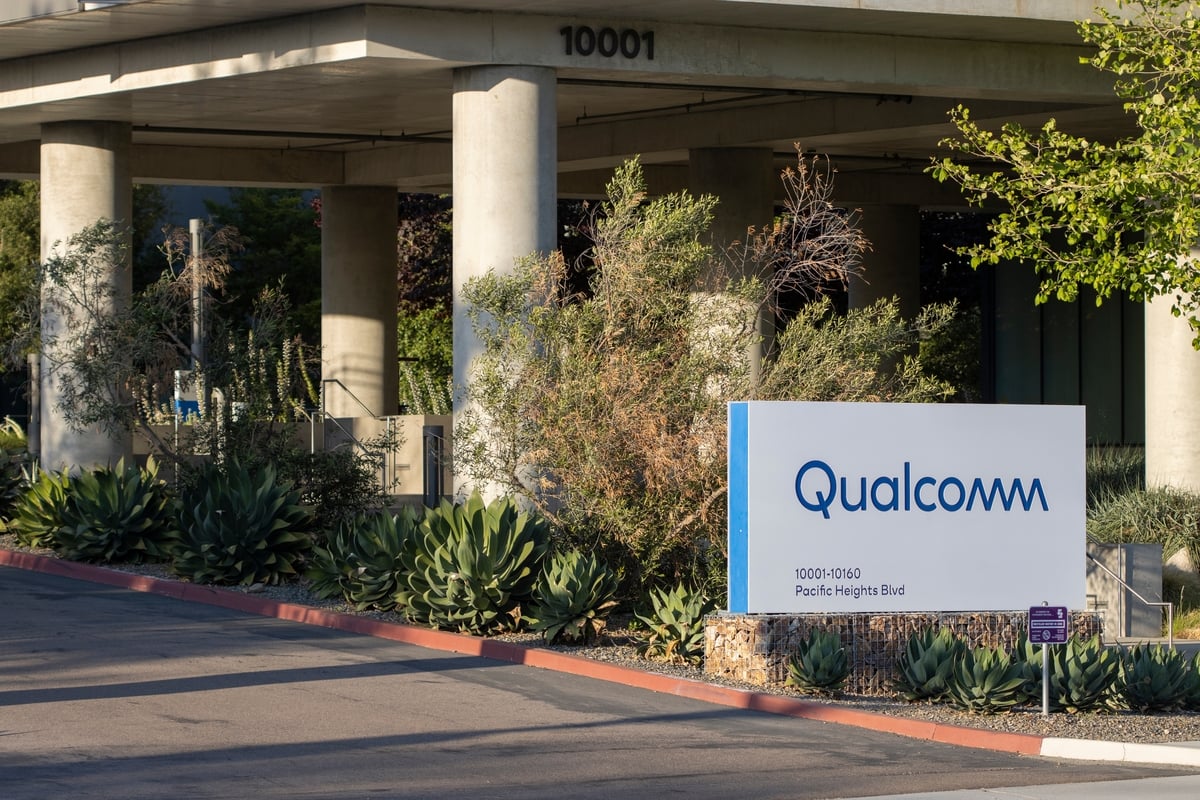
Qualcomm Incorporated (QCOM) slipped 0.29% to $220.18 as the company introduced its new Snapdragon Reality Elite chip. The stock moved lower after an early rally toward $233, then stabilized near intraday lows. The launch places Qualcomm deeper into premium XR hardware, mixed reality, and smart glasses.
Qualcomm Expands XR Push With Snapdragon Reality Elite
Qualcomm unveiled Snapdragon Reality Elite at Augmented World Expo 2026 as its new flagship XR system-on-chip. The platform targets premium mixed reality headsets, optical-see-through glasses, and tethered spatial computing devices. It also replaces the XR2+ Gen 2 as Qualcomm’s highest-end XR platform.
The chip supports upcoming Android XR products, including XREAL’s Project Aura glasses. XREAL’s design uses a connected puck, which shifts battery and compute away from the glasses. As a result, the device could support thinner and lighter hardware.
Qualcomm designed the platform for devices that need low latency and strong visual processing. It also focuses on comfort, battery life, and heat control. These areas remain critical as XR companies try to make wearable devices more practical.

New Chip Brings Higher Performance And On-Device AI
Snapdragon Reality Elite delivers up to 60% higher GPU performance than XR2+ Gen 2. It also brings up to 30% higher CPU performance and 160% higher NPU performance. The NPU reaches up to 48 TOPS for demanding AI tasks.
That added AI capacity supports real-time assistants, avatars, and scene-aware applications. It also allows more workloads to run directly on the device. Therefore, developers can reduce cloud dependence when speed and privacy matter.
The platform supports up to 4.4K resolution per eye at 90 Hz. It also improves video see-through and color handling for mixed reality devices. These upgrades aim to make digital content blend more smoothly with real environments.
Battery Gains Support Smaller XR Devices
Qualcomm said Snapdragon Reality Elite can deliver up to 20% longer battery life at similar workloads. The company also said the chip can run up to 12 degrees Celsius cooler under load. Those gains could help reduce heat issues in smaller devices.
The chip includes Qualcomm’s Engine for Visual Analytics for computer vision tasks. This block handles tracking, depth estimation, optical flow, and 3D reconstruction. Devices can maintain responsive tracking while using less system power.
Qualcomm also introduced Snapdragon START for smart glasses and AI wearables. The toolkit combines hardware modules, software, companion apps, and white-label product designs. It gives eyewear brands a faster route into smart glasses without building full platforms internally.
Get 3 Free Stock Ebooks
Discover top-performing stocks in AI, Crypto, and Technology with expert analysis.
- Top 10 AI Stocks - Leading AI companies
- Top 10 Crypto Stocks - Blockchain leaders
- Top 10 Tech Stocks - Tech giants


