



Key Takeaways
- RBC Capital Markets elevated its S&P 500 12-month target from 7,900 to 8,150
- Enhanced earnings projections and a reduced inflation forecast of 3% fueled the revision
- The firm resumed its comprehensive multi-model valuation framework following reduced geopolitical tensions
- The revised forecast suggests approximately 10.8% growth potential from the June 27 closing price of 7,353.95
- Analysts highlighted immediate risks including semiconductor sector volatility, interest rate fluctuations, and upcoming midterm elections
RBC Capital Markets has increased its 12-month forecast for the S&P 500 to 8,150, up from the previous 7,900 target. The financial institution pointed to enhanced corporate earnings projections and an increasingly favorable economic environment as primary catalysts.
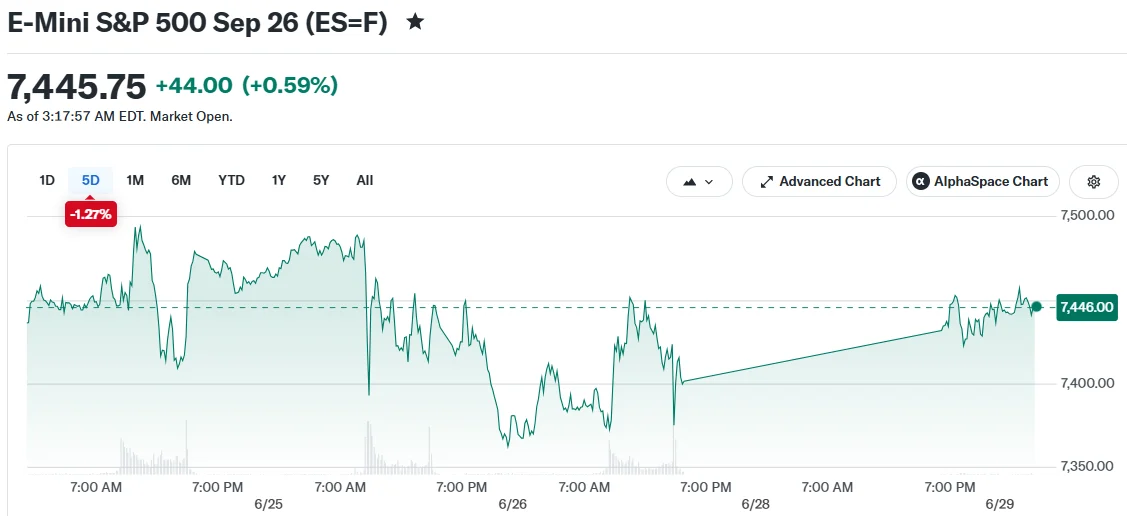
Based on the index’s Friday, June 27 closing level of 7,353.95, this updated projection represents potential gains of roughly 10.8%.
Factors Behind the Revised Outlook
Elevated earnings expectations played a central role in the adjustment. The aggregated bottom-up consensus for Q1 2027 earnings — which RBC employs as a benchmark in its analytical framework — has strengthened since the firm’s previous May assessment.
Additionally, RBC adjusted its inflation projection downward from 3.3% to 3%, enabling a slightly more favorable price-to-earnings ratio. The company maintains its practice of applying a 5% discount to consensus earnings forecasts.
RBC reinstated its comprehensive multi-model methodology for target calculation after temporarily relying exclusively on its valuation framework. The quintet of models encompasses sentiment analysis, valuation metrics, equity-versus-bond comparisons, GDP fundamentals, and monetary policy considerations. The strategy team determined this holistic approach was warranted following the de-escalation of international tensions.

“The story we’re seeing in the numbers broadly is that the stock market deserves to move higher over the next year from a variety of perspectives,” said strategists led by Lori Calvasina.
Warning Signals and Market Headwinds
While projecting upside, RBC identified multiple immediate challenges. The firm noted that expectations heading into the forthcoming earnings reporting period appear elevated from a historical data perspective, potentially triggering short-term market fluctuations.
Analysts also highlighted vulnerability from potential profit-taking in semiconductor companies and other AI stocks. Additional concerns include military conflicts, possible downward adjustments to 2027 profit forecasts, the approaching U.S. midterm elections, and the prospect of Federal Reserve interest rate increases.
RBC anticipates any market corrections would remain contained within a 5% to 10% range from peak values, provided recession probability remains minimal and significant interest rate disruptions don’t materialize.
Regarding market dynamics, RBC noted that the recent strength in international developed markets and value-oriented equities likely has additional momentum. Nevertheless, the firm characterizes both trends as tactical opportunities rather than fundamental shifts in market leadership.
The analytical team projects that U.S. large-cap growth equities will reclaim dominance following the current valuation adjustment cycle.
Concerning small-cap equities, RBC maintained a neutral stance. While acknowledging solid economic fundamentals and appealing earnings growth trajectories, these positives are counterbalanced by elevated valuations and the typical headwinds rising interest rates create for smaller enterprises.
The strategy team indicated they would closely monitor the Russell index reconstitution, which occurred on Friday, for potential shifts in market indicators.
Get 3 Free Stock Ebooks
Discover top-performing stocks in AI, Crypto, and Technology with expert analysis.
- Top 10 AI Stocks - Leading AI companies
- Top 10 Crypto Stocks - Blockchain leaders
- Top 10 Tech Stocks - Tech giants


