


TLDRs
- Rocket Lab fell 0.7% despite upcoming Nasdaq-100 inclusion boost.
- SpaceX weakness and profit-taking weighed on space sector sentiment.
- Analysts remain split, with bullish long-term price targets intact.
- Strong revenue growth contrasts with ongoing net losses and risks.
- Investors await index inflows versus valuation pressure dynamics.
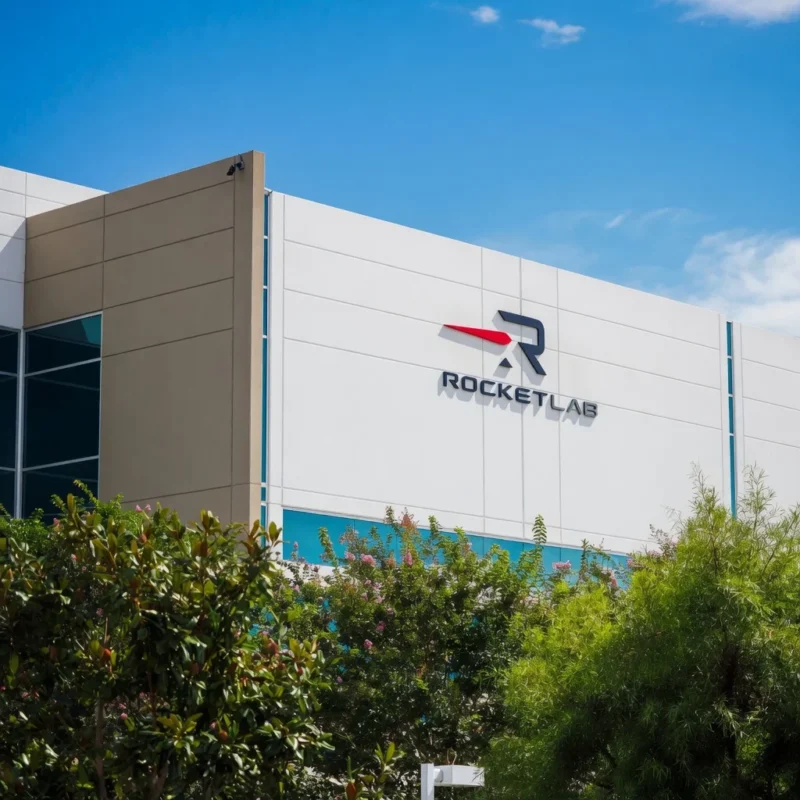
Rocket Lab Corporation (NASDAQ: RKLB) edged lower on Thursday, slipping 0.7% to close at $107.24 as investors positioned ahead of its highly anticipated inclusion in the Nasdaq-100 index.
The stock traded within a wide intraday range of $101.12 to $110.98, reflecting heightened volatility and strong participation, with roughly 70.3 million shares changing hands.
The decline came despite what would typically be viewed as a positive catalyst: automatic demand from index-tracking funds expected to buy shares once the inclusion becomes effective. However, broader sentiment in the space sector and profit-taking activity appeared to outweigh near-term mechanical support.
Space Sector Cools Rapidly
Pressure on Rocket Lab also coincided with a cooling trend across the broader commercial space trade. SpaceX, which recently entered public markets, fell 3.5% to $185, extending its post-IPO correction after an initial surge that had lifted valuations to aggressive levels.
Market analysts noted that early enthusiasm around SpaceX was likely to face natural cooling as investors locked in gains. The shift in sentiment spilled over into related space infrastructure and launch-service names, with Rocket Lab seen as a secondary proxy for sector momentum.

Even as optimism around space exploration remains structurally intact, short-term valuation resets have begun reshaping trading behavior across the industry.
Mixed Wall Street Sentiment Emerges
Despite the weakness, Wall Street analysts remain divided rather than bearish. KeyBanc analyst Michael Leshock upgraded Rocket Lab to “Overweight” and issued a $135 price target, describing the company as a leading competitor in the commercial launch space and a clear second force in the sector behind SpaceX.
The bullish call highlights growing confidence in Rocket Lab’s long-term positioning, particularly as demand for satellite deployment and reusable launch systems continues to expand. However, analysts also caution that near-term volatility may persist as the market digests shifting comparisons with SpaceX’s newly public valuation.
This divergence in sentiment underscores a broader theme: Rocket Lab is increasingly being valued not just on fundamentals, but also relative to a rapidly repricing peer ecosystem.
Strong Growth, Persistent Losses
Fundamentally, Rocket Lab continues to show strong top-line expansion. The company reported first-quarter revenue of $200.3 million, representing a 63.5% year-over-year increase. It also disclosed a backlog of $2.2 billion, signaling sustained demand for its launch services and aerospace solutions.
During the same quarter, Rocket Lab signed 31 Electron and HASTE contracts, along with five dedicated Neutron launch agreements, further strengthening its medium-term revenue pipeline.
However, profitability remains elusive. The company posted a net loss of $45.0 million, or $0.07 per share, as it continues investing heavily in development, particularly for its Neutron medium-lift rocket program. Management has repeatedly emphasized that development timelines and operational projections remain subject to significant execution risks.
Index Inclusion vs Market Reality
Rocket Lab’s upcoming entry into the Nasdaq-100 marks a symbolic milestone for the company and the broader space economy. Founder and CEO Sir Peter Beck called the inclusion a “landmark moment,” emphasizing its significance in recognizing the growing importance of commercial space infrastructure.
Still, market participants are increasingly distinguishing between symbolic index-driven demand and underlying earnings performance. While passive inflows could provide short-term support once the inclusion takes effect, investors appear more focused on whether Rocket Lab can justify its valuation in a market now heavily influenced by SpaceX’s public trading behavior.
With broader markets rallying on Thursday, including a 1.91% gain in the Nasdaq Composite, the stock’s decline suggests that sector-specific dynamics, rather than macro weakness, are driving sentiment.
Outlook Into Monday’s Session
Looking ahead, attention shifts to Monday’s trading session, when Rocket Lab will officially join the Nasdaq-100 before the market opens. Traders are watching closely to see whether index-related inflows provide a rebound or whether broader space-sector caution continues to dominate.
For now, Rocket Lab sits at a critical intersection: supported by strong growth and institutional recognition, but challenged by rising competitive visibility and heightened valuation scrutiny.
Get 3 Free Stock Ebooks
Discover top-performing stocks in AI, Crypto, and Technology with expert analysis.
- Top 10 AI Stocks - Leading AI companies
- Top 10 Crypto Stocks - Blockchain leaders
- Top 10 Tech Stocks - Tech giants


