


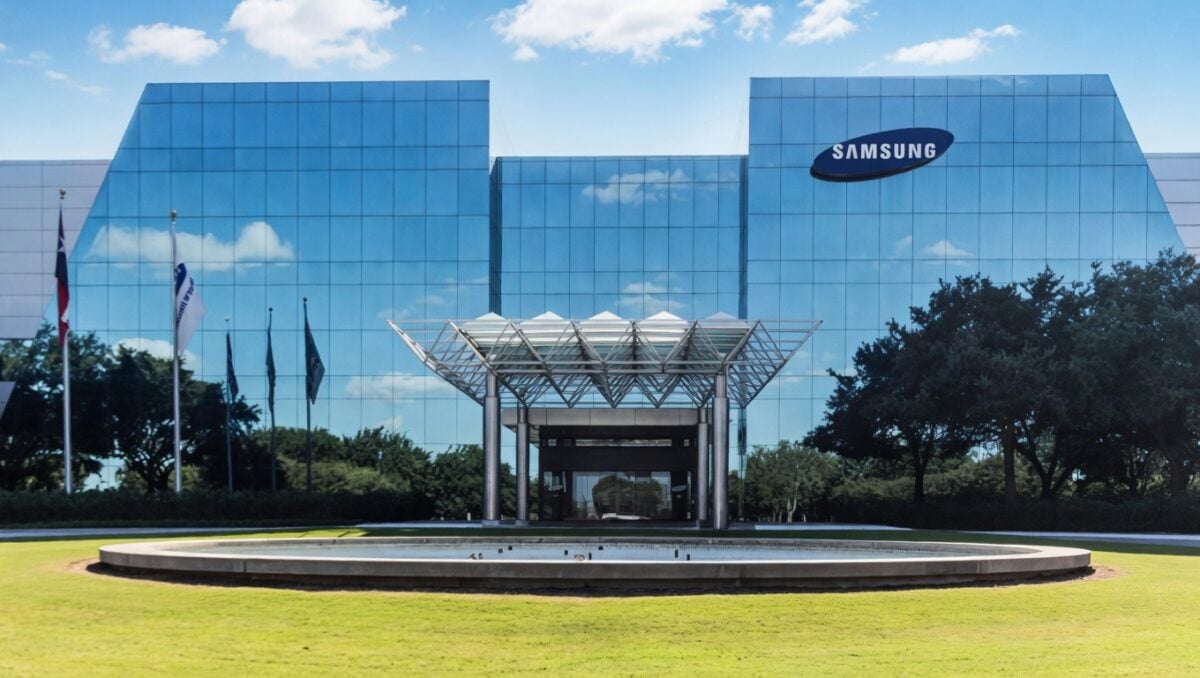
Key Points
- Samsung Electronics shares tumbled 7.8% to ₩330,500 during Friday’s session as tech stocks faced widespread selling pressure across Korean exchanges
- Investor sentiment deteriorated following Apple’s decision to raise prices on MacBook and iPad products, casting doubt on AI hardware demand sustainability
- Single-stock leveraged exchange-traded funds amplified losses for both Samsung and SK Hynix shareholders
- Korea’s main KOSPI index plummeted over 8%, activating the exchange’s fifth trading halt of 2026
- Reports emerged of Samsung preparing to unveil a ₩1,000 trillion ($646 billion) decade-long capital expenditure program covering chips, artificial intelligence, and related infrastructure
Shares of Samsung Electronics declined 7.8% to close at ₩330,500 on Friday, extending a devastating week that included a catastrophic 12% single-day collapse just two days earlier on June 23.
Samsung Electronics Co., Ltd., SMSD.L
The earlier plunge triggered the fourth circuit breaker activation on the KOSPI this year. Friday witnessed the fifth such emergency trading suspension, with the Korea Exchange implementing a 20-minute market-wide pause around 12:10 p.m. Seoul time after the benchmark index shed more than 8%.
The catalyst for Friday’s decline stemmed from Apple‘s announcement regarding price adjustments across its MacBook and iPad product families, citing elevated memory and component expenses. The news rattled market participants who had positioned for continued strength in AI-powered technology hardware.
Semiconductor manufacturers worldwide absorbed significant losses. SK Hynix, Samsung’s primary domestic competitor, experienced similar carnage with shares declining over 8%, while leveraged exchange-traded products tracking both companies plunged more than 15%.

Leveraged Products Intensified Market Volatility
Single-stock leveraged ETFs focused on Samsung and SK Hynix have emerged as a mounting worry for South Korean financial authorities. Friday’s action validated those concerns — these instruments amplified price movements far beyond what underlying business fundamentals alone would warrant.
The outcome was a self-reinforcing cycle of liquidation that punished Samsung shares more severely than headline developments might reasonably justify.
Japan’s Nikkei 225 index fell in tandem, illustrating how rapidly the selloff propagated throughout Asian markets.
Following a substantial rally over the preceding twelve months, Friday’s decline partly reflected profit-taking by investors who had ridden the stock’s impressive ascent. Once market psychology shifts, reversals can accelerate dramatically.
Massive Capital Spending Blueprint Sparks Investor Anxiety
Market timing proved unfortunate. South Korean media outlets disclosed this week that Samsung intends to reveal a ₩1,000 trillion ($646 billion) investment initiative spanning the next ten years — potentially representing the largest corporate capital commitment in the nation’s economic history.
The blueprint reportedly encompasses semiconductor fabrication facilities, artificial intelligence infrastructure, battery production, and display manufacturing. Approximately ₩300 trillion would fund chip manufacturing plants in southwestern Korea, while more than ₩350 trillion targets AI data centre development.
South Korean President Lee Jae Myung is scheduled to convene a national economic policy briefing on June 29, where Samsung Vice Chairman Jun Young-hyun and SK Hynix CEO Kwak Noh-jung will both outline their respective investment strategies.
Contrary to expectations, certain investors interpreted the enormous spending scale as a liability. Deploying hundreds of trillions of won into fixed assets during uncertain semiconductor demand conditions represents significant execution risk.
SK Hynix separately disclosed intentions to secure up to $29.4 billion through a Nasdaq offering of American Depositary Receipts, channeling capital toward new manufacturing facilities, advanced packaging operations, and production equipment.
Both corporate announcements arrive as South Korea attempts to defend its position in the worldwide AI and semiconductor competition amid escalating challenges from American and Chinese rivals.
SK Hynix shares traded down 8.36% at press time, while Samsung recovered modestly to ₩339,500 after clawing back portions of earlier losses.
Get 3 Free Stock Ebooks
Discover top-performing stocks in AI, Crypto, and Technology with expert analysis.
- Top 10 AI Stocks - Leading AI companies
- Top 10 Crypto Stocks - Blockchain leaders
- Top 10 Tech Stocks - Tech giants


