


Key Takeaways
- XRP facilitates rapid, cost-efficient international transactions, with settlements completed within seconds
- The Ripple-SEC legal dispute reached its conclusion in 2025, eliminating significant regulatory uncertainty
- Approximately 32.6 billion XRP remains locked in Ripple’s escrow system, representing potential future supply
- Ripple’s financial infrastructure can operate with stablecoins rather than XRP, reducing mandatory token utility
- Token holders don’t earn dividends or revenue sharing — valuation relies primarily on market speculation
For more than ten years, XRP has remained among cryptocurrency’s most debated digital assets. Advocates champion it as tomorrow’s foundation for international money transfers. Skeptics highlight supply concerns and its connection to Ripple Labs.
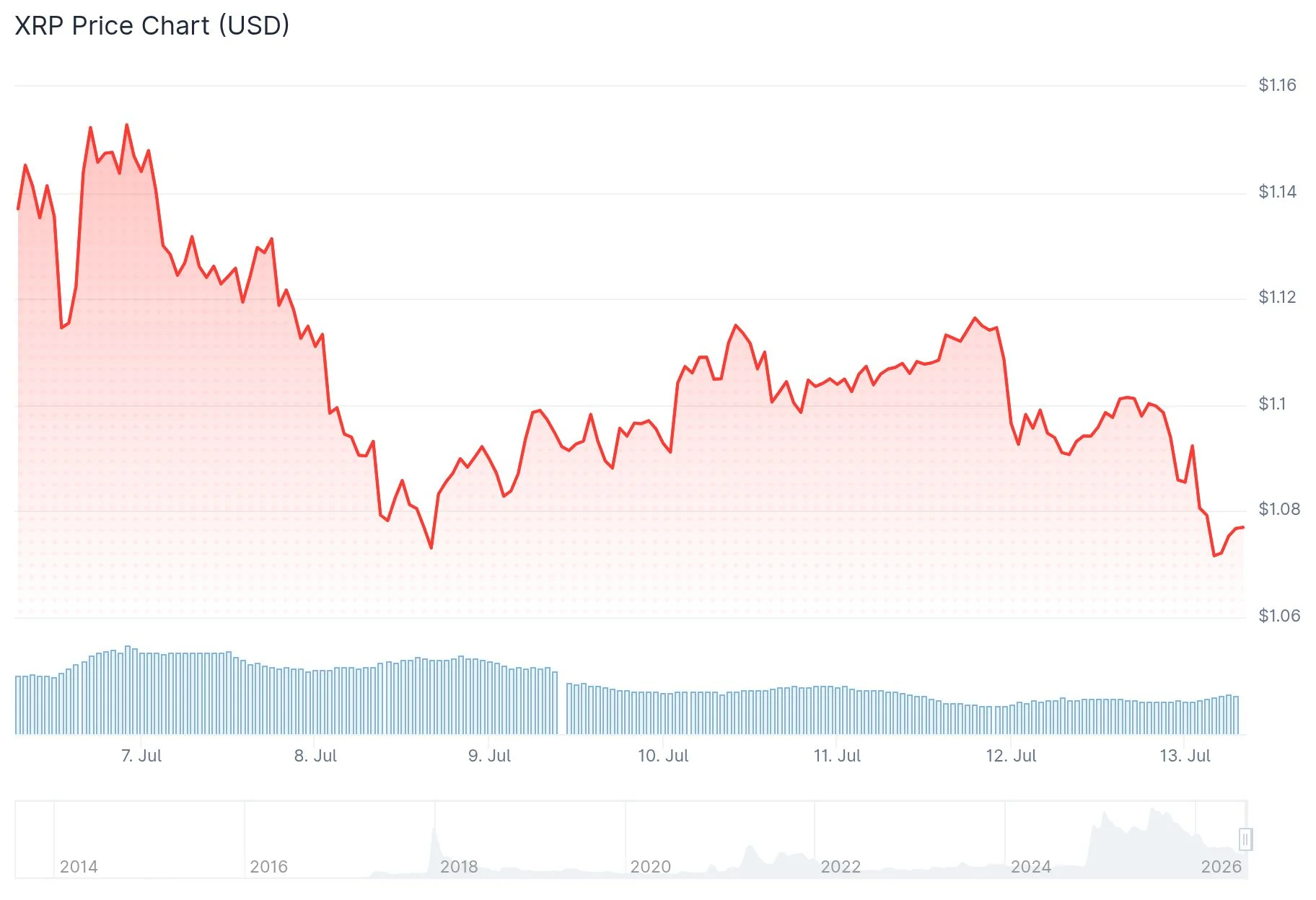
Let’s examine the objective information.
The XRP Ledger powers XRP — a decentralized blockchain designed specifically for efficient, affordable value transfers. Settlement happens in mere seconds with minimal transaction costs. Unlike Bitcoin’s proof-of-work model, no mining exists — the entire 100 billion token supply was generated at inception, with small quantities destroyed per transaction.
Ripple Labs, the enterprise driving XRP‘s commercial adoption, has dedicated years to developing payment networks, custody solutions, stablecoin offerings, and tokenization platforms targeted at banking institutions and financial enterprises. This strategy provides XRP with deeper institutional penetration than most digital currencies.
Regulatory Clarity Achieved
A major challenge facing XRP resolved itself in 2025. The protracted litigation between Ripple and the Securities and Exchange Commission officially concluded. The previous judicial determination that programmatic XRP sales on exchanges didn’t constitute securities offerings remained intact. Ripple agreed to a $125 million fine addressing specific institutional transactions that violated securities regulations.

This outcome encouraged exchanges and institutional participants to expand XRP-related offerings. The development marked genuine progress for the digital asset.
Understanding Supply Dynamics
XRP maintains a fixed maximum supply of 100 billion tokens. Presently, over 62 billion circulate publicly. Ripple controls approximately 32.6 billion XRP through escrow arrangements as of June 2026.
The escrow mechanism permits releasing up to one billion XRP monthly. Ripple routinely returns most unreleased tokens into fresh escrow contracts, preventing sudden market flooding. Nevertheless, the possibility of expanding circulating supply remains constant.
This represents a critical consideration for prospective long-term investors.
Ripple’s business model doesn’t inherently create XRP demand either. Its payment infrastructure can function using stablecoins, including Ripple’s proprietary RLUSD, instead of XRP. Consequently, Ripple’s expansion doesn’t necessarily translate to increased XRP utilization.
Token holders receive zero profit distribution and no dividend payments. Price appreciation depends entirely on investor sentiment and adoption projections.
As of June 2026, Ripple maintains substantial XRP holdings in escrow, executing scheduled monthly releases that market participants continue tracking attentively.
Get 3 Free Stock Ebooks
Discover top-performing stocks in AI, Crypto, and Technology with expert analysis.
- Top 10 AI Stocks - Leading AI companies
- Top 10 Crypto Stocks - Blockchain leaders
- Top 10 Tech Stocks - Tech giants


