


Key Takeaways
- While XRP commands a ~$69B market cap compared to Solana’s ~$45B, Solana hosts significantly more decentralized applications
- XRP faces dilution pressure with a fully diluted valuation near ~$111B, as roughly 38B tokens remain undistributed
- By May, Solana’s real-world asset tokenization surpassed $2.8B, while stablecoin holdings approached ~$16.4B
- Galaxy Digital received $50M in commercial paper from J.P. Morgan directly on Solana utilizing USDC
- XRP Ledger hosted a collaborative tokenized Treasury pilot involving Ripple, J.P. Morgan’s Kinexys platform, Mastercard, and Ondo Finance
Among cryptocurrencies beyond Bitcoin and Ethereum, XRP and Solana stand out as two leading networks capturing significant institutional attention. Despite this shared interest, their fundamental architectures serve distinctly different objectives.
XRP functions primarily as a cross-border payment solution and institutional settlement layer. Conversely, Solana operates as a comprehensive blockchain platform powering decentralized trading venues, stablecoins, tokenized financial instruments, and mainstream applications.
Market Capitalization and Token Economics
Current market capitalization figures place XRP at approximately $69 billion, while Solana registers around $45 billion. Surface-level analysis suggests XRP maintains superior market positioning.
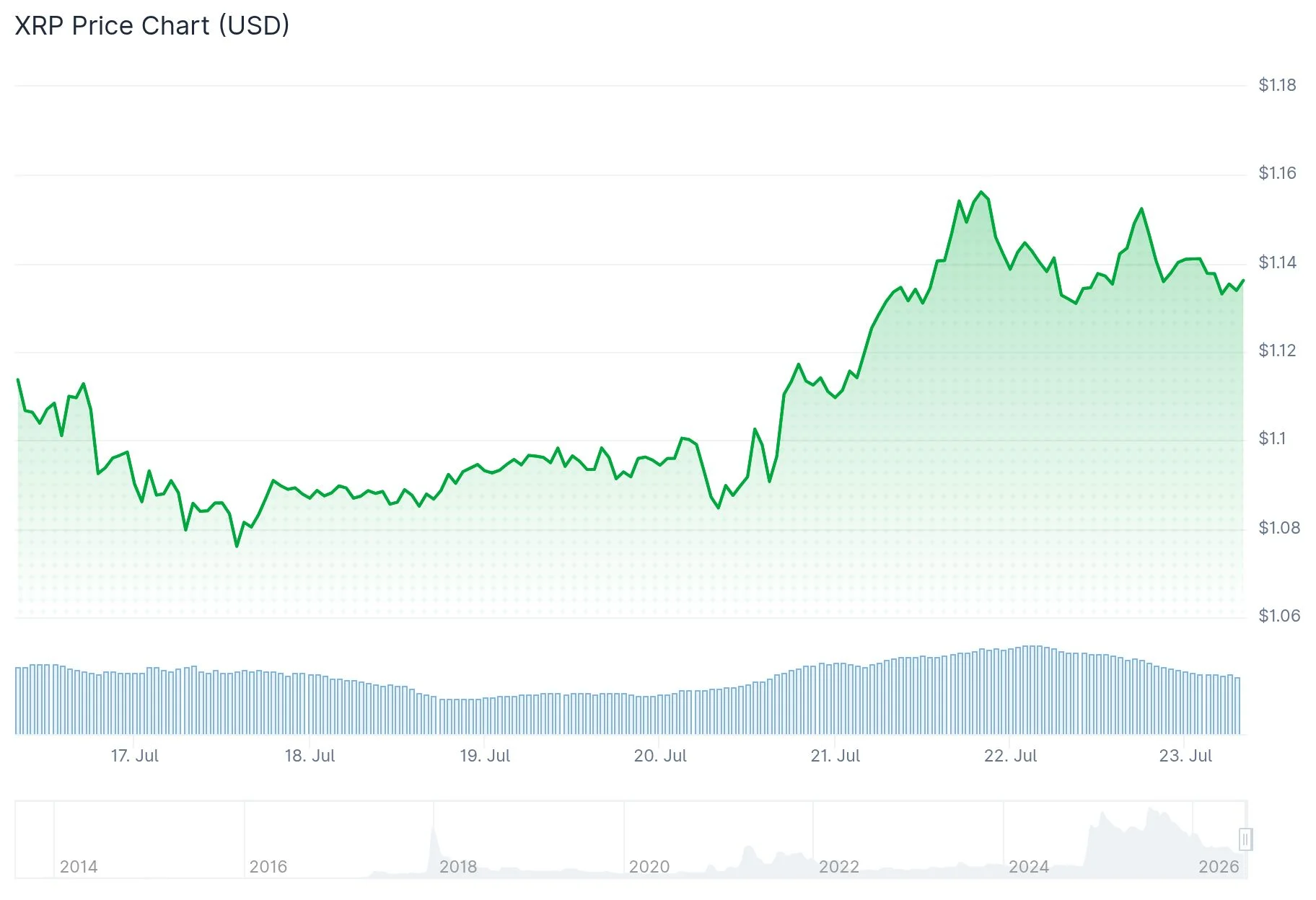
However, examining fully diluted valuations reveals a more nuanced picture. XRP’s FDV reaches approximately $111 billion due to roughly 38 billion tokens remaining outside active circulation. Meanwhile, Solana has distributed about 583 million of its 631 million total token supply, resulting in minimal disparity between market cap and FDV.
This positioning grants Solana superior valuation transparency. While XRP avoids conventional inflation mechanisms—having minted all 100 billion tokens at genesis—the substantial unCirculated supply presents ongoing dilution considerations.

Enterprise Adoption and Strategic Partnerships
Recent months have witnessed both blockchain networks securing meaningful institutional engagement.
Ripple collaborated with J.P. Morgan’s Kinexys platform, Mastercard, and Ondo Finance on an experimental program showcasing near-instantaneous redemption of tokenized U.S. Treasury instruments on the XRP Ledger. Notably, portions of the settlement flow still relied on conventional banking channels.
Solana demonstrated its institutional capabilities when J.P. Morgan facilitated $50 million in commercial paper issuance for Galaxy Digital entirely onchain. Franklin Templeton and Coinbase served as purchasers, with the entire security lifecycle—issuance through redemption—executed using USDC.
According to Solana Foundation data, the network captured 97% of all cumulative onchain tokenized equity trading volume.
Network Activity and Investment Considerations
May statistics for Solana revealed real-world asset tokenization exceeding $2.8 billion alongside stablecoin reserves of approximately $16.4 billion.
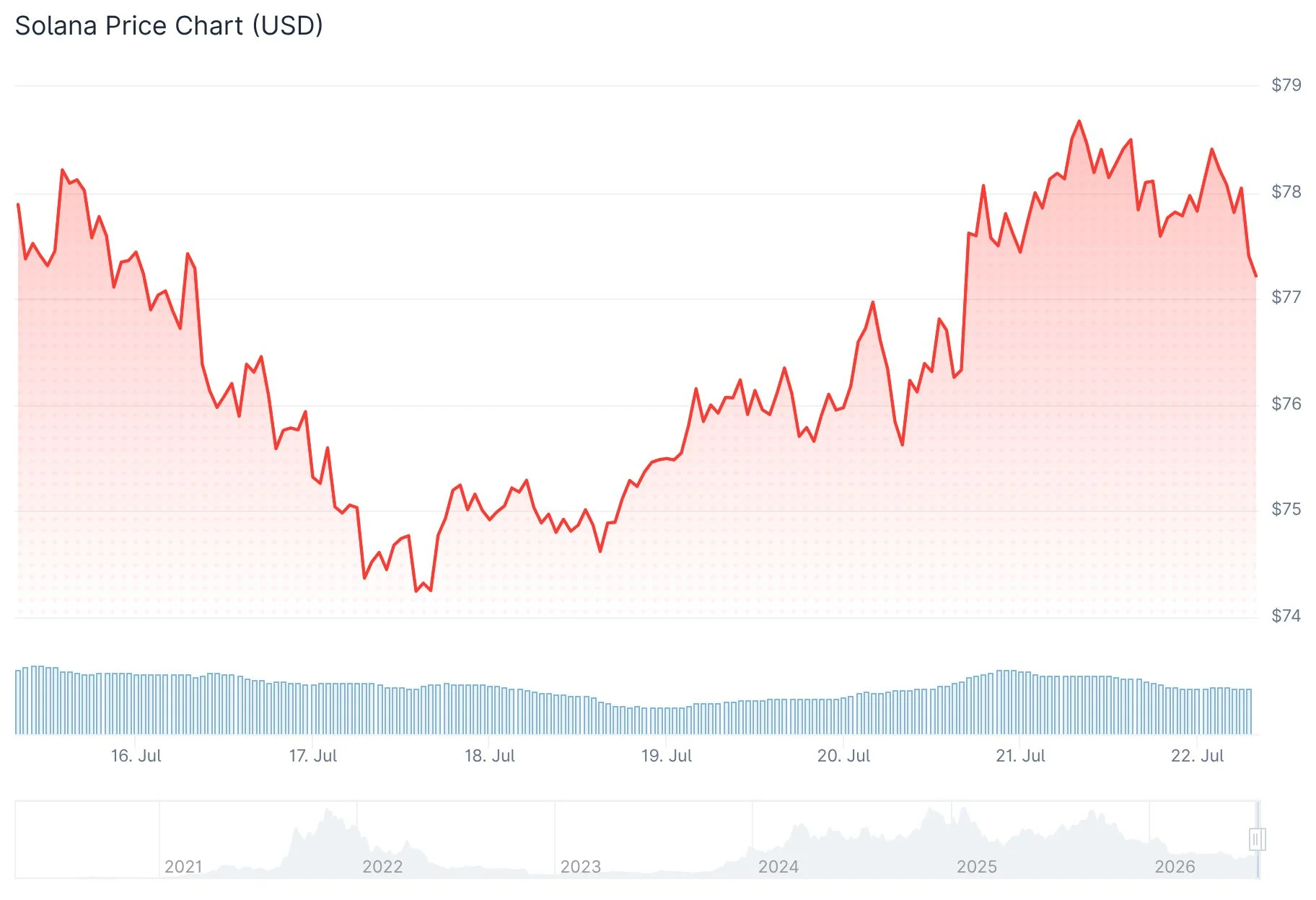
XRP’s competitive advantage lies in its specialized application. The network concentrates on payments, remittance services, and institutional settlements—clearly defined use cases with established demand. Ripple has strategically expanded into custody solutions, stablecoin infrastructure, and tokenized financial products.
Solana presents higher volatility exposure. Token demand correlates directly with sustained blockchain activity, developer engagement, and stablecoin ecosystem expansion. Reduced trading volumes could materially impact token valuation.
Risk-averse investors may find XRP’s investment thesis more compelling. Its payment-centric model provides clarity, while its capped maximum supply eliminates inflation uncertainty.
For participants comfortable with elevated volatility, Solana demonstrates multiple active growth catalysts spanning stablecoins, asset tokenization, and institutional finance infrastructure. Solana additionally benefits from transparent fully diluted economics and stronger ecosystem momentum as 2025 progresses.
Get 3 Free Stock Ebooks
Discover top-performing stocks in AI, Crypto, and Technology with expert analysis.
- Top 10 AI Stocks - Leading AI companies
- Top 10 Crypto Stocks - Blockchain leaders
- Top 10 Tech Stocks - Tech giants


