



TLDR
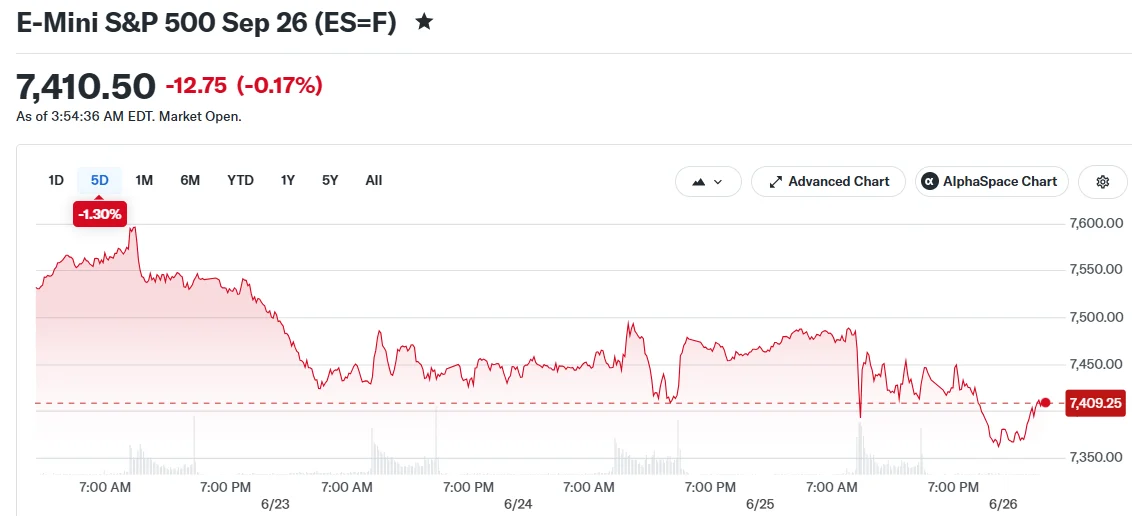
- S&P 500 futures declined 0.3% while Nasdaq 100 futures tumbled 1% amid ongoing technology sector weakness
- MacBook and iPad price increases from Apple triggered concerns about escalating component costs
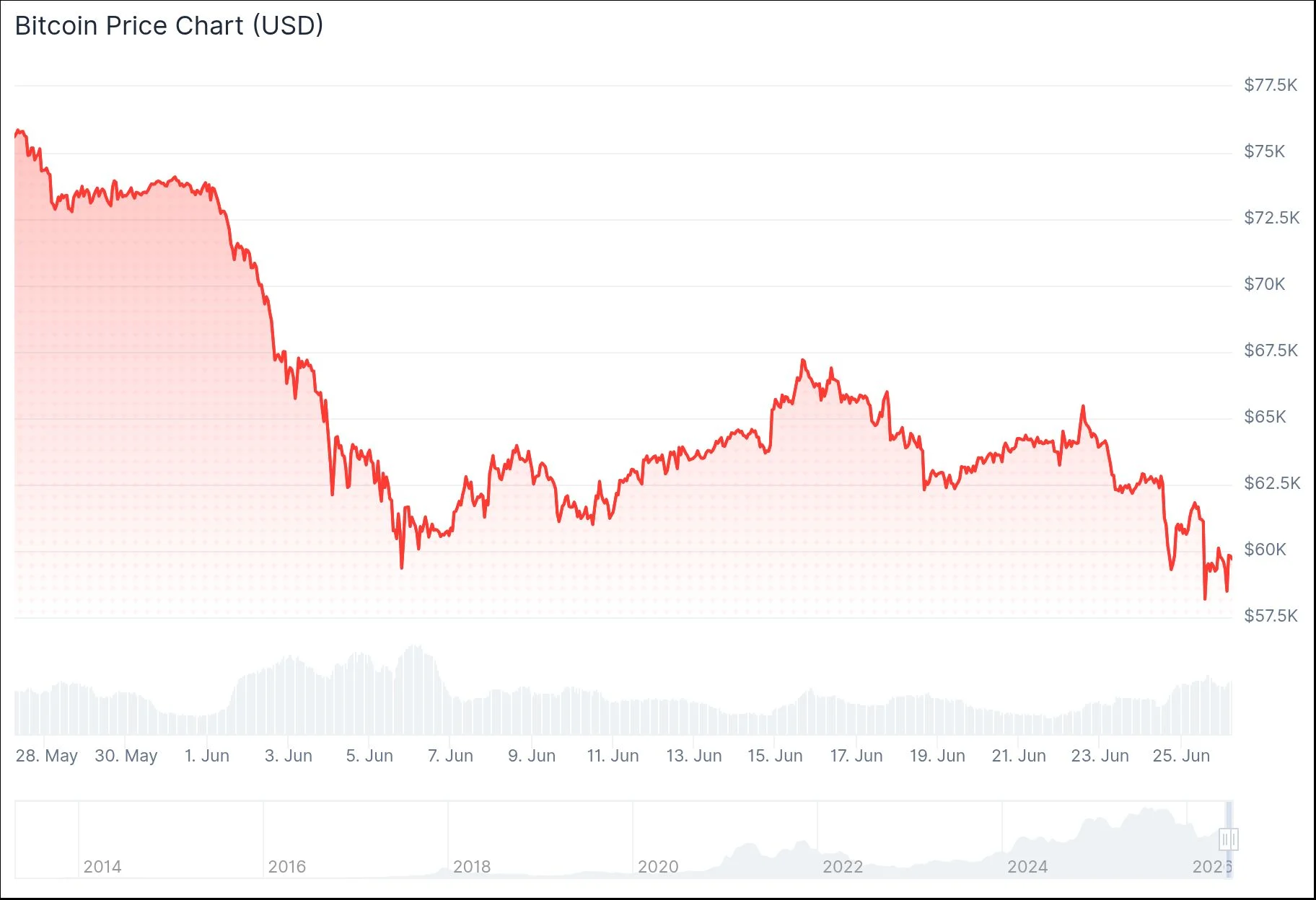
- Bitcoin touched $58,000 before bouncing back to approximately $59,888, registering a 4.5% weekly decline
- Ethereum experienced the sharpest losses among major cryptocurrencies, sliding 5.6% to $1,555; XRP declined 4.9%, dogecoin shed 3.8%
- According to CF Benchmarks, the $50,000–$60,000 range historically represents strong support where bitcoin accumulation occurs
Friday witnessed renewed selling pressure across technology equities, dragging US stock index futures and digital asset markets lower as another challenging week on Wall Street drew to a close.
Nasdaq 100 futures declined 1% during premarket trading. S&P 500 futures slipped 0.3%, extending the index’s losing streak to four consecutive sessions. Dow futures remained essentially unchanged, benefiting from reduced technology sector concentration.
Apple’s Pricing Strategy Triggers Market Anxiety
Apple revealed increased pricing across its MacBook, iPad, and connected home product lines. The announcement sent Apple stock tumbling 6.1% and sparked broader anxiety throughout international markets.
Market participants expressed concern that elevated costs for memory chips and storage components could dampen consumer appetite for electronics. Such a scenario threatens the semiconductor momentum that has underpinned the artificial intelligence investment thesis.
South Korea’s Kospi benchmark plunged as much as 9%, activating its second circuit breaker within the same week. Memory chip manufacturers SK Hynix and Samsung both experienced declines exceeding 8%. Micron’s impressive quarterly results, despite being favorable for that specific company, reinforced concerns about persistently high memory pricing.

An OpenAI development compounded the negative sentiment. The New York Times disclosed that the artificial intelligence company postponed its public offering until 2027, dampening enthusiasm for AI-focused investments.
The Federal Reserve continued casting a shadow over markets. An elevated May Personal Consumption Expenditures reading maintained the possibility of additional monetary tightening, amplifying pressure on technology stock valuations.
Brent crude oil prices dipped beneath $74 per barrel. While a projectile incident involving a vessel in the Strait of Hormuz momentarily reignited supply concerns, oil prices have generally softened following the 60-day ceasefire agreement between the US and Iran.
Cryptocurrency Markets Mirror Tech Sector Weakness, Bitcoin Tests Support
Digital asset markets tracked equities lower. Ether declined 5.6% across 24 hours to approximately $1,555, posting the most severe weekly deterioration among major cryptocurrencies with a 7.9% drop.
XRP retreated 4.9% to $1.03. Dogecoin decreased 3.8% to $0.074, accumulating nearly 10% in losses over the seven-day period. Solana demonstrated relative resilience, declining just 1.2% weekly to $68. Tron emerged as the lone significant winner, advancing 0.4%.
Bitcoin briefly tested the $58,000 level before stabilizing around $59,888, reflecting a 2.7% daily loss and 4.5% weekly decline.
Gabe Selby, who leads research at CF Benchmarks, observed that substantial bitcoin holders liquidated significant positions into a market lacking adequate buy-side depth. He additionally highlighted that fresh capital has predominantly migrated toward artificial intelligence investments rather than cryptocurrency assets.
Selby characterized the price action as a generalized market cooling period. He identified $55,000 as the subsequent support threshold warranting attention, while $61,000 to $62,000 represents the territory bulls must recapture.
“Bitcoin has retreated into the $50,000 to $60,000 zone today, and if historical patterns hold, this is precisely where accumulation activity emerges,” Selby stated.
Cryptocurrency markets are experiencing collateral damage from a technology sector selloff they didn’t initiate, lacking independent catalysts for reversal while investment capital continues flowing toward AI opportunities.
Get 3 Free Stock Ebooks
Discover top-performing stocks in AI, Crypto, and Technology with expert analysis.
- Top 10 AI Stocks - Leading AI companies
- Top 10 Crypto Stocks - Blockchain leaders
- Top 10 Tech Stocks - Tech giants


