


Key Takeaways
- SpaceX shares began trading on Nasdaq with ticker symbol SPCX, surging approximately 30% beyond the $135 IPO price
- A historic $75 billion capital raise eclipsed all previous IPOs, including Saudi Aramco’s record from 2019
- The company’s market capitalization reached roughly $2.29 trillion, propelling Elon Musk to become history’s first trillionaire
- Optimistic investors view SpaceX as an integrated AI powerhouse; skeptics highlight the company’s $4.94 billion 2025 net loss
- Corporate governance questions center on Musk’s 80–85% voting control, restricting ordinary shareholder power
Shares of SpaceX commenced trading Friday on the Nasdaq exchange with the ticker symbol SPCX, jumping roughly 30% from the initial offering price of $135. Early indications suggested an opening price near $175, catapulting the aerospace manufacturer’s market value to about $2.29 trillion.
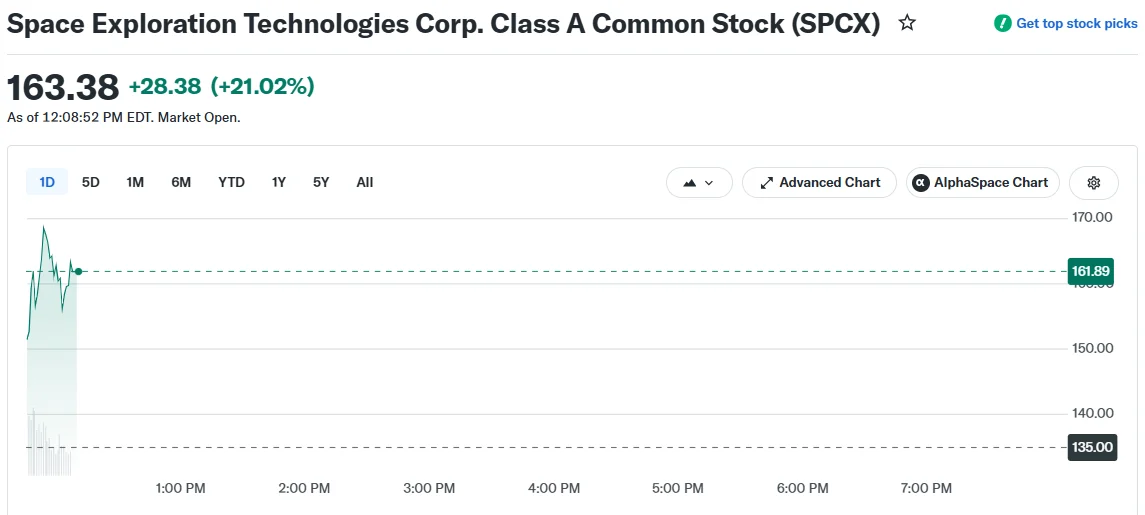
The public offering generated $75 billion in capital, establishing a new global benchmark. This figure dwarfs the previous record holder, Saudi Aramco, which raised $26 billion during its 2019 market debut.
From Starbase in South Texas, Elon Musk participated in a ceremonial bell-ringing to commemorate the trading launch. According to Forbes calculations, the listing pushed Musk’s personal wealth beyond the $1 trillion threshold, securing his position as humanity’s first trillionaire.
SpaceX set the offering price at $135 for each share and placed 555.56 million shares on the market. Reports indicate retail investor appetite exceeded $100 billion, while BlackRock submitted a single institutional purchase order worth $5 billion.
In an unconventional approach for large-scale offerings, the company designated 30% of available shares for individual retail participants. Management also bypassed the conventional roadshow circuit that investment banks ordinarily conduct to assess market interest.

SpaceX’s Core Business Operations
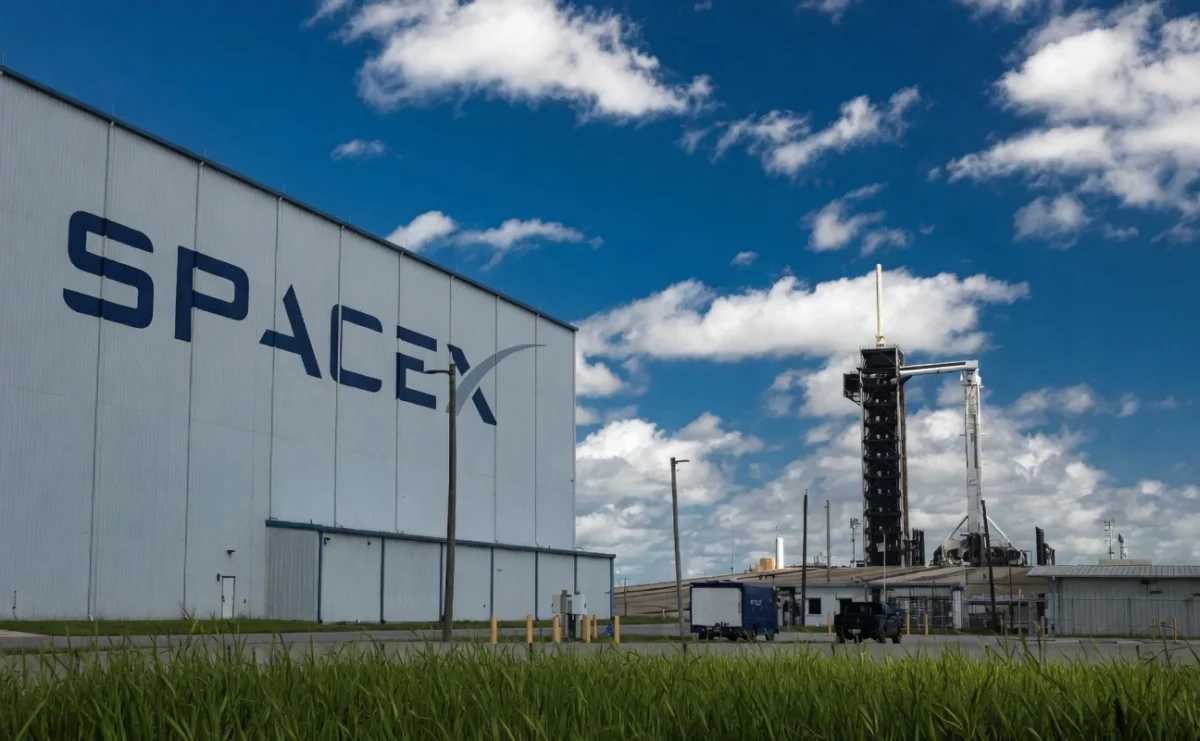
Established in 2002, SpaceX declares its purpose as enabling humanity to become a multi-planetary species. The Starlink satellite broadband network has expanded to 164 nations and generates approximately 60% of the company’s $18.67 billion in 2025 revenues.
According to company data, SpaceX operations represented over 80% of total orbital mass deployment during the previous three years. The Starlink constellation currently maintains around 10.3 million subscribers through a network of 9,600 satellites.
Early in 2026, SpaceX finalized a combination with Elon Musk’s artificial intelligence venture xAI. Oppenheimer emerged as the first prominent financial institution to issue coverage, assigning an outperform rating alongside a $190 price objective. New Street Research established a twelve-month target of $165.
Goldman Sachs scenarios contemplate AI revenues potentially expanding 100-fold to $322 billion by decade’s end, though analysts emphasize substantial uncertainty surrounding these projections.
The Skeptical Perspective
Not all market observers accept the current valuation as reasonable. Morningstar calculated an intrinsic value of merely $63 per share, characterizing the public offering as “significantly overvalued.” Professor Aswath Damodaran, a valuation authority, estimated enterprise value at $1.22 trillion, considerably beneath the IPO-implied figure.
Prominent short seller Jim Chanos dismissed the notion that the company merits a $1.75 trillion valuation “based on any reasonable assumptions.” He emphasized that SpaceX trades at approximately 90 times revenue, contrasted with Tesla’s 14 times sales multiple.
The company recorded a $4.94 billion net loss during 2025, reversing the prior year’s $791 million profit. This deficit emerged following the xAI integration. Revenue nonetheless climbed 33% compared to the previous year.
Elon Musk commands an estimated 80–85% of total voting authority, affording public shareholders minimal influence. Pension systems in California and New York distributed correspondence opposing the offering framework, highlighting super-voting stock classes and compulsory arbitration replacing traditional shareholder litigation.
S&P Global rejected fast-track inclusion of SpaceX into the S&P 500 index, suggesting passive fund purchases may materialize more gradually than certain market participants anticipated. Nasdaq modified its regulations to permit accelerated entry into Nasdaq-affiliated index products, with potential inclusion within 15 days following the listing.
Get 3 Free Stock Ebooks
Discover top-performing stocks in AI, Crypto, and Technology with expert analysis.
- Top 10 AI Stocks - Leading AI companies
- Top 10 Crypto Stocks - Blockchain leaders
- Top 10 Tech Stocks - Tech giants


