



Key Highlights
- July employment data revealed a loss of 23,000 positions, dramatically underperforming expectations of 80,000 to 95,000 new jobs
- Unemployment edged lower to 4.1% from the previous month’s 4.2% reading
- Equity futures advanced broadly, with Nasdaq 100 contracts surging 0.8% to lead major indices
- Bond yields declined sharply, with 2-year Treasuries falling to 4.18% and 10-year notes sliding to 4.62%
- Crude prices climbed amid escalating U.S.-Iran geopolitical tensions and reported explosions near the Strait of Hormuz
July’s employment report delivered a significant surprise, showing the U.S. economy eliminated 23,000 positions rather than adding the 80,000 to 95,000 jobs economists had anticipated. Meanwhile, the jobless rate ticked down modestly to 4.1% compared to June’s 4.2% figure.
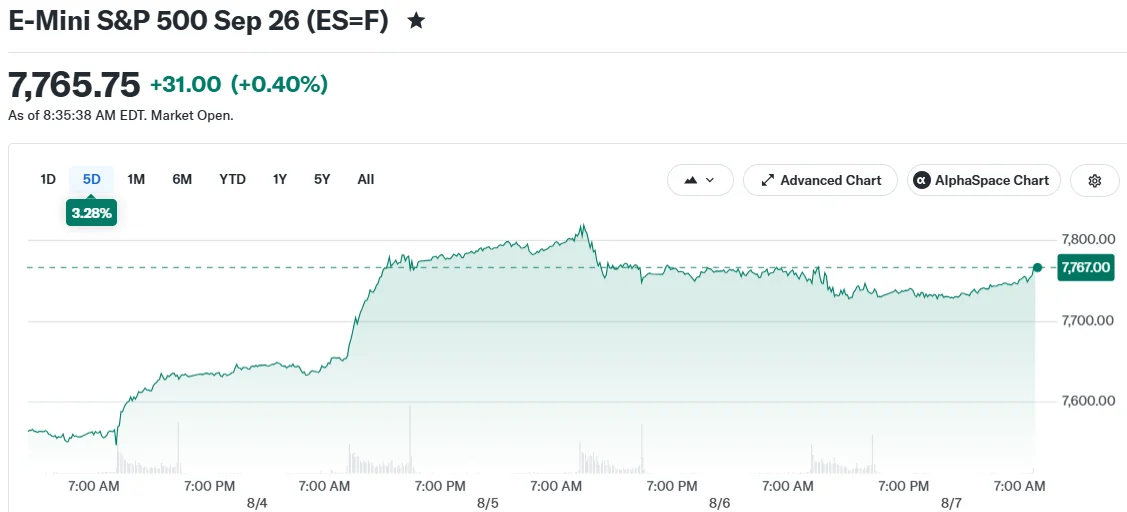
Equity index futures rallied on the disappointing labor market data. Dow Jones Industrial Average contracts advanced 0.2%, S&P 500 futures increased 0.4%, and Nasdaq 100 futures posted the strongest performance with a 0.8% rise.
The disappointing employment figures redirect attention toward Federal Reserve policy decisions at upcoming meetings. Weakening labor conditions generally diminish arguments for additional rate increases, a development equity investors typically welcome.
Bond Market Reacts to Employment Weakness
Fixed-income markets responded swiftly following the release. Two-year Treasury yields slipped to 4.18%, while benchmark 10-year yields retreated to 4.62%.
Declining yields indicate market participants are reducing expectations for further monetary tightening. The central bank continues balancing inflationary pressures against employment trends in formulating monetary policy.

Friday’s calendar also includes the New York Federal Reserve’s one-year inflation expectations survey. This measurement will provide additional insight into consumer sentiment regarding future price trajectories.
Crude Advances on Middle East Geopolitical Risks
Oil prices continued their upward trajectory Friday. The advance followed reports of detonations near the Strait of Hormuz, attributed to Iranian forces intercepting what authorities characterized as threatening objects.
Negotiations between Iranian and Omani officials regarding reopening the strategic waterway remain ongoing. Recent intelligence suggests Tehran may attempt restricting passage for American and Israeli maritime traffic through the channel.
The Strait of Hormuz represents a critical chokepoint for international petroleum transport. Disruptions affecting this passage historically trigger upward price pressure and amplify inflationary concerns.
The interplay between elevated crude prices, inflation metrics, and Treasury market dynamics will command significant attention moving forward.
Corporate earnings announcements Friday remain sparse. Vistra Corp, Oklo, Under Armour, and Wendy’s are scheduled to release quarterly results.
The convergence of underwhelming employment data, retreating bond yields, and Middle Eastern geopolitical instability creates a complex backdrop heading into Friday’s trading session.
Investors await confirmation of whether regular trading hours will validate the optimistic direction established by pre-market futures activity.
Get 3 Free Stock Ebooks
Discover top-performing stocks in AI, Crypto, and Technology with expert analysis.
- Top 10 AI Stocks - Leading AI companies
- Top 10 Crypto Stocks - Blockchain leaders
- Top 10 Tech Stocks - Tech giants


