


TLDR
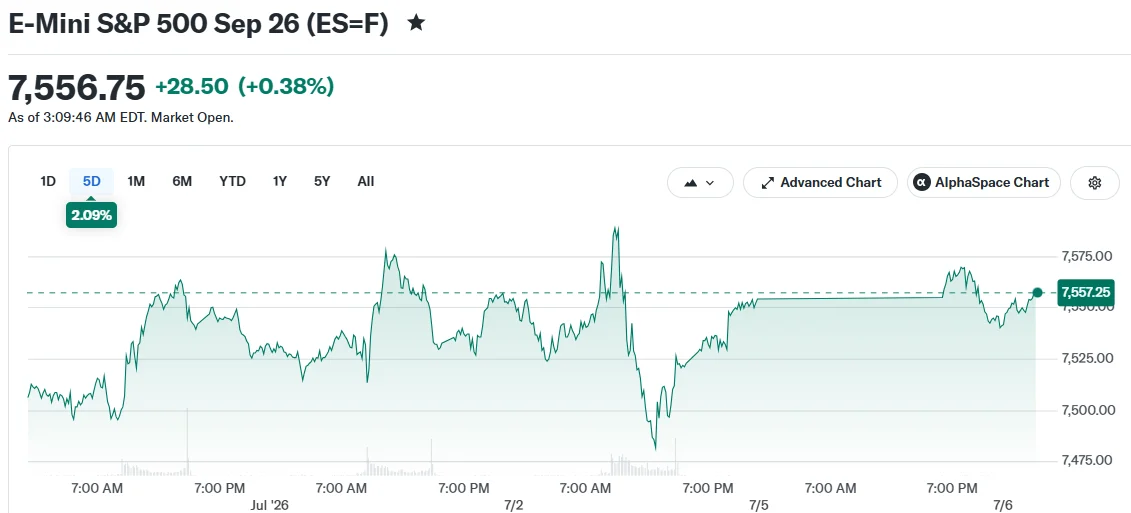
- Nasdaq 100 contracts climbed 1.1%, S&P 500 futures advanced 0.5%, while Dow contracts edged lower
- Technology sector spearheads morning rally following recent semiconductor stock decline
- Foxconn’s quarterly sales exceeded forecasts, indicating persistent artificial intelligence demand
- OPEC+ members agreed to increase production by 188,000 barrels daily in August, pressuring crude prices
- Federal Reserve meeting minutes from Chairman Kevin Warsh’s inaugural session scheduled for Wednesday release
Equity index futures showed strength Monday morning, driven predominantly by technology sector momentum. Nasdaq 100 contracts surged 1.1%, alongside a 0.5% advance in S&P 500 futures. Dow Jones Industrial Average futures edged approximately 28 points lower.
The Dow registered a fresh record close on Thursday — marking its 20th peak closing level of 2026. Each of the three primary benchmarks concluded the Independence Day-shortened trading week with gains.
Technology Sector and Artificial Intelligence Momentum Resurface
Semiconductor equities regained investor attention following a challenging period. The Invesco PHLX Semiconductor ETF has declined 11.4% through July’s trading sessions, though Monday’s futures activity hints at potential stabilization.
Foxconn, a critical manufacturing partner for Nvidia, disclosed quarterly revenue figures Sunday that surpassed Wall Street estimates. Market participants interpreted these results as evidence that artificial intelligence infrastructure spending continues robustly.
Samsung Electronics will unveil its earnings report Tuesday. Market observers anticipate the dominant memory chip manufacturer will reveal an 18-fold earnings surge versus the comparable year-ago quarter.

South Korea’s SK Hynix, ranking as the world’s second-largest memory chip producer, plans to secure over $29 billion through American depositary receipt offerings on the Nasdaq exchange this week.
JPMorgan analysts elevated their S&P 500 price objective, pointing to the artificial intelligence expansion cycle as justification. They cautioned, though, that market progression will likely include volatility.
Federal Reserve Meeting Notes and Monetary Tightening Speculation
Market participants are focused on Wednesday’s scheduled publication of Federal Reserve minutes from June’s policy gathering. The session represented Chairman Kevin Warsh’s first at the helm, following his succession of Jerome Powell in late May.
Warsh has reinforced the central bank’s 2% inflation objective. Financial markets have interpreted this stance as indicating a more restrictive monetary policy approach.
ING strategist Chris Turner noted that “the core message should be a hawkish one,” suggesting certain Fed officials may view the subsequent policy adjustment as a rate increase.
The 10-year Treasury note yield registered 4.461% in early Monday trading, declining marginally from the previous week’s levels.
A disappointing June employment report has also recalibrated rate trajectory expectations. Monday’s services sector data may provide additional insight into economic momentum.
Crude Prices Retreat Following OPEC+ Production Agreement
Oil prices declined after OPEC+ members reached consensus to boost production by approximately 188,000 barrels daily beginning in August. Saudi Arabia numbers among the participating nations.
West Texas Intermediate contracts traded beneath $69 per barrel in early Monday activity.
The Strait of Hormuz, representing a critical petroleum shipping channel, has also returned to normal operations. This development has diminished certain inflationary concerns connected to energy supply constraints.
Declining crude prices alleviate pressure on Federal Reserve policymakers and eliminate one potential inflation catalyst.
Get 3 Free Stock Ebooks
Discover top-performing stocks in AI, Crypto, and Technology with expert analysis.
- Top 10 AI Stocks - Leading AI companies
- Top 10 Crypto Stocks - Blockchain leaders
- Top 10 Tech Stocks - Tech giants


