



Key Takeaways
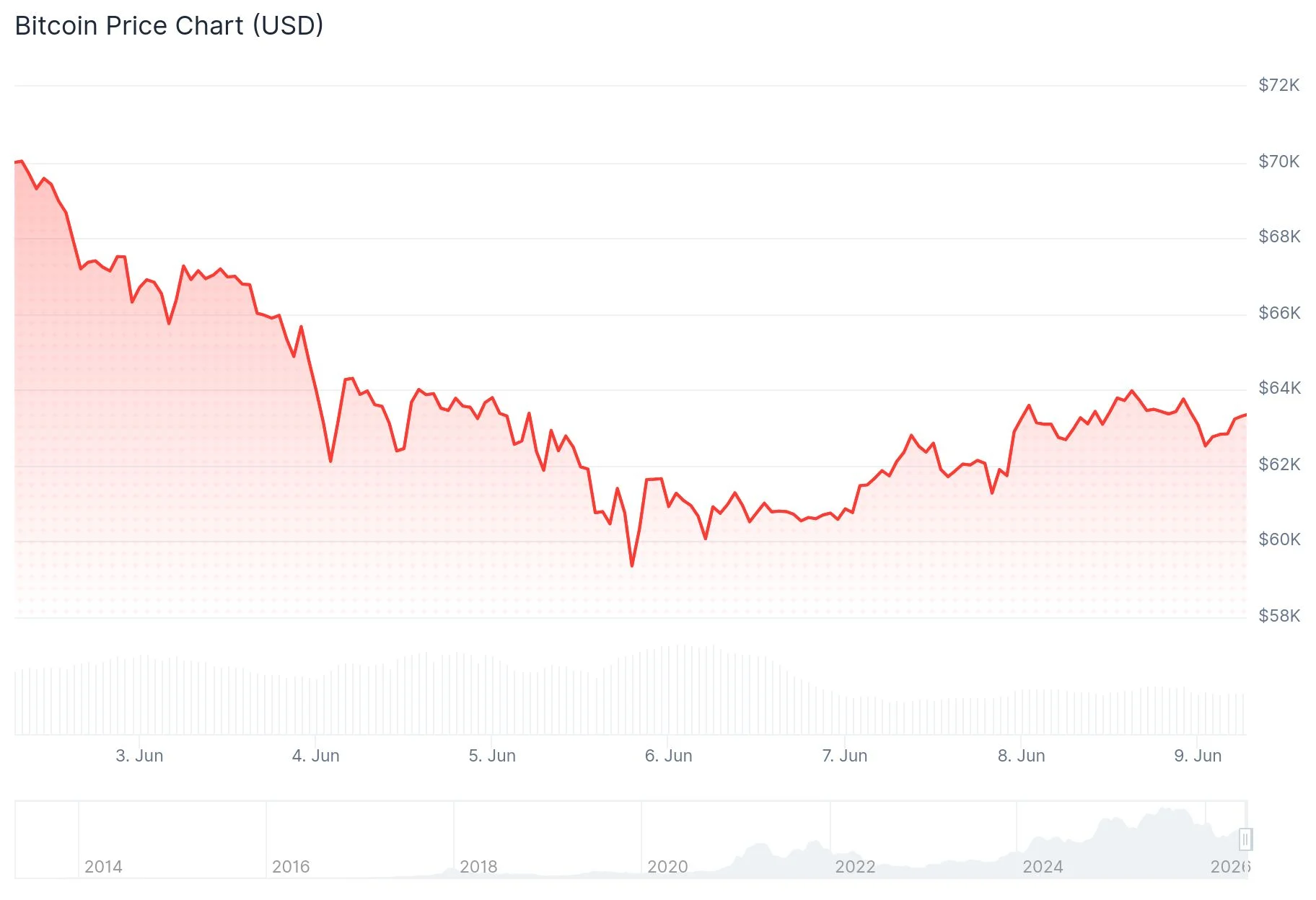
- Bitcoin declined approximately 14% last week, dropping to $60,800—the lowest point in 2026
- Strategy offloaded 32 BTC worth $2.5 million—marking its first bitcoin sale since 2022—to fund preferred stock dividend payments
- Jeff Dorman, Arca’s Chief Investment Officer, argues the sale indicated potential forced selling, dismissing AI rotation theories
- Michael Saylor attributed the decline to approximately $400 billion shifting toward AI infrastructure, data centers, and semiconductor investments
- Despite holding more than 843,000 BTC, Strategy faces roughly $10 billion in unrealized losses at current prices
Bitcoin experienced a sharp decline of nearly 14% throughout last week, momentarily hitting $60,800—a 2026 low. The sudden downturn has triggered heated debate about its underlying causes.
Michael Saylor, Executive Chairman of Strategy, attributes the correction to capital reallocation into artificial intelligence infrastructure. However, Arca, a prominent crypto investment firm, disputes this interpretation.
Saylor’s AI Infrastructure Thesis
In a post on X, Saylor suggested capital markets are channeling unprecedented funds into AI infrastructure development. He referenced approximately $400 billion moving into data center construction and semiconductor chips within a six-month period, with 2026 technology spending projections exceeding $600 billion.
He framed the movement as capital rotation rather than market deterioration. “Volatility creates opportunity,” Saylor stated.
Saylor further highlighted Bitcoin ETF withdrawal patterns. According to Farside Investors data, over $4.3 billion worth of BTC has exited ETF products since May 14, with zero positive inflow days recorded after May 13.
Bitcoin currently trades around $63,000, representing approximately a 50% decline from its $124,000 all-time peak. Strategy shares have fallen 66% year-over-year.

Arca Challenges the Narrative
In his weekly market commentary, Arca CIO Jeff Dorman asserted the selling pressure stemmed “clearly due to the Saylor/MSTR news,” dismissing Saylor’s AI explanation as “gaslighting.”
Dorman’s analysis focuses less on the transaction volume—32 BTC valued at roughly $2.5 million represents a minimal amount—and more on its broader implications. This marked Strategy’s initial bitcoin liquidation since 2022, specifically designated for preferred stock dividend obligations.
This development raised critical market concerns: if Strategy needed to sell bitcoin for one month’s dividend payments, how will subsequent months be managed?
Dorman observed that Strategy possesses approximately five months of operational cash flow. The company recently allocated cash reserves to retire $1.5 billion in convertible debt instruments at a discount, reducing available liquidity for future dividend commitments.
Strategy’s preferred equity STRC dropped beneath its $100 par value to $95.35, indicating market participants are factoring in elevated risk.
Potential Path to Market Stability
Dorman presented a scenario that could restore investor confidence. If Strategy secured $2 to $4 billion through equity issuance and bitcoin liquidation while publicly disclosing this via an 8-K regulatory filing, ensuring preferred dividend coverage through September 2028, he anticipates the market would respond positively.
However, he questions whether Saylor will pursue this approach. “Saylor is basically addicted to buying Bitcoin,” Dorman noted. The more probable outcome, according to Dorman’s assessment, involves modest monthly bitcoin sales sufficient only for dividend obligations—creating persistent, incremental selling pressure.
Strategy maintains 843,706 BTC acquired at an average cost basis of $75,699. With bitcoin trading near $63,000, the holdings show approximately $10 billion in unrealized losses. While these losses remain on paper, they continue impacting stock performance.
Among 18 analysts tracking Strategy stock, 15 assign it a strong buy rating. The consensus price target stands at $363.62.
Dorman offered one positive observation: earlier in the week, bitcoin declined independently while other cryptocurrency assets maintained stability. He interpreted this as evidence of advancing market maturity—investors conducting individual asset assessments rather than indiscriminate selling across all holdings.
Get 3 Free Stock Ebooks
Discover top-performing stocks in AI, Crypto, and Technology with expert analysis.
- Top 10 AI Stocks - Leading AI companies
- Top 10 Crypto Stocks - Blockchain leaders
- Top 10 Tech Stocks - Tech giants


