



Key Highlights
- Nasdaq 100 futures declined more than 1%, while S&P 500 futures retreated 0.5% during Friday’s pre-market session
- Reports from The New York Times indicate OpenAI might postpone its public offering until 2027, weighing heavily on technology sector sentiment
- Memory chip cost inflation flagged by Apple’s MacBook and iPad price increases signals continued supply chain pressures
- Overnight trading saw South Korea’s KOSPI plummet 5.8% amid steep losses in SK Hynix and Samsung Electronics
- Cryptocurrency markets weakened with Bitcoin declining 2.1% to $60,530 within a 24-hour period
Technology equities appeared poised for another challenging trading session Friday morning, as futures contracts signaled widespread losses following a week dominated by persistent selling pressure.
Nasdaq 100 futures contracts retreated approximately 1.1%. S&P 500 futures declined 0.5%. Dow Jones Industrial Average futures slipped roughly 0.1%.
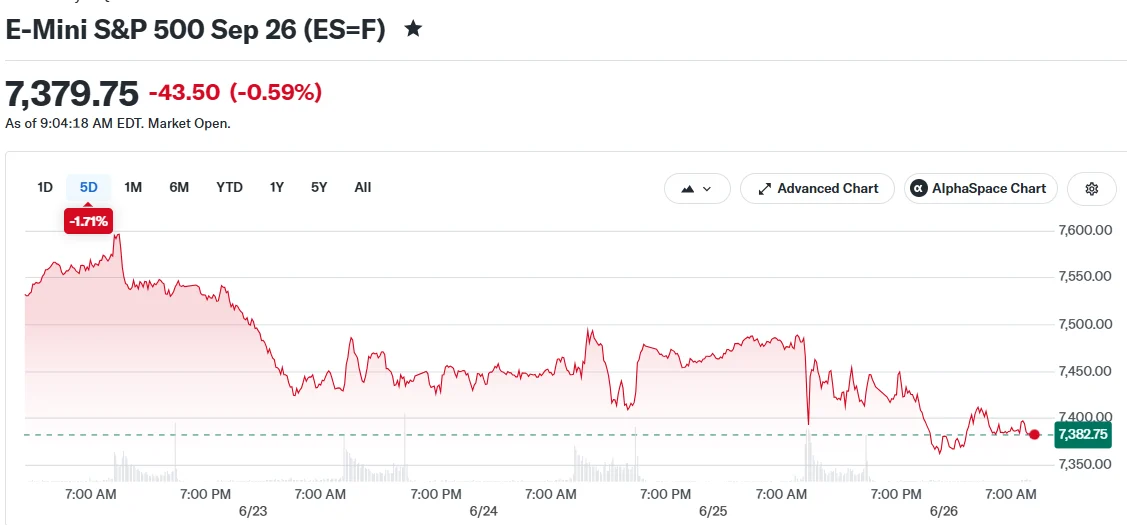
The previous trading session on Thursday represented the fourth consecutive day of losses for both the S&P 500 and Nasdaq indices.
Delayed Public Offering Plans Amplify Tech Sector Concerns
Reporting from The New York Times revealed that OpenAI intends to postpone its much-anticipated initial public offering until 2027. The disclosure contributed to deteriorating sentiment across the broader technology landscape entering Friday’s trading hours.
Equities including Oracle and other companies closely associated with the artificial intelligence revolution experienced downward pressure following the disclosure.

The AI investment thesis was already facing headwinds. Increasing speculation that the Federal Reserve might implement interest rate hikes during the current year has intensified pressure. Strong May figures from the Personal Consumption Expenditures index maintained the possibility of monetary tightening.
A market strategist cautioned that the supremacy of mega-cap technology companies could be beginning to weaken. Richard Reyle, who serves as chief investment officer at Questar Capital Partners, advised that investors should avoid accumulating Big Tech or AI-related equities at prevailing valuations.
“We are not at that point yet, but we are getting closer,” Reyle said.
Component Price Inflation Pressures Electronics Manufacturers
Apple announced price increases across its MacBook and iPad product lines, citing escalating memory and storage component expenses. The decision underscored how semiconductor supply constraints are beginning to impact consumer electronics producers.
Recent quarterly results from Micron demonstrated robust performance while simultaneously indicating that cost pressures will persist.
Memory semiconductor manufacturers including Micron and Sandisk had contributed significantly to market gains throughout 2026. However, market participants are now questioning the sustainability of this momentum.
The primary anxiety centers on whether a major AI infrastructure provider might signal reduced capital expenditure plans, potentially catalyzing a broader sector-wide retreat.
Overnight trading in South Korea witnessed the KOSPI index plummeting 5.8%. Memory chip giants SK Hynix and Samsung Electronics spearheaded the downturn.
Oil prices experienced sharp declines as well. Brent crude fell more than 2% to approximately $73.82 per barrel. West Texas Intermediate decreased to roughly $70.23. Maritime tanker operations continued through the Strait of Hormuz notwithstanding Thursday’s attack on a Singapore-registered cargo vessel by Iran’s Revolutionary Guard forces.
The US dollar remained essentially unchanged. The benchmark 10-year Treasury yield edged lower by one basis point to 4.38%.
Bitcoin tumbled 2.1% across a 24-hour timeframe to $60,530, mirroring the diminished risk appetite throughout financial markets.
Heading into Friday’s opening bell, all three primary US equity index futures indicated lower openings, prolonging a difficult week for technology and artificial intelligence-related securities.
Get 3 Free Stock Ebooks
Discover top-performing stocks in AI, Crypto, and Technology with expert analysis.
- Top 10 AI Stocks - Leading AI companies
- Top 10 Crypto Stocks - Blockchain leaders
- Top 10 Tech Stocks - Tech giants


