


Key Takeaways
- Shares of Tesla declined 6% on Friday following a disappointing Cybercab unveiling event
- The presentation was private, lacked a public livestream, and excluded CEO Elon Musk from attendance
- Federal safety regulators launched an audit examining the Cybercab’s self-certification process for road use
- Analysts from RBC and Wells Fargo noted significant gaps regarding cost structure, manufacturing schedules, and initial service problems in Austin
- The selloff reversed Thursday’s 5.4% rally that preceded the unveiling
Tesla (TSLA) stock tumbled 6% on Friday as the electric vehicle maker’s Cybercab unveiling event in Austin, Texas failed to satisfy investor expectations.
Shares had climbed 5.4% the previous day as traders positioned ahead of the presentation, setting up Friday’s downturn as a notable swing.
Thursday’s presentation remained private with no public streaming option available, and notably, CEO Elon Musk was absent. The company permitted Tesla Robotaxi app users to schedule autonomous Cybercab trips within a restricted operational zone in Austin.
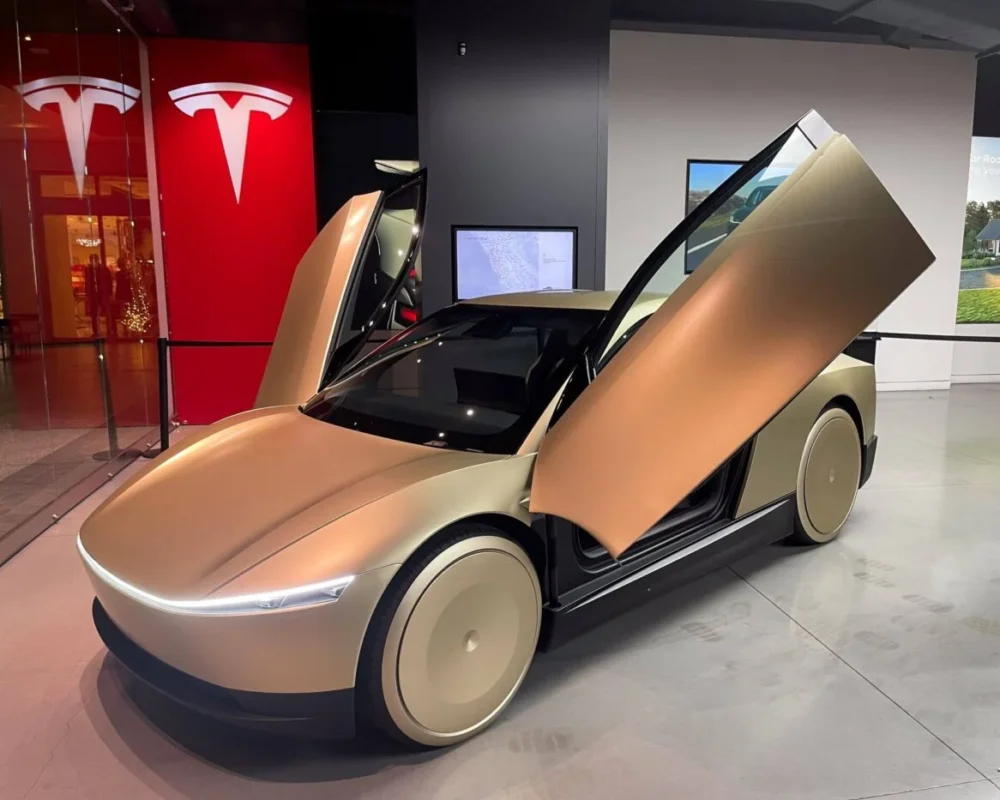
The Cybercab represents a two-passenger autonomous taxi featuring butterfly-style doors while eliminating traditional driving controls including the steering wheel, brake, and accelerator pedals. Production commenced at the company’s Texas manufacturing facility earlier this year.

Analysts at RBC Capital Markets characterized the event as providing “limited new incremental disclosure relative to prior announcements,” noting that critical details around pricing structure, manufacturing timelines, and regulatory clearances remain unclear. The firm continues recommending the stock as a buy.
In a research note titled “TSLA Cybercab Launch Event Underwhelms,” Wells Fargo highlighted emerging operational challenges in Austin. Riders have documented navigation errors, destination failures, and extended pickup delays.
Federal Safety Review Initiated
Separately on Thursday, the National Highway Traffic Safety Administration initiated an audit inquiry examining Tesla’s self-certification procedures for the Cybercab. The regulatory body is assessing the methodology and engineering documentation Tesla submitted to certify compliance with Federal Motor Vehicle Safety Standards.
The agency specifically highlighted that the Cybercab omits standard manual controls such as a steering wheel, brake and accelerator pedals, and side mirrors. Tesla VP of Vehicle Engineering Lars Moravy had indicated the Cybercab was engineered for federal compliance from inception, enabling self-certification instead of requesting regulatory exemptions.
The exemption pathway restricts automakers to 2,500 vehicles annually.
Texas Expansion and Industry Competition
The company’s autonomous ride service has extended beyond Austin into Dallas and Houston markets. The Cybercab made its initial appearance approximately two years ago and entered manufacturing in April.
Alphabet-owned Waymo currently dominates the autonomous taxi sector with approximately 4,000 self-driving vehicles providing commercial rides throughout 14 metropolitan areas.
Musk has indicated that substantial revenue generation from the Cybercab platform is not anticipated until 2027 or later.
Get 3 Free Stock Ebooks
Discover top-performing stocks in AI, Crypto, and Technology with expert analysis.
- Top 10 AI Stocks - Leading AI companies
- Top 10 Crypto Stocks - Blockchain leaders
- Top 10 Tech Stocks - Tech giants


