


TLDRs
- TSMC surged 9% weekly as AI chip demand accelerated globally.
- Nvidia also rose but lagged behind TSMC’s stronger rally.
- Semiconductor stocks gained broadly on easing inflation and demand hopes.
- Investors favored chip manufacturing exposure over design-heavy AI plays.
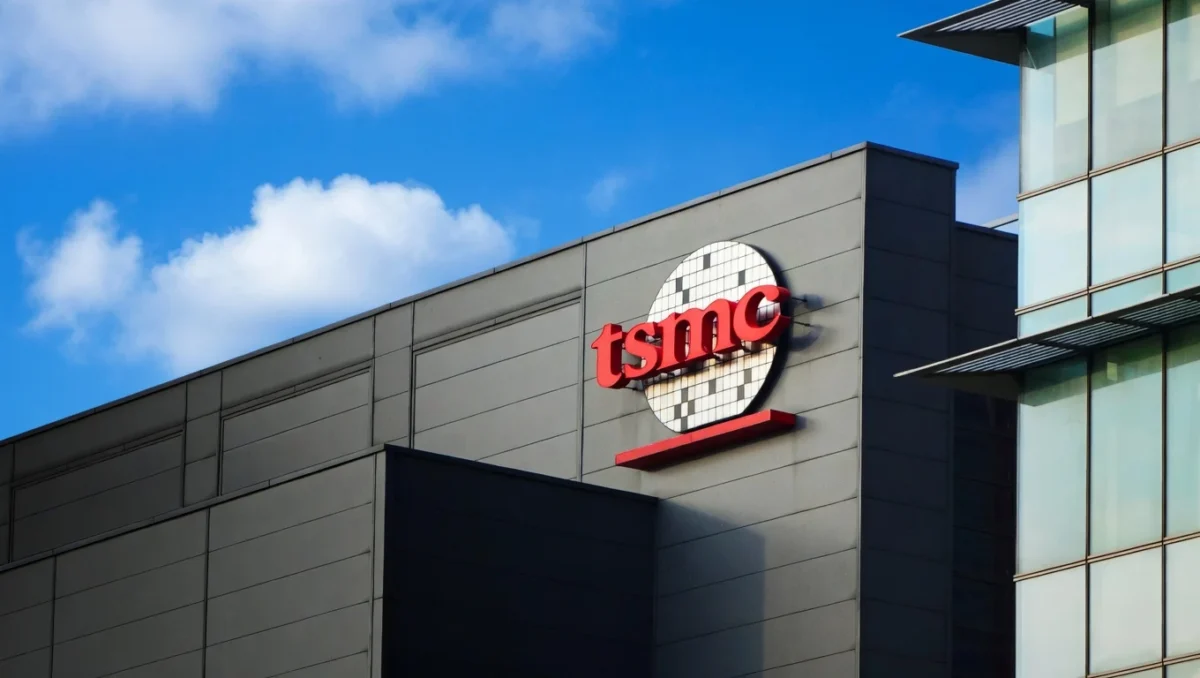
The Taiwanese foundry rose roughly 9% over four sessions, marking a clear lead over Nvidia (NASDAQ: NVDA), which posted more modest gains of about 2.7% for the week.
The rally highlights a growing shift in investor positioning within the AI supply chain, with capital increasingly flowing toward semiconductor manufacturing capacity rather than only chip design leaders. While Nvidia remains central to AI processor innovation, TSMC’s role as the world’s leading advanced chip foundry has placed it at the heart of production bottlenecks driving the current cycle.
Taiwan Semiconductor Manufacturing Company Limited, TSM
Broad Semiconductor Strength
The wider chip sector also posted strong performance, with the PHLX Semiconductor Index rising more than 7% during the week. The gains came as easing geopolitical tensions and improving macro sentiment supported risk assets. A temporary U.S.-Iran diplomatic development helped ease concerns around energy prices, reducing inflationary pressure and lifting broader equity markets, including the Nasdaq, which added nearly 2.4% for the week.
However, the standout performer remained TSMC, which consistently outpaced peers throughout the session. On the final trading day before the U.S. Juneteenth holiday and Taiwan’s Dragon Boat Festival closure, TSMC’s U.S.-listed shares climbed nearly 7% in a single session, finishing at $462.12.

AI Capacity Bottlenecks Intensify
Investor enthusiasm is increasingly tied to supply constraints across advanced semiconductor manufacturing. TSMC executives have repeatedly emphasized that demand continues to exceed available production capacity, particularly for cutting-edge AI chips used by major cloud providers and global technology firms.
CEO C.C. Wei recently reiterated that the company is operating at full intensity to meet customer demand, noting that supply constraints remain a structural feature of the current AI cycle. This imbalance has reinforced TSMC’s pricing power and strengthened its strategic position within the global technology ecosystem.
At the same time, Taiwan’s central bank upgraded its 2026 growth outlook sharply, citing AI-related semiconductor demand as a key driver of national economic expansion. While not a direct forecast for TSMC alone, the revision underscored how central the chip industry has become to broader economic performance.
Nvidia Expands Financial Firepower
Nvidia also contributed to sector momentum, albeit from a different angle. The company recently announced a $25 billion bond issuance, its first investment-grade debt deal since 2019, which attracted exceptionally strong demand. Proceeds are expected to support general corporate purposes, including refinancing and strategic flexibility as AI infrastructure spending accelerates globally.
In addition, Nvidia continues to expand its international AI footprint, with new infrastructure deployments in Europe reinforcing its role in global AI buildouts. Despite increasing policy discussions around technological sovereignty, demand for Nvidia’s hardware remains resilient across data center markets.
Market Rotation Favors Foundries
The relative outperformance of TSMC compared to Nvidia signals a subtle but important rotation within AI-related equities. Investors appear to be placing higher value on companies controlling physical production capacity, especially as demand for advanced semiconductors continues to outstrip supply.
While Nvidia remains a dominant force in AI compute design, TSMC’s position as the backbone of global chip manufacturing has given it a stronger near-term momentum advantage. The divergence does not indicate weakening demand for Nvidia products, but rather a recalibration of where investors see the tightest constraints and pricing power in the AI ecosystem.
Looking ahead, market participants are watching several catalysts, including Nvidia’s upcoming shareholder meeting, Micron’s earnings release, and fresh U.S. inflation data. These events could influence expectations around interest rates and AI capital expenditure trends, both of which remain critical drivers for semiconductor valuations.
For now, however, TSMC has clearly taken the lead in the AI chip rally, with its manufacturing dominance positioning it as one of the strongest beneficiaries of the ongoing technology supercycle.
Get 3 Free Stock Ebooks
Discover top-performing stocks in AI, Crypto, and Technology with expert analysis.
- Top 10 AI Stocks - Leading AI companies
- Top 10 Crypto Stocks - Blockchain leaders
- Top 10 Tech Stocks - Tech giants


