


Key Highlights
- President Trump and Iranian President Masoud Pezeshkian formalized a peace agreement at France’s Versailles palace, concluding hostilities that erupted in February 2026.
- The critical Strait of Hormuz waterway — responsible for transporting roughly 20% of global petroleum supplies — will resume operations, contributing to Brent crude prices falling beneath the $80 per barrel threshold.
- Both nations have committed to a two-month diplomatic period focused on resolving Iran’s nuclear development concerns, with negotiations scheduled in Switzerland.
- Tehran secures relief from certain economic sanctions plus access to a $300 billion reconstruction initiative, though Washington confirmed no American taxpayer funds will be allocated.
- Multiple GOP lawmakers have condemned the agreement, with critics labeling it among the most catastrophic diplomatic failures in recent memory.
A groundbreaking accord between Washington and Tehran ends military confrontation and restores access to the world’s most strategic oil passage, while launching intensive nuclear program discussions.
The United States and the Islamic Republic of Iran have finalized a comprehensive agreement terminating their armed conflict and restoring navigation through the Strait of Hormuz. The historic pact was executed by President Donald Trump alongside Iranian President Masoud Pezeshkian at the iconic Versailles palace in France this Wednesday, coinciding with a Group of Seven leaders’ gathering.
The ceremonial signing occurred ahead of schedule. Officials had originally arranged for a formal ratification event in Switzerland on June 19, but Trump opted to proceed during an evening reception hosted by French President Emmanuel Macron.
The preliminary digital execution took place this past Sunday, with Vice President JD Vance and Iranian Parliament Speaker Mohammad Bagher Ghalibaf affixing their signatures electronically. The principal leaders formalized the document on Wednesday.
Core Provisions of the Agreement
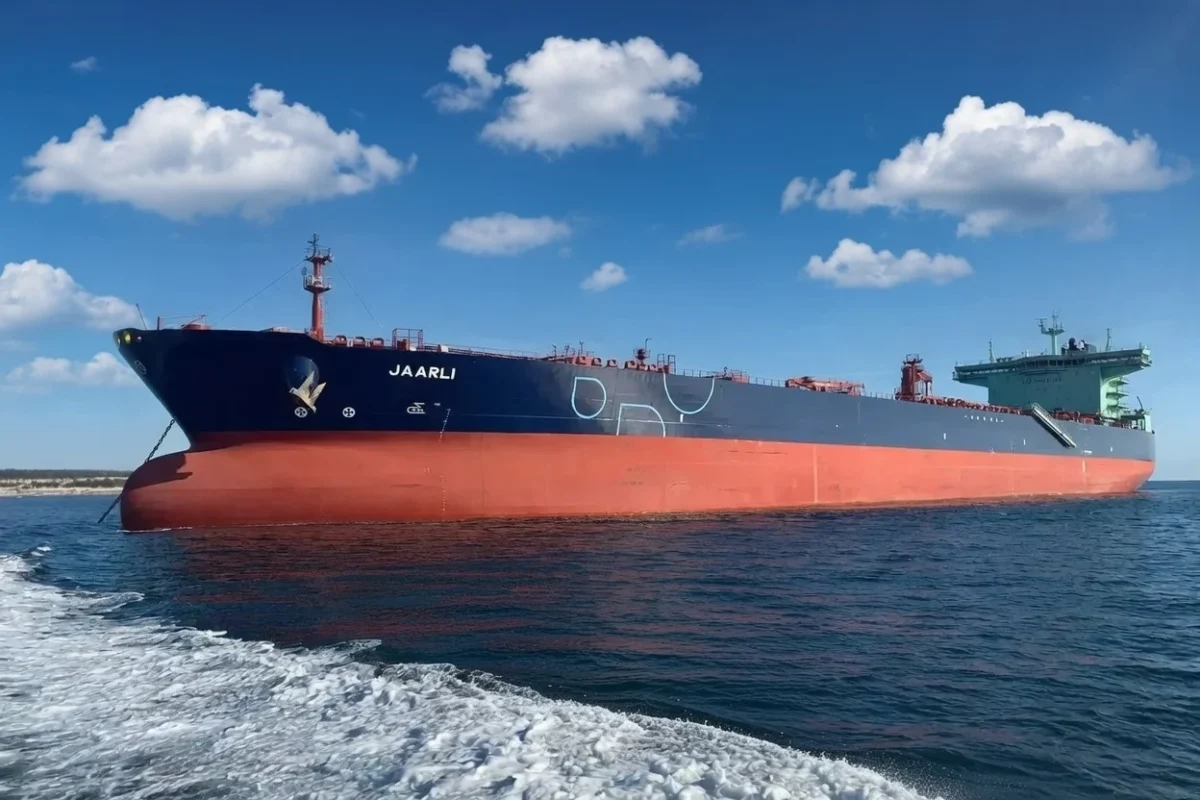
The memorandum of understanding establishes an unconditional cessation of all hostile activities. Critically, it restores full operational status to the Strait of Hormuz, which has remained functionally blockaded since confrontations commenced in February. This narrow waterway facilitates the transport of approximately one-fifth of the [[LINK_START_0]]world’s oil[[LINK_END_0]] supplies and liquefied natural gas shipments.

Under the terms, the strategic passage will operate toll-free for an initial sixty-day period. Following this timeframe, transit fees may potentially be implemented.
Washington has agreed to suspend enforcement of select sanctions targeting Iran. The framework outlines a $300 billion reconstruction financing mechanism for Iranian infrastructure rehabilitation, though President Trump explicitly stated American government resources will not contribute to this fund.
Global petroleum markets demonstrated immediate sensitivity to the announcement. Brent crude prices descended below the $80 per barrel mark earlier this week, though prices recovered partially during Wednesday trading sessions.
Nuclear Program Discussions and Political Backlash
A sixty-day diplomatic window for nuclear-focused negotiations has officially commenced. High-level discussions are scheduled to convene in Switzerland spanning Friday through Sunday. Iranian officials have consistently characterized their nuclear development initiatives as exclusively peaceful in nature. The International Atomic Energy Agency has documented that Iran represents the sole nation to have enriched uranium to 60% concentration levels without maintaining an acknowledged weapons development program.
The current agreement excludes provisions addressing Iran’s ballistic missile capabilities. President Trump indicated missile technology will constitute a separate negotiation track in subsequent diplomatic engagements.
Former Vice President Mike Pence criticized the memorandum for containing “no mention of verifiably dismantling the nuclear weapons program.”
Senator Ted Cruz characterized the arrangement as providing “billions of dollars to theocratic lunatics.” Senator Bill Cassidy denounced it as the “worst foreign policy blunder in decades,” emphasizing that thirteen American military personnel perished and the Strait of Hormuz had been freely navigable prior to the conflict’s initiation.
Senator Lindsey Graham assessed the memorandum as representing more of an outline than a comprehensive finalized agreement.
Trump defended the diplomatic resolution, asserting that continued military confrontation “could have caused an international depression.” He simultaneously warned that American military forces would execute additional strikes against Iran should leadership fail to uphold commitments.
The President suggested he might authorize the release of billions in frozen Iranian financial assets, arguing the dollar’s international credibility necessitates such action. Iran’s immobilized assets have represented a persistent source of bilateral tension.
Pakistan’s President Shehbaz Sharif, who facilitated mediation efforts, verified the agreement enters into “immediate effect.”
President Trump clarified the 60-day timeframe for nuclear negotiations should not be interpreted as an absolute deadline. “Just as long as they’re behaving,” he explained to journalists.
Get 3 Free Stock Ebooks
Discover top-performing stocks in AI, Crypto, and Technology with expert analysis.
- Top 10 AI Stocks - Leading AI companies
- Top 10 Crypto Stocks - Blockchain leaders
- Top 10 Tech Stocks - Tech giants


