



Key Takeaways
- An exploit targeting a legacy Rain card smart contract resulted in the theft of approximately $1.1 million from various Solana-based platforms
- Avici suffered $500,800 in damages impacting 1,685 cardholders; Tria experienced losses exceeding $430,000 across 636 users
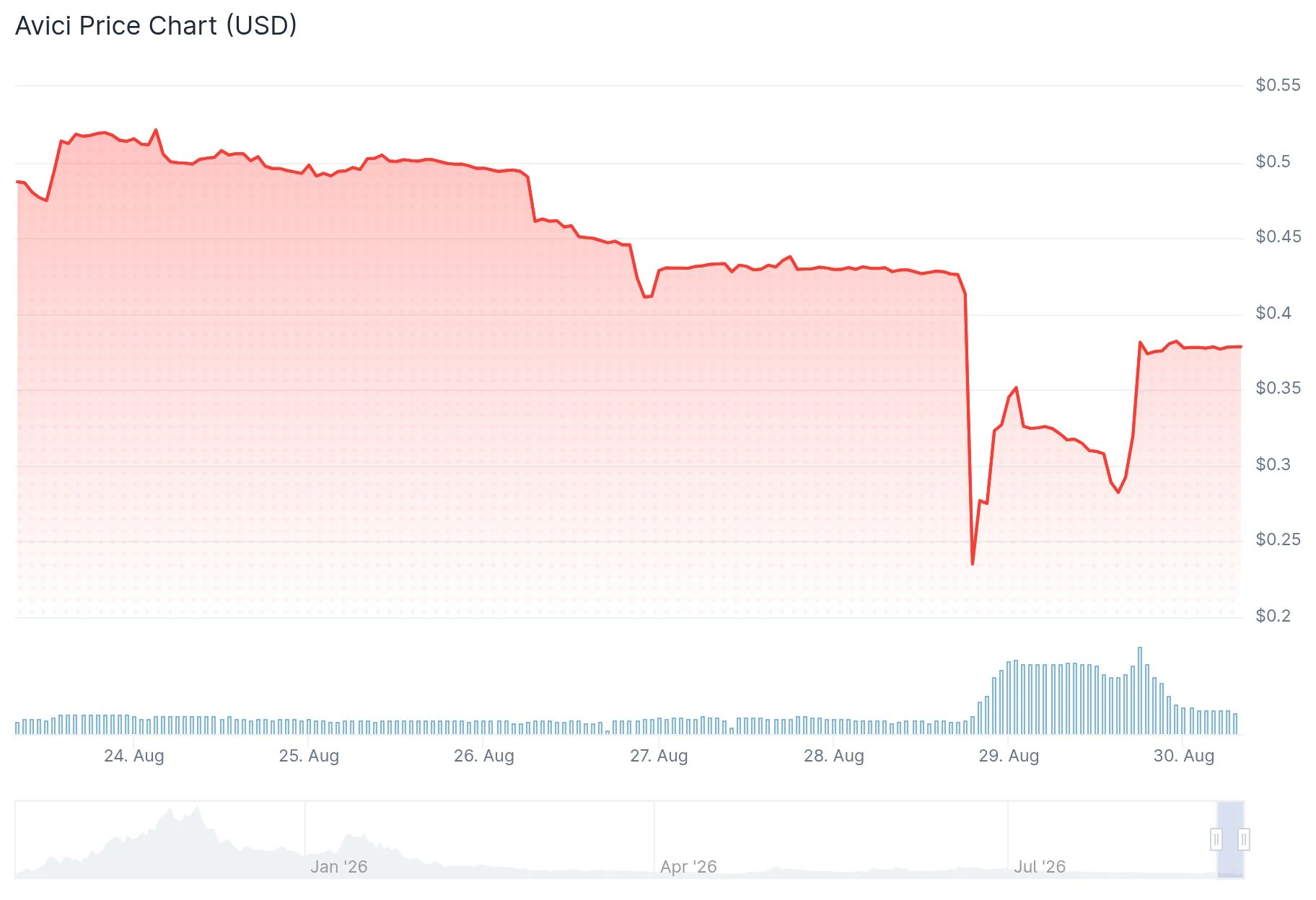
- AVICI token plunged 49% from its daily peak, reaching an all-time low of $0.217
- Hackers converted stolen stablecoins to SOL, transferred them to Ethereum, and laundered funds through Tornado Cash
- Avici and Tria have committed to full user reimbursement; Avici has notified federal authorities
A security flaw in a deprecated smart contract has resulted in a $1.1 million theft affecting several Solana-based crypto card platforms, with the majority of damages impacting customers of digital banks Avici and Tria.
Rain, the infrastructure provider operating as a Visa principal member for stablecoin-based card services, stated that its security systems identified the vulnerability in a legacy contract version. The company has since upgraded all programs utilizing the compromised version and confirmed no additional unauthorized transactions have occurred.
The perpetrator leveraged the security weakness by repeatedly submitting signed authorizations, granting themselves administrative privileges to individual card-backed accounts, then draining the funds systematically.
Following the theft, the perpetrator converted the stolen stablecoins to Solana, transferred them cross-chain to Ethereum, and obscured the trail using the Tornado Cash mixing service.
Avici Bears the Brunt of Losses
Avici, a non-custodial digital bank enabling cryptocurrency spending through Visa-integrated payment cards, confirmed losses totaling $500,800 affecting 1,685 customers.

According to the platform, the breach was confined to a specific Solana smart contract that temporarily stored customer funds following card top-ups. Non-custodial wallets on Solana and Ethereum-based networks remained secure and uncompromised.
Avici has committed to fully reimbursing all impacted cardholders. The platform has also submitted a formal complaint to the FBI’s Internet Crime Complaint Center. Details regarding reimbursement timing and funding mechanisms have not yet been revealed.
The AVICI token experienced a steep decline of 49% from its 24-hour peak of $0.43, bottoming out at an unprecedented $0.217 before rebounding to approximately $0.378.
Tria Confirms Breach, Commits to Total Reimbursement
Tria, another digital banking platform powered by Rain’s infrastructure, confirmed that 636 customers were compromised, with total losses surpassing $430,000.
Tria has promised complete reimbursement for all affected users. The platform’s native token also experienced volatility, declining over 10% temporarily in the aftermath of the disclosure.
Neither platform has publicly identified additional Rain-powered services that may have been compromised, and the comprehensive loss figure across all affected platforms remains undisclosed.
The discrepancy between the $1.1 million tracked through blockchain analysis and Avici’s confirmed losses indicates that additional Rain-integrated platforms likely suffered breaches as well.
Broader Industry Context
This security incident occurs during a period of rapid expansion in crypto card adoption. Monitored crypto-card transactions surged more than threefold to $1.04 billion in July, with stablecoins accounting for 70% of over 10 million individual transactions.
The breach underscores a critical custody distinction for cryptocurrency card users. While funds maintained in Avici’s non-custodial wallet infrastructure remained secure, capital transferred onto cards migrated to a third-party smart contract where the vulnerability was exploited.
According to Avici’s service terms, Third National serves as the official card issuer, with Rain delivering the underlying technological infrastructure.
Get 3 Free Stock Ebooks
Discover top-performing stocks in AI, Crypto, and Technology with expert analysis.
- Top 10 AI Stocks - Leading AI companies
- Top 10 Crypto Stocks - Blockchain leaders
- Top 10 Tech Stocks - Tech giants


