


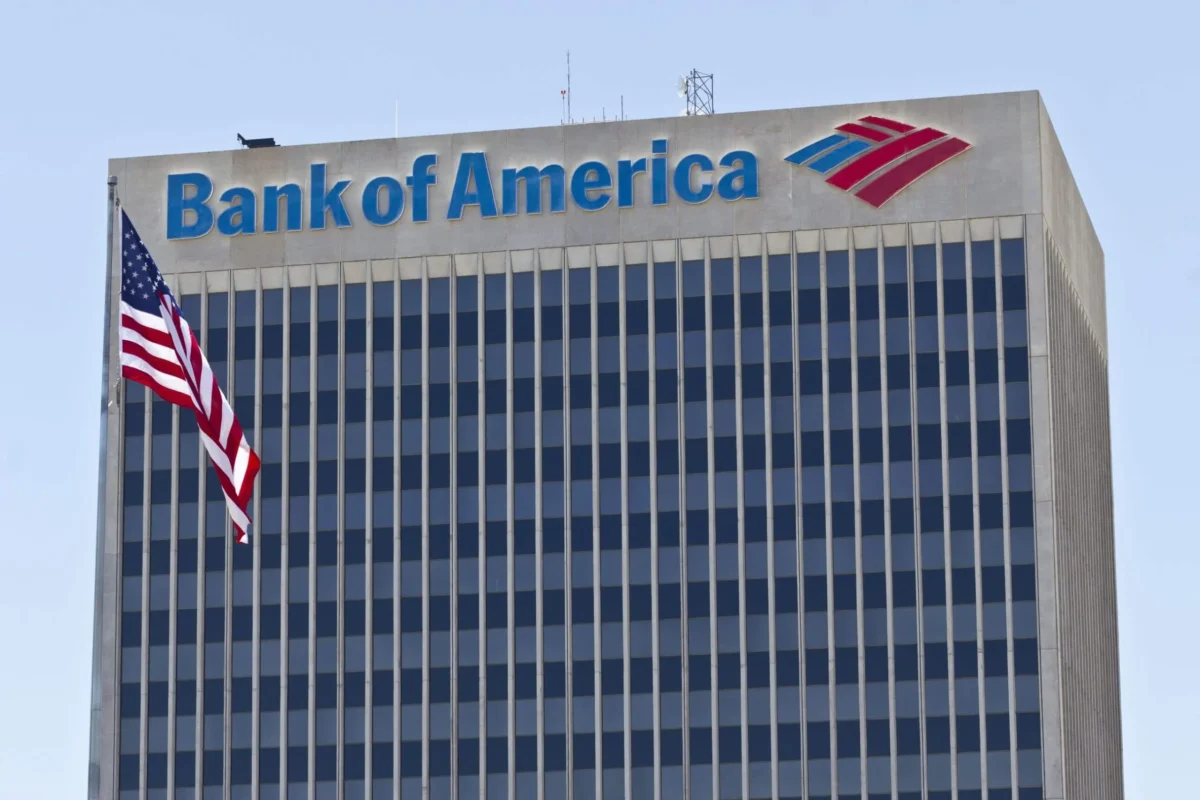
- Bank of America has identified five semiconductor companies as essential investments for Q4: Nvidia, Intel, Marvell, Micron, and Lam Research.
- The firm increased its AI data center market projection to $2.2 trillion by 2030, representing a significant increase from its previous $1.8 trillion estimate.
- In a concurrent analysis, BofA strategists cautioned that declining AI investor sentiment, rather than rising bond yields, represents the most significant threat to U.S. equity markets.
- The top 20 performing S&P 500 companies have generated approximately $1.7 trillion in additional value since late August, while the remaining 480 components have collectively shed roughly $1.9 trillion.
- According to BofA, the current market dynamic mirrors the traditional “Fed put,” except AI optimism has replaced central bank intervention as the primary market support mechanism.
Bank of America published a research note Thursday identifying its preferred semiconductor investments for the upcoming fourth quarter. The quintet of companies includes Nvidia, Intel, Marvell, Micron, and Lam Research.
The firm’s analysts highlighted historical performance patterns, noting that chip stocks have consistently outperformed during Q4 and Q1 periods since 2010. Throughout this timeframe, semiconductor equities have typically exceeded S&P 500 returns by 300 to 500 basis points during these seasonal windows.
Each recommendation comes with specific near-term catalysts. Nvidia faces positive momentum from forthcoming GTC conference events and an enhanced share repurchase program. Intel stands to benefit from strengthening demand for agentic CPU applications and potential foundry contract announcements.
Micron plans to initiate a fresh buyback program beginning December 9. Marvell has scheduled an Analyst Day presentation for October 6, while experiencing robust growth in custom silicon demand. Lam Research appears positioned to capture additional market share across memory and logic chip segments.

BofA Boosts AI Infrastructure Projections
The financial institution has revised upward its outlook for the AI data center sector. Current projections anticipate the market reaching $2.2 trillion by decade’s end, a substantial upgrade from the previous $1.8 trillion forecast. This trajectory implies approximately 40% compound annual growth.
According to BofA, several factors support sustained high spending levels: accelerating demand for AI agent technologies, intensifying competition among AI research laboratories, and constrained semiconductor supply. The bank further suggests that any deceleration in AI advancement, or implementation of stricter AI model regulations, would paradoxically drive increased computing requirements.
Aggregate capital expenditures from leading American and Chinese cloud infrastructure providers are projected to approach $1 trillion during the current year. BofA forecasts this figure could climb to $1.4 trillion by 2027 and potentially range between $2 trillion and $3 trillion by 2030.
The firm also emphasized that semiconductor valuations remain attractive. The SOX semiconductor index currently trades at 21 times forward earnings—approximately 12% below its median valuation since ChatGPT’s November 2022 debut.
The Emerging “AI Put” Phenomenon
In companion research, BofA Global Research strategists identified a distinct market concern. They contend that escalating bond yields represent a secondary risk compared to the primary threat: potential erosion of investor confidence in artificial intelligence.
This dynamic has been dubbed the “AI put.” The terminology draws parallels to the historic “Fed put” concept, where market participants expected Federal Reserve intervention during periods of market stress. BofA maintains that AI-driven optimism now fulfills this market-stabilizing function.
Recent market performance data supports this thesis. Since August 31, the S&P 500’s top 20 performers have accumulated approximately $1.7 trillion in additional market capitalization. Conversely, the index’s remaining 480 constituents have experienced combined losses totaling roughly $1.9 trillion.
Smaller capitalization stocks have faced headwinds as bond yields approached multi-decade peaks. Financial services and utility sectors have similarly experienced selling pressure. The Dow Jones Industrial Average, with relatively limited AI company representation compared to the S&P 500 or Nasdaq, has underperformed accordingly.
BofA identified a critical distinction between these two “put” mechanisms. While the Fed put relies on decisions from a single centralized authority, the AI put depends upon the collective sentiment of millions of market participants, creating inherently greater unpredictability.
A fundamental unresolved question concerns the ultimate source of AI investment returns. More than $1 trillion has flowed into data center infrastructure since ChatGPT’s late 2022 launch, according to calculations from Goldman Sachs and comparable research firms.
Technology sector analysts project substantial cash flow expansion by 2028. However, analysts covering industries that would constitute AI service customers maintain considerably more conservative expectations regarding this timeline.
BofA acknowledges that rising bond yields will eventually pressure equity valuations. Nevertheless, the bank suggests this inflection point likely exceeds current market consensus estimates. Should AI investor confidence deteriorate while yields continue ascending, BofA warned this dual pressure could amplify market declines significantly.
Get 3 Free Stock Ebooks
Discover top-performing stocks in AI, Crypto, and Technology with expert analysis.
- Top 10 AI Stocks - Leading AI companies
- Top 10 Crypto Stocks - Blockchain leaders
- Top 10 Tech Stocks - Tech giants


