


Key Takeaways
- Corteva (CTVA) shares declined approximately 82% on Thursday following the finalization of its seed and genetics division spinoff into Vylor Inc. (VYLR).
- The price decline represents value transfer to Vylor shares rather than actual shareholder losses for pre-split investors.
- Both a federal appeals panel and district court denied California’s efforts to halt the corporate separation earlier this week.
- The state of California contends the spinoff represents fraudulent transfer designed to protect Corteva from PFAS liability exposure.
- The restructured Corteva emerges as a focused crop protection enterprise with a $11 billion development pipeline spanning approximately 110 nations.
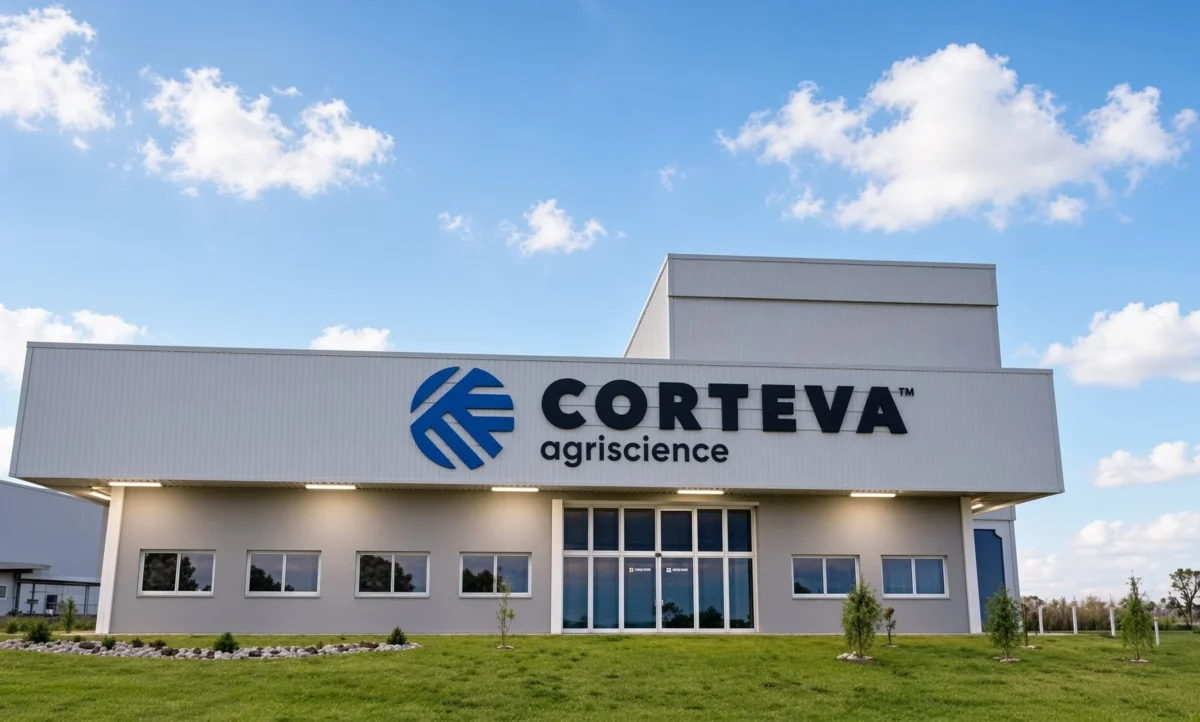
Corteva (CTVA) shares experienced an approximately 82% decline on Thursday following the company’s successful completion of its seed and genetics business separation into the newly independent entity Vylor Inc. While the percentage drop appears severe, it primarily represents an accounting adjustment rather than genuine shareholder wealth destruction.
During corporate spinoffs, stock prices naturally adjust downward to account for the departing business unit. Shareholders holding Corteva shares as of the September 24 record date received corresponding Vylor shares, meaning the economic value transferred rather than vanished. The wealth simply relocated to a different stock symbol.
According to Benzinga Pro information, Corteva traded around $14.48 in premarket activity, representing roughly an 81% decrease from the previous closing price. Such dramatic overnight price movements are typical for substantial corporate restructurings of this magnitude.
Court Battles Nearly Derailed the Transaction
The spinoff nearly faced cancellation this week. California submitted a legal motion attempting to halt the transaction, claiming it constituted fraudulent conveyance intended to insulate Corteva from legacy PFAS environmental obligations.

On Wednesday, the U.S. Court of Appeals for the Fourth Circuit overturned a procedural determination connected to California’s petition. However, the appellate panel refrained from addressing the substantive arguments in the state’s case.
Following the appellate ruling, the matter returned to the District Court for South Carolina. That tribunal rejected California’s petition for a temporary restraining order, enabling Corteva to proceed according to its original timeline.
In its written decision, the court observed that California had been aware of the intended spinoff since December 2025 at minimum. The state delayed filing its injunction request until just 17 days prior to the scheduled completion date.
Following the resolution of legal obstacles, Corteva finalized the business separation on October 1, 2026, adhering to its announced schedule.
Corteva’s New Corporate Structure
Corteva now operates as an independent crop protection enterprise. The seed and genetics operations that previously carried its brand name no longer fall under its ownership.
According to company statements, the organization maintains nearly 9,000 employees and provides services to agricultural producers across approximately 110 nations. Its product portfolio encompasses traditional agrochemicals, biological solutions, seed treatment technologies, and naturally derived products.
Chief Executive Luke Kissam stated the corporate restructuring provides Corteva with “enhanced focus, flexibility, and a strengthened dedication to innovation and operational performance.” While such statements represent typical spinoff rhetoric, the underlying financial data provides tangible support.
From 2020 through 2025, Corteva’s crop protection division increased revenue by over $1 billion. Operating EBITDA margins within that business unit improved by approximately 250 basis points during that timeframe.
According to company disclosures, specialized technologies currently constitute roughly 65% of total sales. The organization also highlighted an $11 billion crop protection development pipeline.
This pipeline encompasses 12 novel active ingredients scheduled for market introduction throughout the coming decade. Five of these represent biological formulations.
Concurrent with the equity distribution, Vylor finalized an associated debt restructuring. Bondholders tendered approximately $434.8 million of EIDP’s 2.300% notes maturing in 2030, $476.2 million of its 5.125% notes due in 2032, and $527.6 million of its 4.800% notes maturing in 2033.
Participating investors received equivalent Vylor notes carrying identical interest rates and maturity schedules as their original holdings. The exchange was conditional upon the spinoff’s completion and settled simultaneously with the corporate separation according to plan.
Get 3 Free Stock Ebooks
Discover top-performing stocks in AI, Crypto, and Technology with expert analysis.
- Top 10 AI Stocks - Leading AI companies
- Top 10 Crypto Stocks - Blockchain leaders
- Top 10 Tech Stocks - Tech giants


