



Key Highlights
- Both Brent and WTI crude benchmarks have rallied more than 11% over the past week, marking their strongest performance since the final days of April
- American forces conducted their sixth successive evening of aerial operations against Iranian targets, focusing on military supply chains and naval assets
- Tehran retaliated with attacks on American installations across the Middle East, including an unprecedented direct assault in Syria
- Iranian officials have warned of potential destruction of regional energy infrastructure and reportedly coordinated with Houthi forces regarding Red Sea route closures
- American petroleum reserves decreased by 1.7 million barrels in the previous week, signaling market tightening
Energy markets experienced significant upward momentum on Friday, positioning crude oil for one of its most substantial weekly advances in recent memory. The surge reflects growing concerns over the intensifying military exchanges between Washington and Tehran.
Brent crude futures advanced to approximately $84.79 per barrel during Friday trading. Meanwhile, U.S. West Texas Intermediate hovered around $79.78 per barrel. Week-over-week gains for both indicators exceeded 11%.
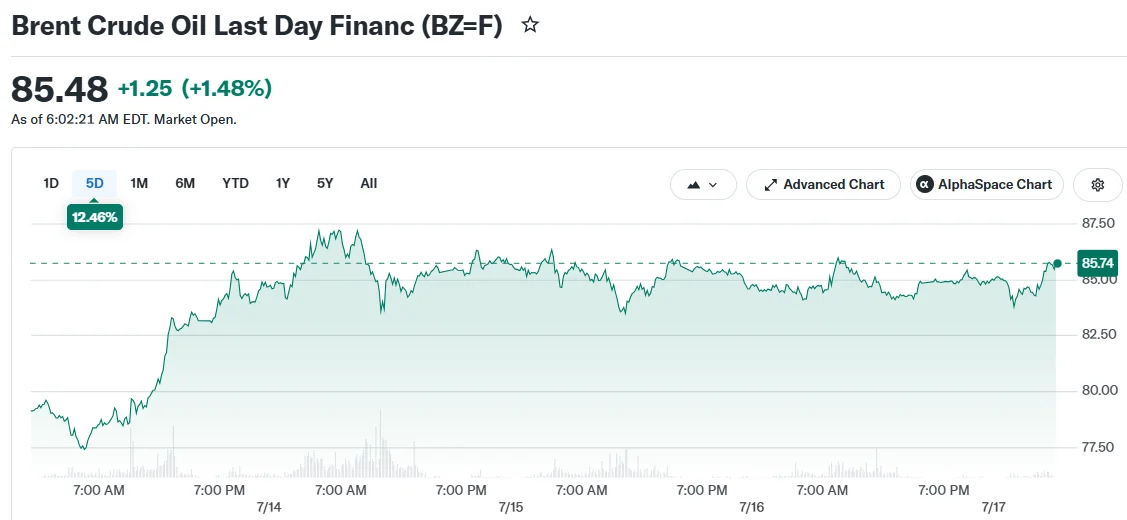
This represents the most impressive weekly advancement for petroleum prices since late April’s trading sessions.
American Military Campaign Enters Sixth Consecutive Night
U.S. Central Command verified the completion of its sixth uninterrupted night of bombing operations targeting Iran during the overnight hours of Thursday. The campaign struck numerous military installations, including logistical infrastructure and maritime defense systems.
Centcom indicated that over 50,000 American military personnel are presently deployed throughout Middle Eastern territories. The command characterized its forces as maintaining a posture that is “vigilant, lethal, and ready.”

Tehran countered with retaliatory strikes against American positions in the area on Friday morning. Notably, this marked Iran’s inaugural direct military action within Syrian territory.
President Trump indicated earlier in the week that American forces would proceed to target Iranian infrastructure absent a diplomatic resolution. Iran’s military leadership issued a stark warning that should such threats materialize, “all the infrastructure in the region will be crushed.”
Critical Hormuz Passage Drives Supply Anxiety
The Strait of Hormuz has emerged as the primary concern for oil traders at present. Approximately one-fifth of global petroleum transport navigates through this narrow waterway.
A delicate ceasefire agreement established in June has now disintegrated. Maritime traffic through the strategic passage declined dramatically this week following Washington’s reinstatement of a naval blockade targeting Iranian harbors.
Reports indicate Tehran has also requested that Yemen’s Houthi militia forces prepare to potentially block the Red Sea petroleum route should American forces attack Iranian electrical infrastructure. CNBC was unable to independently confirm these claims.
Experts at Rystad Energy maintain that a constrained agreement between Washington and Tehran remains their primary expectation, though certainty in this projection has diminished.
Jorge León, senior vice president at Rystad, observed that both nations retain economic motivations to prevent complete diplomatic collapse. Iran possesses access to unfrozen financial assets and export exemptions that it wishes to preserve. The United States similarly desires reduced petroleum costs in advance of November midterm electoral contests.
American crude petroleum inventories contracted by 1.7 million barrels during the week concluding July 10, per Energy Information Administration data, while gasoline stockpiles similarly declined by 1.5 million barrels.
Diplomatic initiatives persist, with Qatar, Egypt, and Pakistan allegedly pursuing negotiations notwithstanding the June ceasefire’s breakdown.
Get 3 Free Stock Ebooks
Discover top-performing stocks in AI, Crypto, and Technology with expert analysis.
- Top 10 AI Stocks - Leading AI companies
- Top 10 Crypto Stocks - Blockchain leaders
- Top 10 Tech Stocks - Tech giants


