



Key Highlights
- Brent crude reached $89.81 while WTI hit $84.08 on Wednesday, continuing a five to six-day rally
- Ongoing strikes targeting vessels in the Strait of Hormuz and Bab el-Mandeb strait are intensifying concerns over supply chain interruptions
- Tehran maintains Hormuz will remain blocked until Washington fulfills specific demands, including unfreezing Iranian financial assets
- American crude stockpiles expanded by 9.1 million barrels, significantly exceeding forecasts and potentially alleviating some supply worries
- America’s Strategic Petroleum Reserve dropped beneath 300 million barrels, reaching its lowest point since 1982
Crude oil markets advanced on Wednesday following renewed assaults on maritime vessels in two crucial Middle Eastern shipping channels, maintaining trader anxiety about potential supply chain disruptions.
Brent crude futures gained 1% to reach $89.81 per barrel, marking its sixth consecutive session of increases. West Texas Intermediate advanced 1.1% to $84.08, extending its winning streak to five straight days.
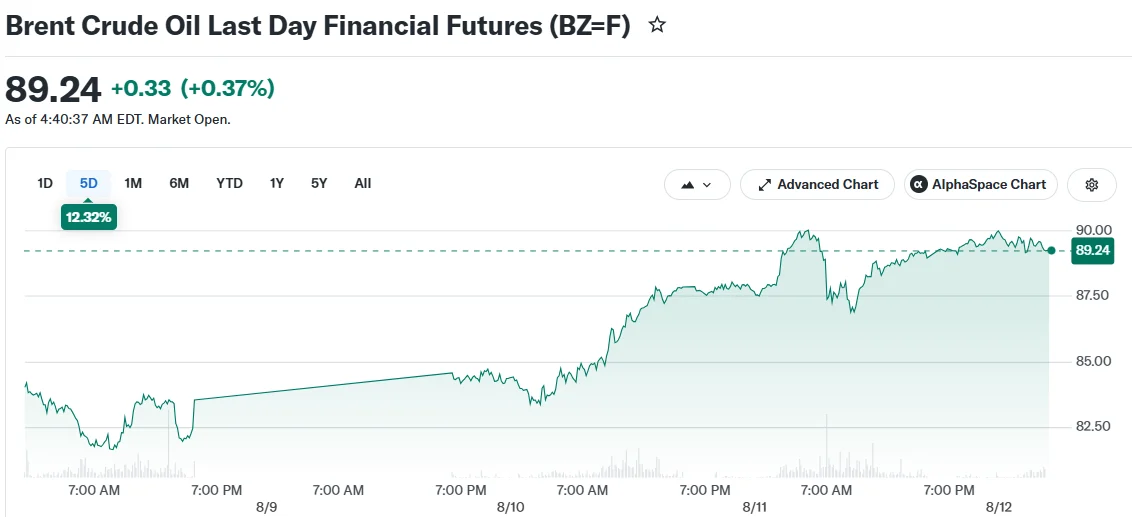
The upward momentum followed reports from both American officials and Yemen’s Houthi forces detailing separate incidents targeting commercial shipping in the Strait of Hormuz and the Bab el-Mandeb Strait on Tuesday.
These narrow passages serve as vital conduits for Middle Eastern petroleum and natural gas shipments, working in tandem with the Suez Canal.
A senior Iranian security official declared that the Strait of Hormuz would continue its closure until Washington agrees to Tehran’s stipulations for conflict resolution, which encompasses unfreezing Iranian financial holdings.

American President Donald Trump has firmly rejected these requirements, with negotiations showing minimal advancement toward resolution.
Maritime tracking information revealed only eight vessels successfully navigated Hormuz on Tuesday, representing a one-week minimum. Prior to the conflict, daily traffic through the strait typically ranged from 125 to 140 ships.
American Crude Inventories Show Unexpected Growth
While prices continued their ascent, expanding U.S. petroleum stockpiles could potentially cap additional gains.
Industry statistics released by the American Petroleum Institute indicated U.S. crude reserves increased by approximately 9.1 million barrels during the previous week, substantially exceeding analyst projections.
Gasoline reserves declined by 1.5 million barrels while distillate inventories decreased by 596,000 barrels during the identical timeframe.
Market observers suggested the crude accumulation might mitigate certain supply shortage apprehensions, pending verification through official Energy Information Administration figures scheduled for release later Wednesday.
A Reuters survey had actually projected inventory declines, rendering the unexpected increase a significant element market participants are monitoring carefully.
Emergency Petroleum Stockpile Reaches Four-Decade Minimum
America’s Strategic Petroleum Reserve declined below 300 million barrels during the previous week, falling 6.1 million barrels to 298.7 million barrels.
This represents the most diminished level in four decades, based on Department of Energy statistics.
President Trump authorized the discharge of 172 million barrels in March to help compensate for supply interruptions resulting from the Iranian confrontation.
The reserve was established for deployment during supply crises, and the ongoing depletion illustrates how stretched international petroleum supplies have become.
In Libya, the National Oil Corporation announced that fires affecting fuel storage facilities at the Zawiya petroleum complex were completely extinguished.
Looking ahead, the EIA anticipates Middle Eastern crude supply interruptions will continue through late 2027. The agency projects 2026 Brent prices will average $86.81 per barrel while West Texas Intermediate will average $80.88.
Get 3 Free Stock Ebooks
Discover top-performing stocks in AI, Crypto, and Technology with expert analysis.
- Top 10 AI Stocks - Leading AI companies
- Top 10 Crypto Stocks - Blockchain leaders
- Top 10 Tech Stocks - Tech giants


