


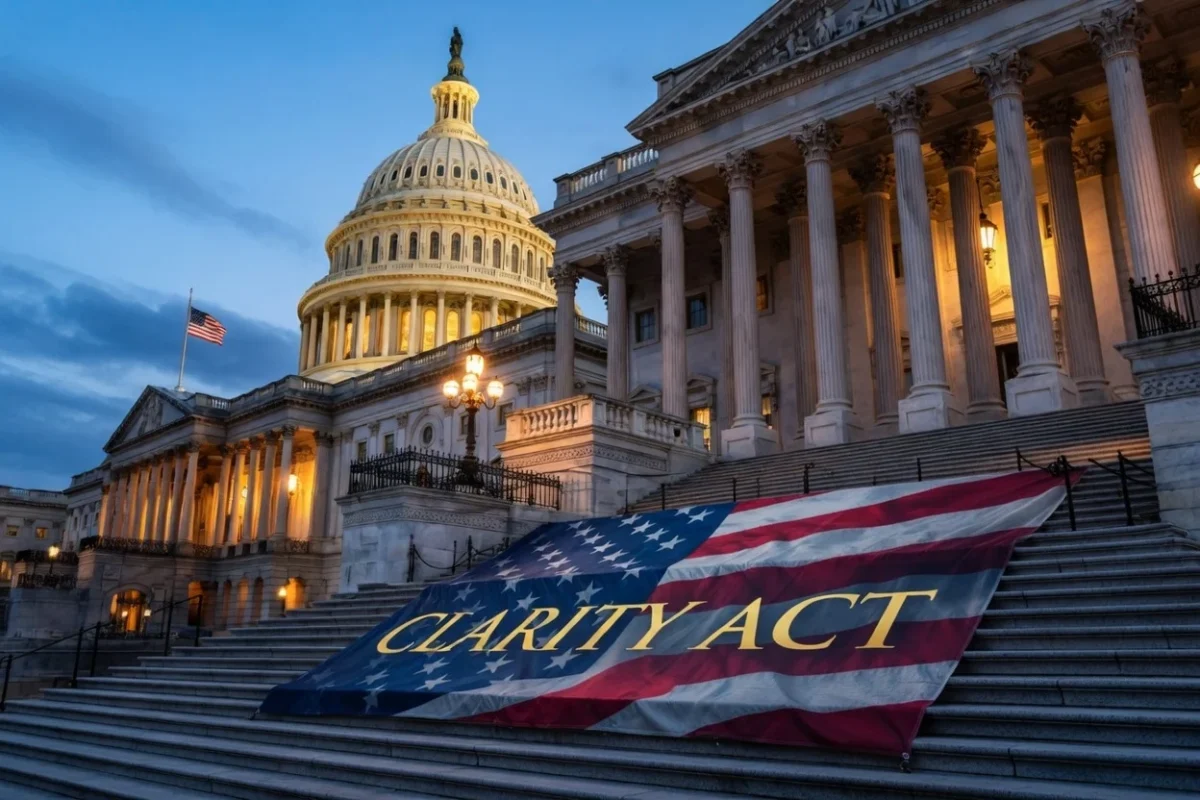
Key Takeaways
- Senate leadership has postponed the Digital Asset Market Clarity Act to concentrate on Russia sanctions legislation and Trump administration nominations
- The legislation faces minimal prospects for a floor vote before next week, leaving only days until the Senate’s August 8 summer break
- Contentious ethics provisions — particularly restrictions preventing government officials from endorsing cryptocurrency ventures — continue blocking progress
- Market forecasts now place the probability of passage in 2026 under 38%
- Missing the current legislative window could delay consideration until September at the earliest, with potential postponement into 2027
Senate leadership has postponed consideration of the Digital Asset Market Clarity Act, opting to prioritize confirmation of federal appointments and legislation sanctioning Russia named in honor of the late Senator Lindsey Graham.
On Monday, Senate Majority Leader John Thune initiated cloture proceedings for a batch of 74 Trump administration nominees. Following Jay Clayton’s confirmation as Director of National Intelligence on July 28, the chamber pivoted to the Russia sanctions measure. This legislation would target Russian officials with sanctions while implementing tariffs on nations conducting trade with Russia.
Memorial services for Senator Graham held this week in both Washington and South Carolina on Tuesday and Wednesday have further constrained the Senate’s available legislative time.
Limited Time Remaining Before Summer Break
As senators prepare for their summer recess beginning August 8, the Clarity Act confronts an increasingly tight timeline for advancement — and that opportunity continues to narrow.
Political observers expect no floor vote on the cryptocurrency legislation until next week at the very earliest. Senate parliamentary rules typically permit consideration of only one contentious measure at a time, requiring completion of the Russia sanctions bill beforehand.
The Digital Asset Market Clarity Act has remained on the Senate’s legislative calendar since early June yet has encountered successive postponements. Primary obstacles include disputes regarding stablecoin interest payment regulations and an ethics clause prohibiting senior administration officials, including President Trump, from promoting cryptocurrency projects.

During the previous week, Trump indicated willingness to accept provisions constraining his digital asset involvement. However, Democratic lawmakers swiftly countered that the proposed limitations remained insufficient, citing his existing cryptocurrency business operations. Negotiations between both parties continue.
Resistance Mounting From Various Stakeholders
New York Attorney General Letitia James issued a public appeal to Congress urging rejection of the Clarity Act, asserting the legislation would undermine state and municipal authorities’ capacity to combat cryptocurrency-related fraud.
Senate Democrats have additionally advocated for empowering state prosecutors to enforce the ethics provisions, rather than limiting enforcement solely to the Department of Justice.
While prominent financial institutions such as BlackRock, Fidelity, Goldman Sachs, Charles Schwab, and Grayscale have expressed support, current projections indicate the legislation’s 2026 passage probability has declined to less than 38%.
Cryptocurrency sector representatives have cautioned that continued delays risk postponing the measure until 2027. Should the bill fail during this congressional session, the GENIUS Act addressing stablecoins alongside ongoing regulatory development at the SEC and CFTC would represent the primary remaining avenues for establishing regulatory frameworks.
Both chambers of Congress reconvene in September for a brief period, though available floor time remains constrained. Following November’s elections, Congress enters a lame duck period characterized by legislative unpredictability.
Should the Senate approve the Clarity Act, the legislation must return to the House of Representatives for an additional vote before proceeding to President Trump for signature.
Get 3 Free Stock Ebooks
Discover top-performing stocks in AI, Crypto, and Technology with expert analysis.
- Top 10 AI Stocks - Leading AI companies
- Top 10 Crypto Stocks - Blockchain leaders
- Top 10 Tech Stocks - Tech giants


