


Key Points
- Natural gas prices across Europe climbed more than 4%, breaching €74 per megawatt-hour for the first time in three years
- Tehran announces intentions to establish a restricted maritime zone near the Strait of Hormuz after American military operations targeted Iranian vessels
- Approximately 20% of worldwide liquefied natural gas shipments pass through the Strait of Hormuz, predominantly originating from Qatar
- Gas reserves across Europe stand at merely 62% of capacity, falling approximately 17 points short of the historical five-year average
- European Central Bank anticipated to implement a 25 basis point interest rate increase amid energy-fueled inflation reaching 3.3%
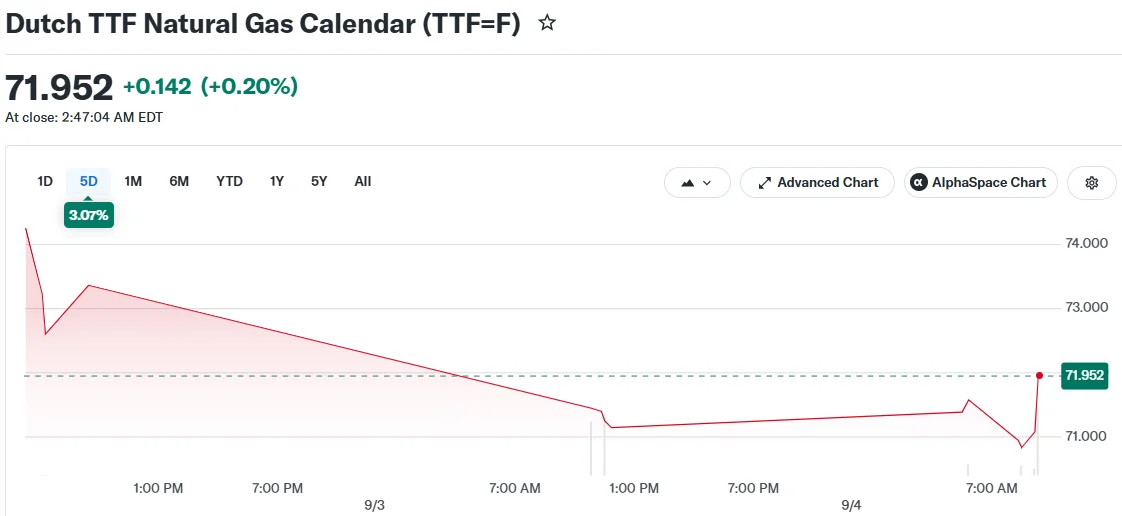
Energy markets across the European continent experienced significant turbulence on Monday as gas prices skyrocketed to their highest point since late 2023. The Dutch TTF front-month futures contract, which serves as the continental benchmark, advanced to approximately €73.80 per megawatt-hour, approaching the previous week’s pinnacle of €74.32.
Meanwhile, wholesale natural gas contracts in Britain experienced a 2% uptick, reaching nearly 182.50 pence per therm, hovering close to the 2023 maximum of 183.95 pence.
The sharp price movements coincide with intensifying military confrontations between Washington and Tehran in the strategically vital Persian Gulf region.
Persian Gulf Crisis Puts LNG Transit Routes at Risk
Iranian authorities have declared their intention to establish a restricted maritime zone in waters adjacent to the Strait of Hormuz within the coming days. The announcement follows weekend military operations by United States forces that struck and incapacitated three Iranian petroleum tankers.
American defense officials justified the strikes as a necessary response to Iranian ballistic missile assaults targeting two United States Navy vessels operating in regional waters.

The strategic waterway of the Strait of Hormuz serves as a transit route for approximately 20% of global LNG shipments, with the majority originating from Qatari export facilities. Any significant impediment to vessel traffic through this narrow passage could sever a vital supply artery feeding European markets.
Energy companies across Europe now find themselves in fierce competition with Asian purchasers for whatever Atlantic basin LNG cargoes remain available to compensate for potential supply gaps.
Market participants continue monitoring the situation with heightened concern as the tit-for-tat military actions demonstrate no indication of de-escalation.
Depleted Gas Inventories Compound European Vulnerability
The geopolitical crisis arrives at a particularly vulnerable moment for European energy security. Underground storage infrastructure across the continent currently holds only 62% of total capacity, lagging behind the five-year seasonal norm by roughly 17 percentage points.
Unseasonably warm temperatures throughout Southern European regions during summer months drove elevated electricity demand from gas-powered generation facilities. Scheduled maintenance operations on Norwegian pipeline infrastructure combined with postponements of Qatari LNG shipments further constrained storage replenishment efforts throughout August.
Should LNG deliveries face disruption during the autumn months, energy analysts caution that Europe could confront dramatic price escalations and potentially mandatory supply rationing measures when winter temperatures arrive.
Brent crude oil continues trading above $90 per barrel, compounding the overall pressure on energy expenditures across the continent.
Central Bank Monetary Policy Under Scrutiny
Escalating energy costs are contributing to accelerating inflation throughout the eurozone economy. Overall consumer price inflation climbed to 3.3% in August, with energy component prices surging 14.3% compared to the previous year.
The European Central Bank convenes Thursday for its latest monetary policy meeting. Financial markets have incorporated near-certainty of a 25 basis point interest rate increase under ECB President Christine Lagarde’s guidance.
Elevated energy input expenses are compressing profit margins for European industrial enterprises while simultaneously straining household budgets, complicating the central bank’s policy deliberations.
The convergence of inadequate storage levels, supply disruption risks, and accelerating inflation has left European energy markets in a precarious position as the continent approaches the heating season.
Get 3 Free Stock Ebooks
Discover top-performing stocks in AI, Crypto, and Technology with expert analysis.
- Top 10 AI Stocks - Leading AI companies
- Top 10 Crypto Stocks - Blockchain leaders
- Top 10 Tech Stocks - Tech giants


