



TLDR
- European markets climbed on Tuesday, driven primarily by strength in technology sectors.
- Chip manufacturers rallied following reports that Anthropic is preparing for a public offering potentially valuing the firm above $2 trillion.
- Energy markets remained elevated amid ongoing U.S.-Iran diplomatic tensions.
- Swiss chocolatier Lindt tumbled approximately 7% following its second 2026 revenue forecast reduction this year.
- Julius Baer and Legrand emerged as top performers following favorable corporate developments.
European stock markets posted solid gains during Tuesday’s session, with technology sectors providing the primary momentum.
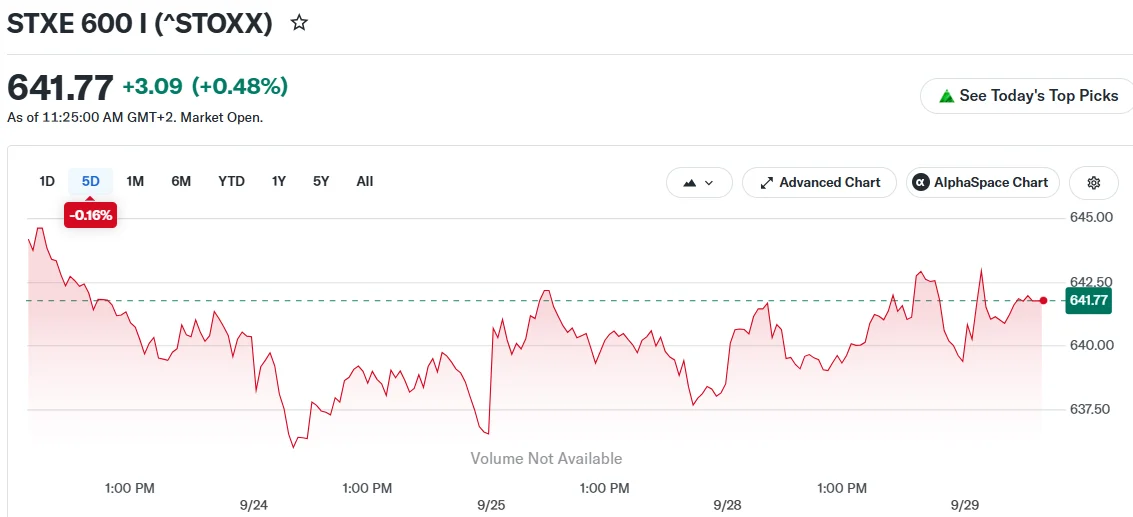
The broad-based STOXX 600 benchmark climbed approximately 0.3% to settle at 640.28 points during mid-morning trading. The majority of regional indices followed suit with positive performance.
Technology equities surged to their strongest level in four weeks. The rally followed a Reuters story detailing Anthropic’s preparation for a public market debut.
The anticipated offering could assign the artificial intelligence firm a valuation exceeding $2 trillion. Market participants interpreted this development as evidence that appetite for AI-focused initial public offerings is recovering.
Technology Sector Drives Market Performance
Chip manufacturers posted notable advances in response to the Anthropic disclosure. Market strategist Fiona Cincotta noted the report revived enthusiasm surrounding the IPO landscape.

This investment theme had faced headwinds in recent trading sessions. Earlier in the month, executives from multiple AI firms had advocated for restrained expansion amid concerns regarding potential technology misapplication.
Those previous statements had dampened technology stock performance. Increasing government bond yields compounded the pressure during that period.
Crude oil quotations maintained elevated levels on Tuesday. Brent futures hovered around $106.99 per barrel.
Pricing remained firm as diplomatic efforts between Washington and Tehran failed to produce progress. European nations rely substantially on fuel imports, making the region particularly vulnerable to energy price fluctuations.
Government debt yields globally persisted near levels unseen in decades. Market participants continue expressing concern about inflationary pressures linked to energy expense increases.
European Central Bank President Christine Lagarde delivered remarks on Monday. She indicated that this year’s inflation acceleration has not yet triggered widespread secondary impacts throughout the eurozone.
Lagarde indicated that a calibrated policy stance remains appropriate. The ECB had implemented rate increases earlier in the month.
Notable Corporate Performance
Lindt registered as the STOXX 600’s weakest performer. The stock declined nearly 7%.
The Swiss confectionery manufacturer reduced its 2026 revenue projection for the second occasion this year. Management cited diminished consumer expenditure, heightened price sensitivity among customers, and subdued demand attributable to unseasonably warm European weather.
Competitors Barry Callebaut and Nestle experienced declines in sympathy. Julius Baer demonstrated contrasting momentum, claiming the session’s top spot.
The Swiss banking institution’s shares surged nearly 8%. Switzerland’s financial oversight authority FINMA concluded enforcement actions related to private lending arrangements and client associations with two politically connected Russian nationals.
Legrand also delivered impressive performance. The French electrical equipment and digital infrastructure provider advanced more than 7% following an upward revision to its medium-term objectives.
Across other European markets, London’s benchmark added roughly half a percentage point, supported by pharmaceutical and natural resources stocks. German and French indices recorded more modest advances.
Spain reported annual inflation acceleration to 4.9% in September. The nation’s retail sales contracted 0.4% on a year-over-year basis.
Sweden’s consumer confidence measure improved to 102.2 in September. The country’s business sentiment indicator extended its winning streak to six consecutive months, reaching 109.3.
Within fixed income markets, the U.S. 10-year yield edged down marginally to 5.23%. The UK 10-year yield advanced to 5.39%, while Germany’s 10-year yield retreated to 3.62%.
Get 3 Free Stock Ebooks
Discover top-performing stocks in AI, Crypto, and Technology with expert analysis.
- Top 10 AI Stocks - Leading AI companies
- Top 10 Crypto Stocks - Blockchain leaders
- Top 10 Tech Stocks - Tech giants


