


TLDR
- Gold climbed 0.6% to reach $4,139.91 per ounce on Tuesday, staging a modest rebound following Monday’s sharp 4% decline.
- Oil price increases linked to escalating US-Iran tensions over the Strait of Hormuz continue to stoke inflation concerns.
- Treasury yields surged to a 19-year peak, diminishing gold’s appeal as a non-yielding asset.
- The precious metal has declined approximately 7% in the last 30 days following Federal Reserve rate increases and hawkish policy signals.
- Market participants are closely monitoring Wednesday’s inflation figures and Friday’s employment data for Federal Reserve policy direction.
Gold prices registered gains on Tuesday following a challenging opening to the week. Monday saw the precious metal plummet 4%, marking one of its sharpest daily retreats in recent memory.
Spot gold advanced 0.6% to settle at $4,139.91 per ounce at 05:33 ET. Meanwhile, gold futures edged up 0.1% to $4,171.90 per ounce.
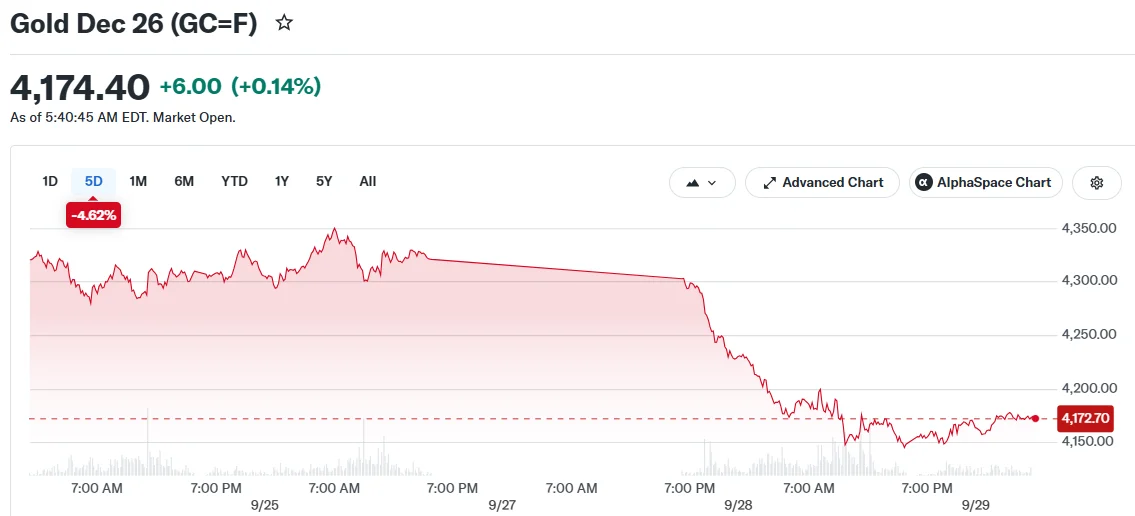
The modest recovery still leaves gold trading near its lowest point in seven weeks. The yellow metal continues to face headwinds from climbing Treasury yields and an appreciating US dollar.
US-Iran Tensions Fuel Energy Costs and Inflation Anxiety
Oil prices continued their upward trajectory as Iran maintained its position regarding the Strait of Hormuz reopening. This crucial shipping channel handles a substantial portion of worldwide energy transport.
President Trump turned down Iran’s most recent proposal, which included reopening the strategic waterway within a seven-day timeframe. Reports suggest Iranian authorities believe a resolution is unlikely before the November US midterm elections.

The US-Iran standoff has now extended into its eighth month, persistently disrupting energy markets and amplifying inflationary pressures.
Escalating oil costs typically drive broader inflation higher. This dynamic increases the likelihood of central bank rate hikes, which negatively impacts gold given its non-interest-bearing nature.
Bond Yields Surge to Levels Not Seen in Nearly Two Decades
Monday’s renewed oil price surge intensified selling pressure in the US Treasury market. The benchmark 10-year Treasury yield reached its loftiest point in 19 years.
Elevated yields diminish gold’s attractiveness as investors can secure superior returns from interest-bearing instruments rather than holding a non-yielding commodity.
The past month has witnessed gold declining roughly 7%. This downturn followed the Federal Reserve’s initial rate hike since 2023.
Federal Reserve policymakers additionally signaled openness to further rate increases in 2025. Current market pricing indicates approximately 70% probability of another rate increase coming in October.
ANZ analysts noted that gold’s near-term prospects remain challenging. They identified elevated yields and persistent inflation risks as primary obstacles confronting the precious metal.
Previous reporting from last week documented gold futures declining for three consecutive trading sessions. That selloff materialized as the greenback strengthened and the 10-year yield touched its highest level since July 2007.
Silver experienced similar pressure during this period, settling 2.4% lower at $64.382 per troy ounce.
Market attention now shifts to two pivotal economic releases. Wednesday will deliver the personal consumption expenditures index, representing the Federal Reserve’s favored inflation gauge.
Friday’s nonfarm payrolls data will provide fresh insights into US labor market conditions. These reports hold significant weight in shaping market expectations surrounding the Fed’s upcoming policy decisions.
Currently, gold finds itself trapped between opposing market dynamics. Elevated energy prices and geopolitical instability bolster safe-haven demand, while strengthening yields and dollar momentum apply downward pressure on the metal.
Get 3 Free Stock Ebooks
Discover top-performing stocks in AI, Crypto, and Technology with expert analysis.
- Top 10 AI Stocks - Leading AI companies
- Top 10 Crypto Stocks - Blockchain leaders
- Top 10 Tech Stocks - Tech giants


