


Key Highlights
- Spectrum rocket achieved orbit from Norway’s Andøya Spaceport, marking a historic first for private European space companies
- The launch came after a failed debut attempt approximately 18 months earlier that ended in a crash
- Five small satellites plus a technology demonstration payload reached orbit successfully
- The German company has secured €270 million in funding and a €200 million European Space Agency deal
- Defense sector accounts for roughly 60% of current launch bookings, with missions scheduled until 2028
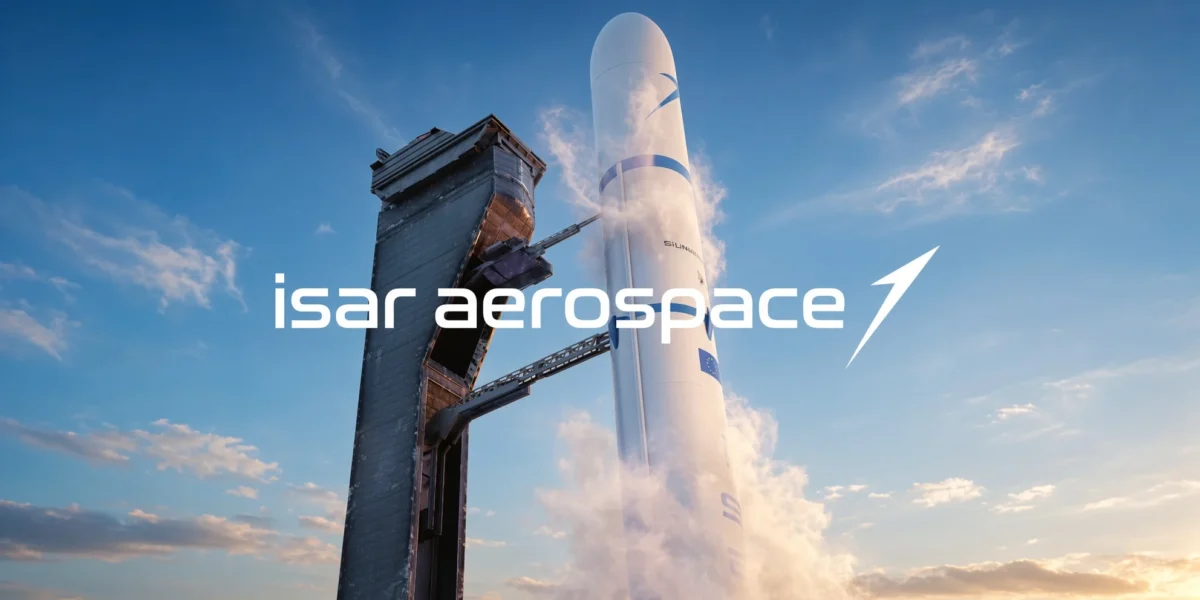
A German rocket startup Isar Aerospace achieved a significant milestone on Saturday when its Spectrum launch vehicle successfully reached orbit from Norway’s Andøya Spaceport in the Arctic Circle. The achievement represents the first time a privately developed commercial rocket has reached orbit from mainland Europe.
The successful mission represents a significant achievement for European space ambitions. Multiple European countries have been pursuing strategies to develop indigenous launch capabilities and decrease dependence on foreign rocket providers.
Saturday’s orbital success followed an earlier setback. Isar’s inaugural Spectrum launch approximately 18 months ago ended when the rocket crashed mere seconds after liftoff from the identical Norwegian facility. That incident resulted in no casualties.
Friedrich Merz, Germany’s Chancellor, celebrated the achievement, characterizing it as “the beginning of a new era.” Andrius Kubilius, who serves as the EU’s Defence and Space Commissioner, took to social media to declare that “Europe’s independent access to space just got a major boost.”
Daniel Metzler, serving as Isar’s CEO, emphasized that the successful mission provides Europe with “sovereign access to space” and identified launch capacity as “the biggest bottleneck in the entire industry.”
Spectrum Rocket Capabilities
The Spectrum launch vehicle measures 28 meters in height and possesses a payload capacity of up to 1,000 kilograms for low Earth orbit missions. While this represents a fraction of SpaceX’s Falcon 9 capacity, Isar positions this as a strategic advantage.

Dedicated launches enable smaller satellites to achieve precisely tailored orbits. This level of customization becomes challenging when satellite operators must rideshare aboard larger vehicles with multiple payloads.
The weekend launch deployed five compact satellites along with an experimental technology demonstration system.
Financial Backing and Growth Strategy
Earlier this year, Isar completed a €270 million funding round. The company subsequently finalized an approximately €200 million agreement with the European Space Agency in August to support ongoing launch vehicle development.
Military and defense organizations currently represent approximately 60% of Isar’s confirmed orders. Growing European government investment in satellite systems and space-based infrastructure has fueled this demand.
Five additional Spectrum rockets are currently under construction. The company is establishing a manufacturing facility outside Munich designed to eventually produce as many as 40 rockets annually.
The company’s launch manifest extends through 2028, featuring missions for both the European Space Agency and Norway’s space agency.
A second launch facility is under development in Nova Scotia, Canada, with operations potentially beginning by 2028.
Public market plans are not under consideration currently. Metzler indicated the company maintains sufficient capital and that an initial public offering is “not on the table.”
While achieving orbit represents a critical technical validation, Isar’s commercial viability will ultimately hinge on its ability to rapidly increase production rates and execute its substantial backlog of scheduled missions.
Get 3 Free Stock Ebooks
Discover top-performing stocks in AI, Crypto, and Technology with expert analysis.
- Top 10 AI Stocks - Leading AI companies
- Top 10 Crypto Stocks - Blockchain leaders
- Top 10 Tech Stocks - Tech giants


