


TLDR
- A draft framework between the U.S. and Iran for ending hostilities is approaching final stages.
- The agreement aims to restore access through the Strait of Hormuz, a critical passage for 20% of worldwide oil shipments.
- Both sides have a 30-60 day window to finalize outstanding matters.
- Tehran’s nuclear activities represent the most significant unresolved obstacle.
- Global oil markets have already responded with declining prices following initial deal reports.
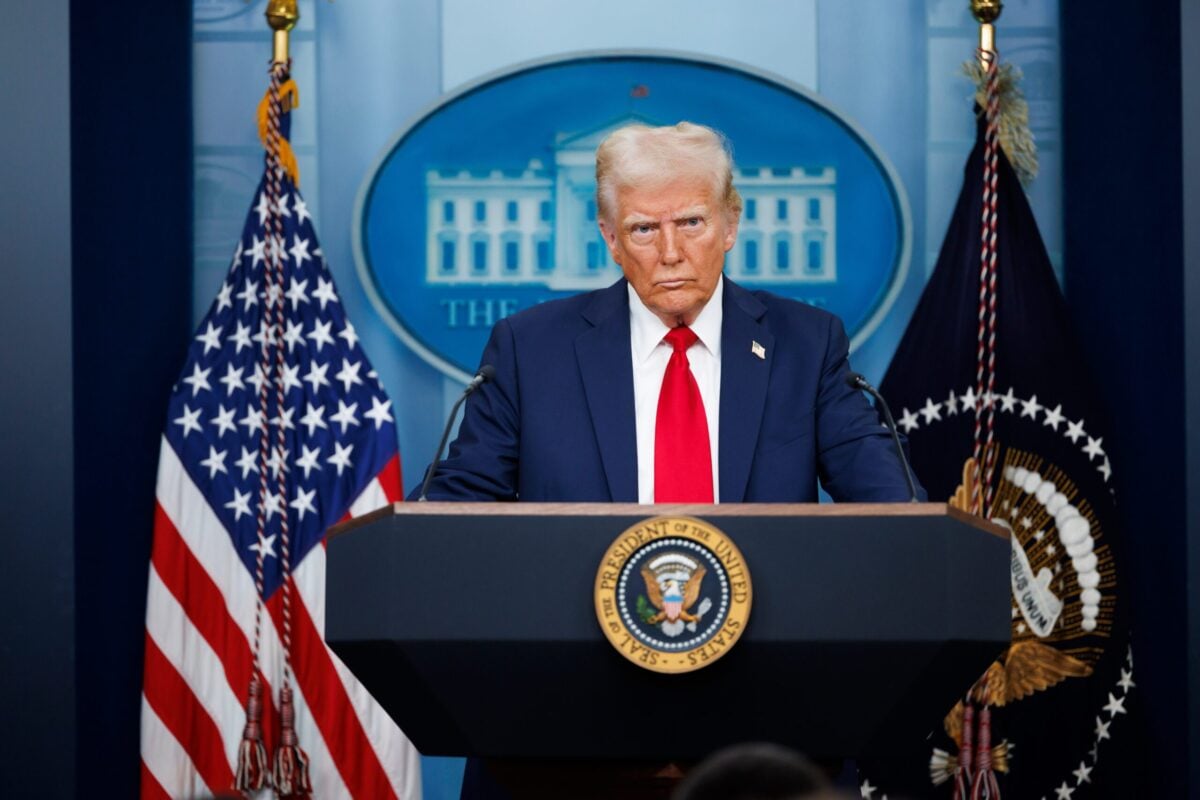
President Trump revealed Saturday that Washington and Tehran are close to finalizing a framework agreement that would pave the way for comprehensive peace negotiations. The arrangement would restore navigation through the Strait of Hormuz, a vital maritime corridor handling approximately 20% of global petroleum shipments.
Speaking via Truth Social, Trump indicated the framework had been “substantially negotiated” involving the United States, Iran, and multiple mediating countries. He promised complete details would be disclosed in the near future.
The strategic waterway has remained blocked since Tehran closed it following joint U.S.-Israeli military operations that resulted in the death of Iran’s long-serving leader Ali Khamenei in late February. The blockade has severely impacted international energy markets and fueled wider economic instability.
Brent crude contracts settled Friday slightly above the $100 per barrel threshold, with U.S. WTI crude benchmark finishing the week north of $96. Oil prices had already declined Thursday as preliminary reports about a possible ceasefire arrangement emerged.
The Path to a Deal
Before his announcement Saturday, Trump held discussions with heads of state from Saudi Arabia, the UAE, Qatar, Pakistan, Turkey, Egypt, Jordan, and Bahrain. He subsequently connected with Israeli Prime Minister Benjamin Netanyahu, who has traditionally resisted diplomatic overtures toward Tehran.
Esmail Baghaei, Iran’s foreign ministry spokesman, acknowledged both nations were in the “concluding phase” of preparing a memorandum of understanding. He characterized the 30-60 day timeframe for reaching a comprehensive agreement as feasible.

According to the proposed framework, Tehran would provisionally restore navigation through the Strait of Hormuz and eliminate transit charges during ongoing negotiations. Simultaneously, Washington would dismantle its naval blockade surrounding Iranian harbors. Tehran is additionally pursuing rapid release of roughly $100 billion in frozen assets currently held internationally under U.S. sanctions.
Pakistan alongside several Arab states have advocated for a six-week extension of the existing ceasefire to provide additional negotiating time.
Nuclear Issues Remain Unresolved
The framework leaves unaddressed the core disagreement regarding Iran’s nuclear development. The United States seeks a comprehensive agreement incorporating a two-decade moratorium on Iranian nuclear operations and Tehran’s commitment to transfer its stockpile of weapons-grade enriched uranium to American custody.
Tehran has refused both stipulations. Supreme Leader Mojtaba Khamenei declared publicly this week that enriched uranium cannot be exported from Iranian territory. Iranian representatives have indicated nuclear matters should be tackled during subsequent negotiations, concurrent with comprehensive sanctions elimination.
Baghaei communicated to state media: “At this stage, our entire focus is on ending the war.”
Additional unresolved matters encompass Iran’s ballistic missile capabilities and its backing of regional proxy forces—both critical concerns for Israel and Washington’s Gulf allies.
Iran’s semiofficial Fars News disputed Trump’s characterization, asserting any agreement would preserve Tehran’s authority over passage routes, scheduling, and transit authorizations through the Strait of Hormuz.
The conflict remains technically active. American military personnel and equipment continue operating from Israeli territory, and hostilities could reignite should negotiations fail.
Certain Republican senators, notably Lindsey Graham, have openly encouraged Trump to restart military operations rather than pursue diplomatic compromises.
The framework represents the most recent chapter in an extended series of negotiations between Washington and Tehran that has oscillated between potential breakthroughs and threats of renewed military confrontation.
Get 3 Free Stock Ebooks
Discover top-performing stocks in AI, Crypto, and Technology with expert analysis.
- Top 10 AI Stocks - Leading AI companies
- Top 10 Crypto Stocks - Blockchain leaders
- Top 10 Tech Stocks - Tech giants


