



Key Highlights
- Precious metal maintains position above $4,400 per ounce following strongest weekly performance since early year
- Disappointing U.S. employment numbers have reduced September Fed rate increase probability to under 50%
- Market participants are closely monitoring Wednesday’s U.S. CPI release and Thursday’s producer price data
- Strait of Hormuz geopolitical tensions are bolstering safe-haven appeal
- Other precious metals including silver, platinum, and industrial copper are advancing in tandem
The yellow metal continues trading firmly above $4,400 per troy ounce as Monday’s session unfolds, with market participants eagerly awaiting crucial U.S. inflation reports that may influence the Federal Reserve’s monetary policy trajectory.
Spot bullion advanced 0.3% to reach $4,354.51 per ounce during early market hours, while futures contracts for U.S. delivery climbed to $4,414.40. These gains build upon the precious metal’s strongest weekly advance since the beginning of the year.
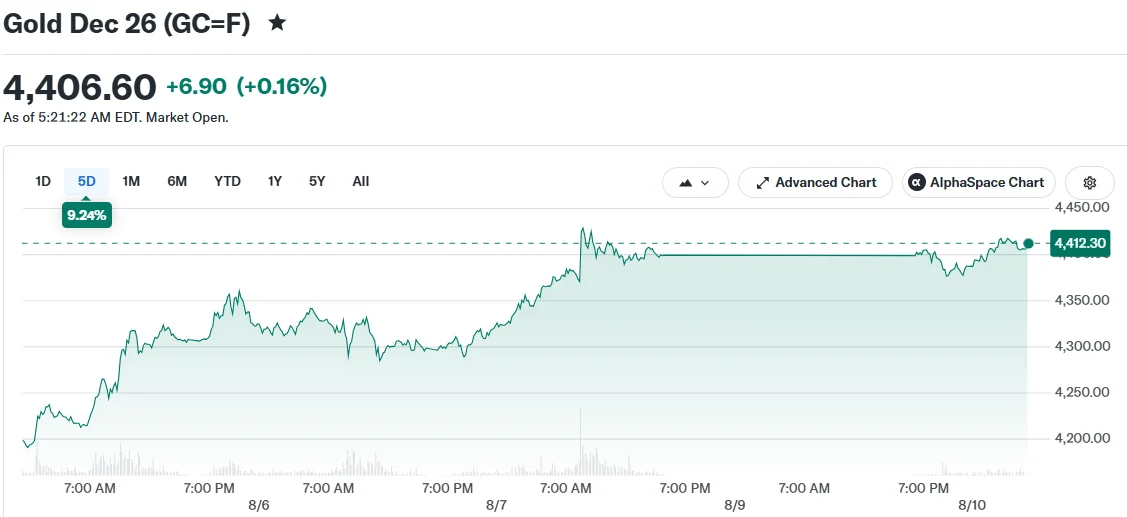
The market reached a seven-week peak on Friday following disappointing U.S. employment figures. July’s report showed job losses, while previous months’ employment numbers underwent significant downward revisions.
These disappointing labor market statistics have fundamentally altered market expectations regarding the Federal Reserve’s upcoming decisions. Probability assessments for a rate increase at the September 15-16 policy meeting have fallen below 50%, marking a notable shift from the better-than-even odds that prevailed just days earlier.
Reduced borrowing costs typically benefit gold by diminishing the opportunity cost of maintaining positions in non-yielding assets. The softer employment data prompted traders to increase their bullion allocations.

Critical Inflation Metrics Approaching
Wednesday brings the next significant market catalyst with the release of U.S. consumer price index figures. Producer price statistics will follow on Thursday. Softer-than-anticipated readings could further diminish rate increase expectations.
Market strategists at Saxo Bank attributed the recent bullion rally to a combination of disappointing U.S. economic indicators, growing concerns over government debt levels, dollar weakness, and persistent buying from central banks and Asian market participants.
Should inflation metrics arrive below expectations, anticipation for a more accommodative Federal Reserve stance could intensify further, potentially providing additional upward momentum for the precious metal.
Regional Instability Strengthens Defensive Positioning
Geopolitical factors continue supporting elevated precious metal valuations. Iranian officials indicated progress toward finalizing an agreement with Oman regarding alternative shipping routes through the Strait of Hormuz. However, Tehran maintains that Washington must satisfy multiple preconditions before the critical waterway can resume normal operations.
The ongoing Strait of Hormuz situation presents potential disruption risks for international crude oil supply chains. Rising energy costs could complicate the inflation outlook and reduce prospects for Federal Reserve accommodation, creating a nuanced environment for bullion traders.
Silver advanced 1.3% to $64.36 per ounce. Platinum registered gains of 0.5% to reach $1,757.64.
Copper also demonstrated strength. London Metal Exchange copper contracts edged higher by 0.6% to $14,126.33 per ton. U.S. copper futures increased 0.7% to $6.635 per pound.
ING market analysts noted that copper has experienced substantial appreciation based on anticipation of U.S. import duties, with market participants accelerating metal imports and creating tightness in physical markets. They cautioned that any policy developments falling short of expectations could challenge the tariff-related premium, with valuations approaching historical peaks.
The precious metal continues consolidating above $4,400 entering a week that may substantially reshape Federal Reserve expectations depending on Wednesday’s inflation data outcome.
Get 3 Free Stock Ebooks
Discover top-performing stocks in AI, Crypto, and Technology with expert analysis.
- Top 10 AI Stocks - Leading AI companies
- Top 10 Crypto Stocks - Blockchain leaders
- Top 10 Tech Stocks - Tech giants


