


TLDR
- Gold futures climbed 1% to reach $4,166/oz following disappointing U.S. employment figures that reduced rate increase forecasts
- The precious metal achieved its first positive week since May, climbing more than 2% during the period
- The U.S. dollar rebounded from nearly two-week lows on Monday, weighing on gold values
- Spot gold decreased 0.6% to $4,151.66 on Monday amid dollar strength
- Federal Reserve meeting minutes from June are scheduled for release this week, potentially impacting market direction
The precious metal market experienced a volatile opening to the week. Following its strongest weekly performance since May, gold surrendered gains on Monday as the U.S. dollar recovered ground.
Spot gold declined 0.6% to settle at $4,151.66 per ounce during early Monday sessions. Gold futures contracts retreated 0.7% to $4,167.29 per ounce.
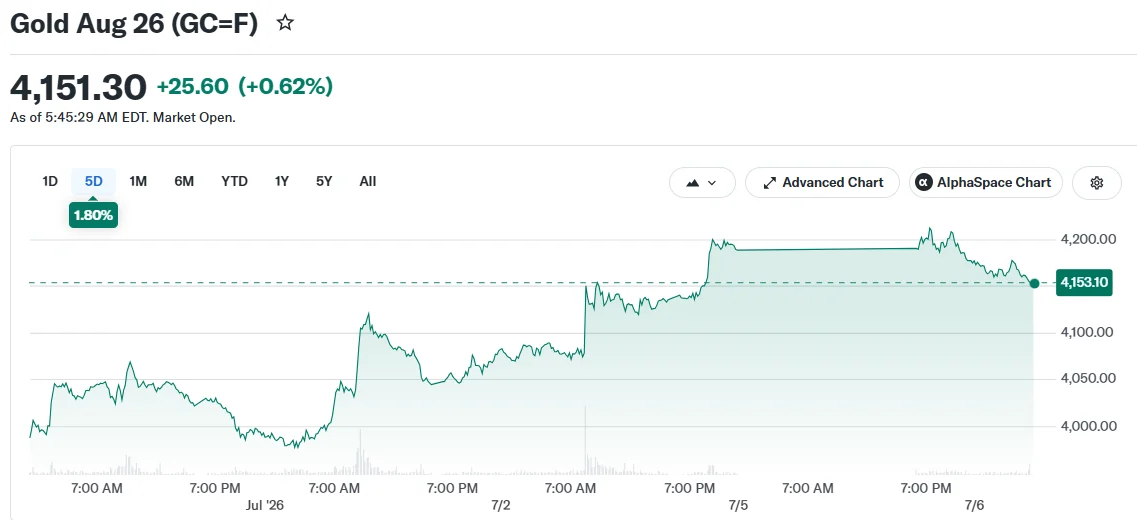
The previous week painted a contrasting picture. Gold rallied over 2%, marking its strongest weekly advance since mid-May, propelled by underwhelming U.S. employment data.
The nonfarm payrolls report released Thursday missed analyst expectations. This prompted market participants to reduce expectations that the Federal Reserve would implement additional interest rate increases in 2025.
The Connection Between Interest Rates and Gold Prices
Unlike bonds or equities, gold generates no yield through interest payments or dividend distributions. As interest rates increase, fixed-income securities become comparatively more appealing than gold, diminishing investor appetite for the yellow metal.

This relationship has pressured gold throughout most of the current year, keeping prices substantially beneath the record peaks established in January.
Declining oil prices provided additional support for gold during the previous week. Crude oil’s decline, attributed to restored shipping through the Strait of Hormuz and increased OPEC+ production quotas, alleviated inflationary concerns.
Reduced inflation expectations diminish the likelihood of Federal Reserve rate increases. This scenario typically benefits gold investments.
Greenback Strength Limits Gold’s Advance
During Monday’s trading, the dollar index gained 0.1%, bouncing back from nearly two-week lows. This dollar strength exerted downward pressure on gold valuations.
The U.S. currency remains near 13-month highs reached in June. Persistent U.S. inflation has maintained market uncertainty regarding the Federal Reserve’s monetary policy trajectory.
Saxo Bank analysts highlighted that short-term U.S. Treasury yields continue suggesting the possibility of a rate hike before year-end. They emphasized that further moderation in rate expectations would be necessary to sustain gold price appreciation.
Additional precious metals also experienced Monday selloffs. Spot silver declined 1.1% to $61.74 per ounce. Spot platinum retreated 0.4% to $1,635.31 per ounce.
Market participants are also monitoring potential inflationary pressures stemming from the artificial intelligence sector and escalating global temperatures, either of which could elevate commodity prices.
Federal Reserve officials indicated during their June policy meeting that persistent inflation might necessitate at least one additional rate increase this year.
The official minutes from that June gathering are scheduled for publication this week. Market observers are scrutinizing these documents for insights into the Fed’s upcoming policy decisions and their potential impact on gold markets.
Get 3 Free Stock Ebooks
Discover top-performing stocks in AI, Crypto, and Technology with expert analysis.
- Top 10 AI Stocks - Leading AI companies
- Top 10 Crypto Stocks - Blockchain leaders
- Top 10 Tech Stocks - Tech giants


