



Key Takeaways
- Gold retreated beneath the $4,400 threshold following robust August employment figures
- August payrolls showed 162,000 new positions, surpassing market forecasts
- Traders now assign a 60% probability to a Federal Reserve rate increase on September 15-16
- Crude oil approaching $97 per barrel intensifies inflation worries
- Critical inflation reports scheduled for Thursday and Friday may reshape monetary policy expectations
The price of gold has declined below a significant threshold as new economic indicators weigh on the yellow metal. Robust employment statistics from the United States have prompted market participants to increase their expectations for an interest rate adjustment by the Federal Reserve before month’s end.
On Monday, spot gold declined 0.7% to reach $4,398.89 per ounce. Similarly, gold futures contracts decreased 0.7% to settle at $4,444.11. The precious metal had already experienced a 1% decline on Friday before continuing its downward trajectory into the new week.
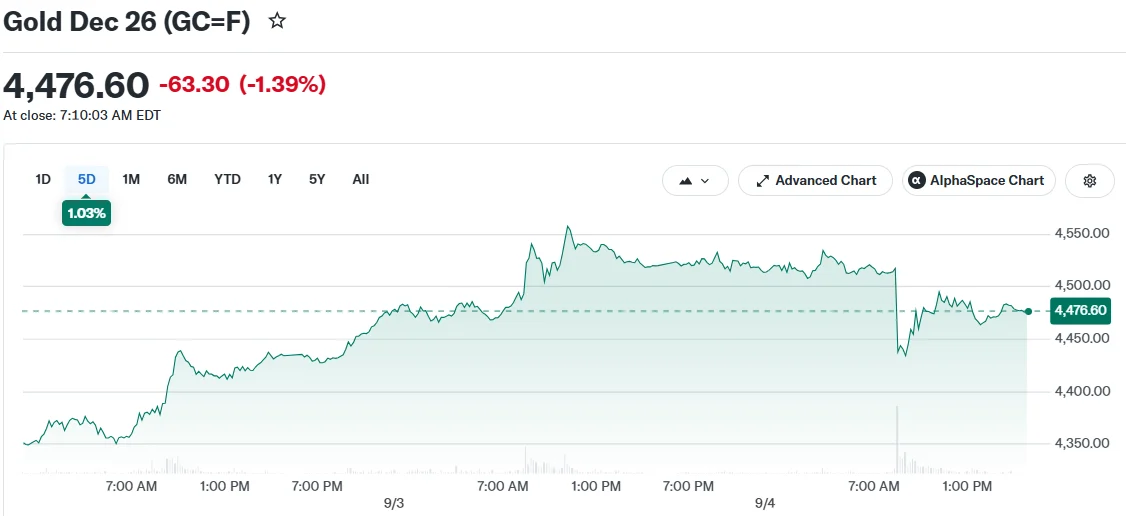
The downward movement followed the U.S. Labor Department’s announcement that 162,000 positions were added to payrolls during August. This figure exceeded analyst projections. Meanwhile, the unemployment rate remained unchanged.
Robust employment conditions provide the Federal Reserve with greater flexibility to implement interest rate increases. Elevated rates typically pressure gold downward because they enhance the appeal of alternative investments, such as fixed-income securities.
Market Pricing Shifts Toward Tightening
Financial markets currently assign approximately 60% probability to a 25 basis point rate increase during the Federal Reserve’s September 15-16 policy meeting. This represents an uptick from the lower probabilities observed before Friday’s employment data release.

Research analysts at ING observed in commentary to clients that the anticipated rate adjustment should provide temporary support for the U.S. dollar, especially relative to currencies offering lower yields.
A strengthening dollar creates additional headwinds for gold. Since gold is denominated in U.S. dollars, an appreciating greenback increases the cost for international buyers utilizing alternative currencies.
Earlier last week, private employment tracker ADP disclosed merely 38,000 new positions for August, significantly underperforming expectations. That weaker reading temporarily assisted gold in breaking a three-day losing streak on September 2.
Front-month gold contracts advanced 0.4% to $4,366.30 during that session, while silver gained 0.2% to reach $64.72 per ounce, before the official government payrolls data shifted market sentiment.
Energy Markets and Inflation Concerns Mount
Oil prices remain under close scrutiny. Iran announced it had targeted three petroleum tankers navigating the Strait of Hormuz, alongside additional vessels with connections to the United States. This action followed American strikes on maritime targets during the prior weekend.
Brent crude was changing hands near $97 per barrel. Escalating energy costs can contribute to broader inflationary pressures, potentially compelling the Federal Reserve to maintain elevated interest rates for an extended period.
Gold has remained confined within a relatively narrow trading band since rebounding from support levels near $4,000 during July. Last week witnessed the metal breaking below its 200-day moving average positioned around $4,526, inflicting some near-term technical deterioration.
The subsequent significant price catalysts arrive later this week. U.S. producer price index figures are scheduled for Thursday, with consumer price index data following on Friday. Elevated inflation readings could amplify rate hike expectations further and intensify selling pressure on gold.
Get 3 Free Stock Ebooks
Discover top-performing stocks in AI, Crypto, and Technology with expert analysis.
- Top 10 AI Stocks - Leading AI companies
- Top 10 Crypto Stocks - Blockchain leaders
- Top 10 Tech Stocks - Tech giants


