


TLDR
- Gold surged as much as 1.3%, reaching above $4,540 per ounce during Tuesday’s session
- Mixed messages from Washington and Tehran regarding diplomatic negotiations influenced the rally
- Declining crude oil prices helped alleviate concerns about inflation pressures
- Manufacturing activity in the United States grew in May at the strongest rate since 2021
- The precious metal continues trading approximately 14% below its pre-conflict levels from February
Gold experienced upward momentum on Tuesday as market participants responded to contradictory and unclear updates regarding diplomatic discussions between Washington and Tehran.
The spot price of gold advanced 1% to reach $4,528.93 per ounce during London market hours. The precious metal touched an intraday high of 1.3%, momentarily exceeding the $4,540 threshold.
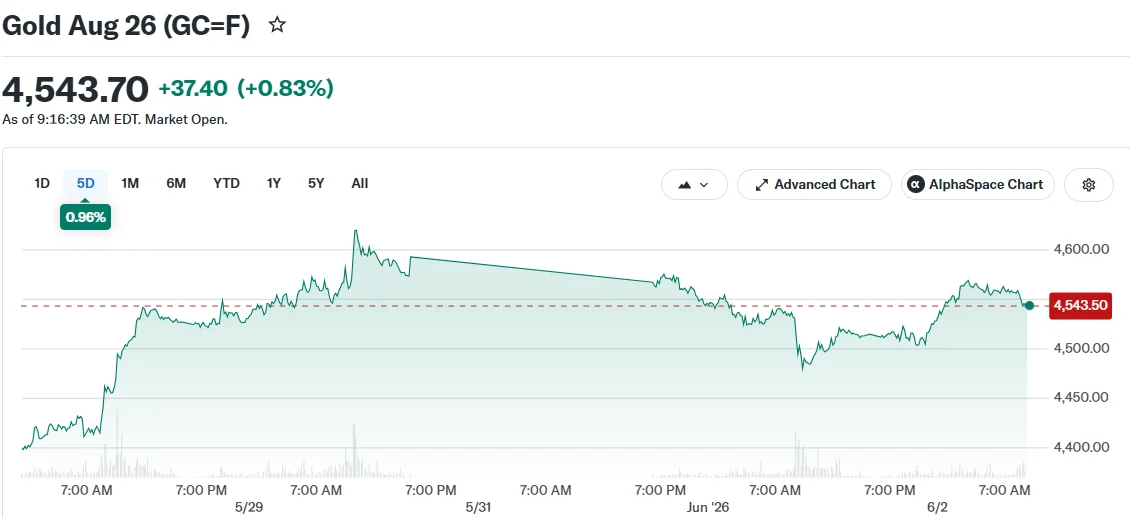
Tuesday’s advance followed a substantial decline in the prior trading session. That selloff occurred after news emerged that Tehran had suspended communication channels with Washington through intermediary nations.
Tehran’s decision to halt dialogue came as a reaction to escalating Israeli military operations targeting Hezbollah positions in Lebanon. This development heightened concerns that the strategically vital Strait of Hormuz could remain blocked for an extended timeframe.
The Strait of Hormuz serves as a crucial shipping route for approximately 20% of global petroleum supplies. Its ongoing closure has contributed to a worldwide energy emergency now entering its fourth month.

On Tuesday, oil prices retreated after experiencing significant gains during the previous session. The pullback in crude oil markets helped diminish worries about energy-related inflation acceleration.
“Oil is trading softer following yesterday’s price surge and that has fueled a fresh upside push in gold,” said Ole Hansen, head of commodity strategy at Saxo Bank.
Trump and Netanyahu Offer Different Accounts of Talks
President Donald Trump indicated on Monday that diplomatic discussions with Iran were progressing “at a rapid pace.” Speaking with ABC News, he expressed optimism that an agreement could materialize “over the next week.”
Trump acknowledged there had been “a little glitch,” referencing Tehran’s opposition to Israeli military actions in Lebanon as the probable reason behind the communication pause.
Israel and the United States initiated coordinated military strikes against Iran during late February. Israeli defense forces have also deployed ground troops into southern Lebanese territory as part of the wider regional confrontation.
Lebanese authorities announced a limited ceasefire arrangement between Hezbollah and Israel, though Lebanon’s diplomatic mission in Washington clarified it would not completely halt hostilities. The Israeli Defense Forces reported intercepting two projectiles launched from Lebanese territory on Tuesday.
President Trump and Israeli Prime Minister Benjamin Netanyahu provided conflicting versions of a telephone conversation regarding the Lebanese situation, further compounding uncertainty surrounding the status of negotiations.
Manufacturing Data Complicates Rate Cut Outlook
Despite gold’s upward movement, certain market analysts remain hesitant about the metal’s future trajectory.
Manufacturing sector activity in the United States expanded during May at the most robust rate observed in four years. This marked the fifth consecutive month of sector growth, potentially reducing the Federal Reserve’s motivation to implement interest rate reductions.
Reduced interest rates generally benefit gold because the commodity generates no yield. Should rates remain elevated for a prolonged period, that dynamic could pressure prices downward.
“The outlook for gold remains contingent on developments in the Middle East,” said Rhona O’Connell of StoneX Financial. She added that prices are likely to remain range-bound, “potentially with a downward bias on the back of interest-rate expectations.”
Gold remains trading approximately 14% beneath its value immediately preceding the outbreak of hostilities in late February. Silver appreciated 2.1% to $76.42 per ounce, while platinum and palladium also registered gains during Tuesday’s trading.
Get 3 Free Stock Ebooks
Discover top-performing stocks in AI, Crypto, and Technology with expert analysis.
- Top 10 AI Stocks - Leading AI companies
- Top 10 Crypto Stocks - Blockchain leaders
- Top 10 Tech Stocks - Tech giants


