


Key Takeaways
- Investment bank projects crude prices could climb to $120 per barrel amid worsening Middle East shipping disruptions
- Alternative scenario forecasts Brent falling to $80 if regional supply routes stabilize
- Bank favors long exposure to natural gas and diesel over traditional crude positions
- Brent crude currently sits at approximately $97.55, reflecting a daily gain exceeding 1%
- Beijing’s demand patterns expected to moderate crude volatility but not gas or refined fuel markets
Goldman Sachs has issued a stark warning that crude prices may climb as high as $120 per barrel should shipping disruptions in the Middle East continue their upward trajectory. Conversely, the financial institution projects a potential retreat to $80 should regional tensions ease and normal export operations resume.
During a weekend interview with Bloomberg TV, Daan Struyven, the bank’s co-head of global commodities research, emphasized that recent developments highlight genuine threats of widening and intensifying maritime disruptions.
The current crisis revolves around the Strait of Hormuz, a critical chokepoint for worldwide petroleum shipments. Recent days have witnessed US military action against Iranian tankers, while Tehran has declared a newly restricted maritime zone adjacent to this vital waterway.
American naval assets are reportedly implementing a blockade of Iranian maritime facilities while simultaneously providing escort services for tankers from allied oil-producing countries exiting the volatile region.
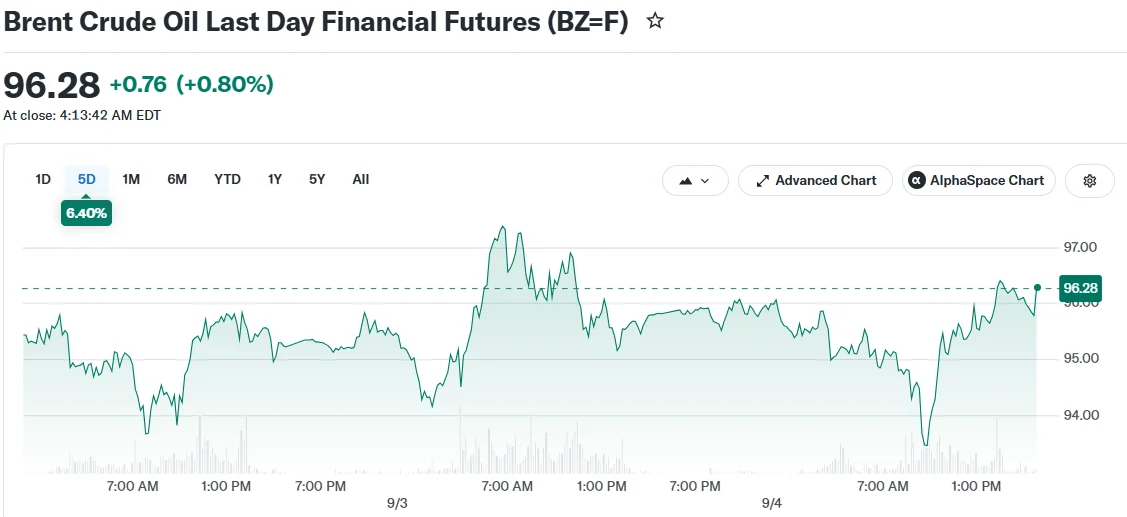
Energy markets have responded with crude reaching its strongest position since July. Brent crude registered at $97.55 per barrel with a 1.32% increase, while West Texas Intermediate marked $92.64, advancing 1.28%.

Strategic Preference for Gas and Diesel Positions
Rather than advocating straightforward crude purchases, Goldman Sachs is steering investors toward alternative energy positions, specifically recommending extended exposure to international natural gas markets and refined petroleum products such as diesel fuel.
According to Struyven, supply disruptions affecting these particular commodities typically demonstrate greater severity compared to crude oil itself. Diesel valuations have experienced more than a 100% increase year-to-date, while natural gas has similarly outperformed crude during the comparable timeframe.
The prolonged conflict, now extending beyond six months, has elevated energy costs across the spectrum. Yet refined products and natural gas have demonstrated significantly steeper appreciation trajectories relative to traditional crude benchmarks.
This tactical positioning underscores Goldman’s assessment that investors stand to capture superior returns through these specific commodity channels rather than conventional oil futures exposure alone.
Beijing’s Influence on Energy Markets
Struyven indicated that Chinese demand dynamics are positioned to serve a balancing function within crude oil markets. Historical patterns show Beijing typically reduces import volumes as prices escalate, effectively establishing a ceiling on crude appreciation.
The bank does not anticipate China exercising comparable restraining influence within natural gas or refined product markets, however. This distinction leaves those sectors considerably more vulnerable to price volatility should regional hostilities persist.
Goldman’s $120 projection constitutes an upside scenario rather than a baseline expectation. This outcome hinges upon continued deterioration of shipping security conditions and sustained interruption of regional supply flows.
Currently, petroleum markets maintain a heightened state of alert. Developments surrounding the Strait of Hormuz continue to unfold, with market participants closely monitoring indicators that might signal either intensification or resolution of the standoff.
Get 3 Free Stock Ebooks
Discover top-performing stocks in AI, Crypto, and Technology with expert analysis.
- Top 10 AI Stocks - Leading AI companies
- Top 10 Crypto Stocks - Blockchain leaders
- Top 10 Tech Stocks - Tech giants


