



TLDR
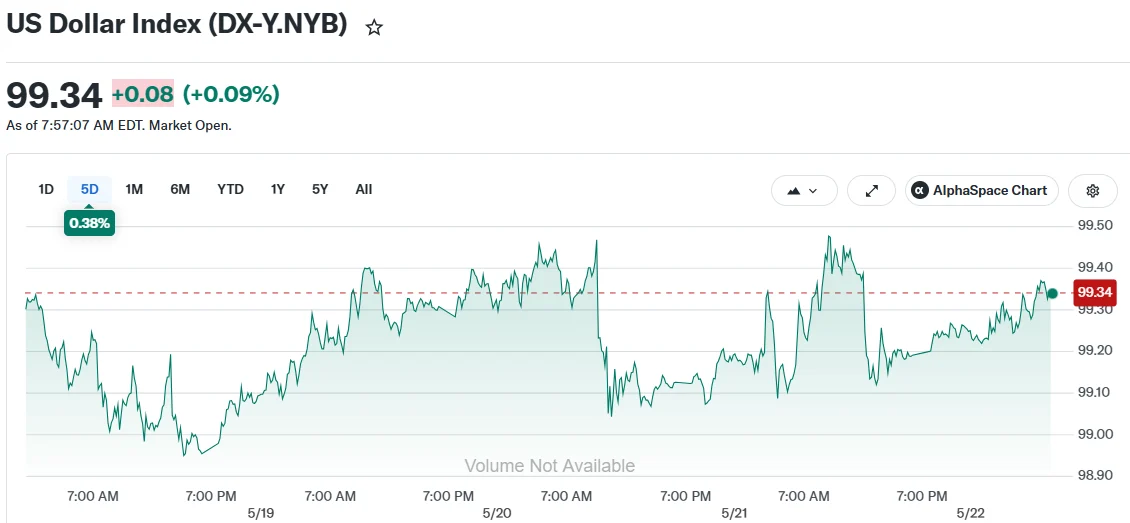
- The greenback climbed to its strongest level in six weeks amid uncertainty surrounding U.S.-Iran diplomatic negotiations
- Marco Rubio, U.S. Secretary of State, indicated “some good signs” emerged from discussions, though significant disagreements persist
- Robust American economic indicators — including declining unemployment claims and manufacturing activity reaching a four-year peak — bolstered the dollar
- Japan’s currency weakened beyond the 159 threshold against the dollar, erasing most gains from recent suspected market interventions
- Currencies across developing markets, particularly Turkey’s lira and Indonesia’s rupiah, faced significant downward pressure
The American dollar maintained its position near a six-week zenith on Friday as mixed messages emerging from diplomatic talks between Washington and Tehran created turbulence in foreign exchange markets.
The two nations continued to face substantial disagreements regarding Iran’s enriched uranium reserves and operational authority over the Strait of Hormuz shipping corridor. Despite these obstacles, Secretary of State Marco Rubio acknowledged that negotiations had produced “some good signs.”
The dollar index advanced 0.17% to reach 99.37, hovering close to its recent high of 99.515 — marking its strongest position since the seventh of April.
The European common currency declined 0.2% during the trading session to $1.1594, positioning itself for a consecutive second week of losses. Sterling experienced a modest decline to $1.342, shrugging off disappointing domestic data revealing that United Kingdom retail sales experienced their steepest decline in nearly twelve months during April.
Robust American economic releases provided additional tailwinds for the dollar. Weekly unemployment insurance claims decreased during the previous week, while manufacturing sector activity in the United States surged to its highest level in four years throughout May.

Tony Sycamore, a market analyst at IG, said the conflict is no closer to resolution. “I still feel like the risks are for the U.S. dollar to go higher, because I really just don’t see a way out of this situation in the Middle East without them sort of needing to be more forceful,” he said.
Japanese Yen Struggles Despite Intervention
Japan’s currency continued its descent beyond the 159 level versus the dollar on Friday, trading 0.1% weaker at 159.09. The yen has now surrendered approximately 75% of the appreciation it experienced following a suspected recent market intervention by Japanese monetary authorities.
Matthew Ryan, head of market strategy at Ebury, said the risk of further intervention is rising. “Officials have indicated that there is no real limit as to how much, or how often, they can step in to protect the currency,” he said.
Japan’s core inflation decelerated to a four-year low during April, creating complications for the Bank of Japan’s monetary policy trajectory. The central bank is anticipated to implement rate increases only incrementally, while other major central banks such as the European Central Bank are positioned to act more aggressively — creating a comparative disadvantage for the yen.
Measured on a trade-weighted basis, Japan’s currency has reached unprecedented lows. While this benefits Japanese export-oriented companies, it exacerbates energy import costs, considering Japan’s substantial dependence on foreign energy supplies.
Emerging Markets Feel the Strain
Currencies throughout emerging Asian economies experienced downward pressure during the week as global oil prices surged dramatically.
Indonesia implemented new regulations requiring all natural resource exporters to deposit 100% of their export proceeds in government-controlled financial institutions beginning June 1. The policy aims to enhance domestic dollar liquidity and provide support for the rupiah.
Nigel Foo, head of Asian fixed income at First Sentier Investors, said the rupiah had been “under tremendous pressure.” He added that Indonesia’s economic fundamentals had “clearly been deteriorating.”
Turkey’s currency plummeted to unprecedented lows against the American dollar on Friday following an unfavorable court decision impacting the nation’s primary opposition political party.
Lee Hardman, currency strategist at MUFG, said the best outcome for the yen — and many other currencies — would be a quick resolution to the Iran conflict. “Even if it just got back down into the mid 150s, that would probably be the best they can hope for right now,” he said.
Get 3 Free Stock Ebooks
Discover top-performing stocks in AI, Crypto, and Technology with expert analysis.
- Top 10 AI Stocks - Leading AI companies
- Top 10 Crypto Stocks - Blockchain leaders
- Top 10 Tech Stocks - Tech giants


