


Executive Summary
- Hyperliquid operates as a purpose-built Layer 1 blockchain optimized for rapid onchain trading, capable of executing up to 200,000 orders every second.
- The Assistance Fund channels 99% of all trading fees from perpetual and spot markets directly into HYPE token buybacks.
- Revenue reached approximately $960 million throughout 2025, with product expansion into S&P 500 and SpaceX-related perpetual futures contracts.
- The token launched without venture capital backing, CEX allocations, or market maker reserves — however, contributor vesting continues until 2027, with a significant unlock scheduled for July 6, 2026.
- Principal concerns include limited validator decentralization, dependency on perpetuals trading volume, and potential regulatory enforcement against offshore leverage offerings.
Hyperliquid has emerged as one of crypto’s most discussed trading platforms. Operating on a proprietary Layer 1 blockchain, the protocol executes every order, trade, and liquidation entirely onchain with single-block finality.
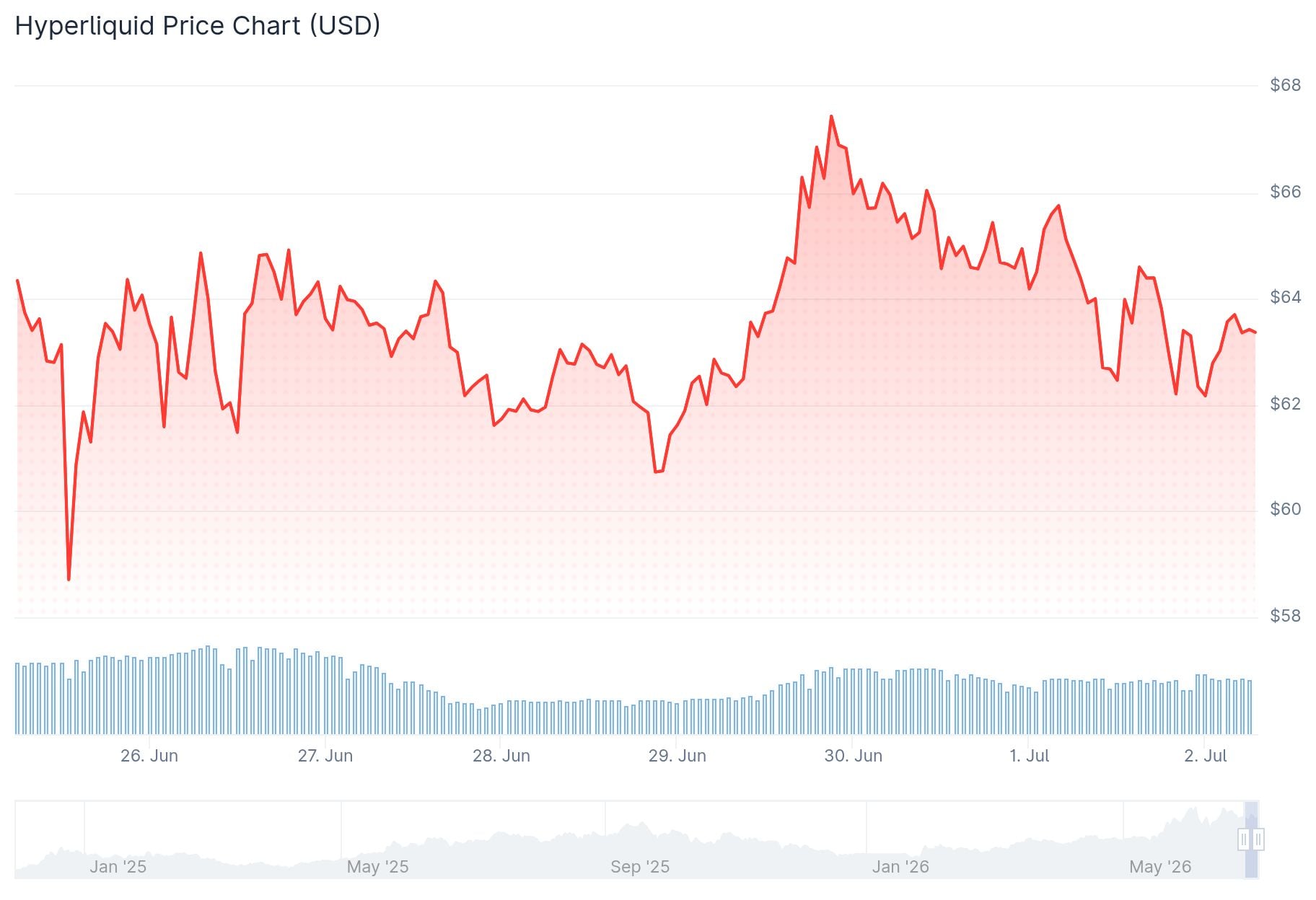
The infrastructure supports approximately 200,000 orders per second. This performance profile resembles centralized exchange speed while maintaining complete blockchain transparency.
Execution is divided across two parallel systems. HyperCore manages perpetual futures and spot order book operations. HyperEVM layers Ethereum-compatible smart contract capabilities onto the base infrastructure.
Understanding the Fee-to-Token Value Pipeline
HYPE’s value proposition operates more transparently than typical crypto assets. Per DeFiLlama data, 99% of fees generated from Hyperliquid’s perpetual and spot trading flow into the Assistance Fund, which systematically purchases HYPE tokens.
This structure establishes a quantifiable relationship between platform usage and token acquisition pressure. Few cryptocurrency projects demonstrate such explicit economic linkage.

DeFiLlama positions Hyperliquid among the highest-earning protocols in crypto by fee generation and revenue metrics. Financial Times coverage indicated the platform accumulated approximately $960 million in revenue during 2025.
Reuters and Wall Street Journal reporting documented Hyperliquid’s move into pre-IPO perpetual futures markets and its licensing agreement with S&P Dow Jones for an S&P 500 index perpetuals product. SpaceX-related perpetuals emerged as among the platform’s most actively traded instruments.
These developments reflect genuine market adoption beyond pure speculative activity.
Token Distribution and the Upcoming July 2026 Release
HYPE’s distribution model avoided traditional venture allocations, centralized exchange reserves, and market maker set-asides. Maximum supply is fixed at 1 billion tokens.
Initial distribution allocated 31% to public airdrop recipients, 38.8% for future emissions and community incentives, and 23.8% to core contributors.
The contributor allocation carries significant implications. Vesting schedules run through 2027. The next major core contributor unlock occurs on July 6, 2026.
Validators can stake HYPE, collect rewards, and earn commission fees. However, the validator network remains limited — numbering in the low dozens — creating potential centralization vulnerabilities.
Primary Risk Considerations
Regulatory exposure represents a tangible threat. Reuters reporting highlighted that offshore platforms like Hyperliquid generally implement U.S. user restrictions. Escalating regulatory scrutiny of offshore leverage products could fundamentally impact operational viability.
Revenue concentration in perpetuals trading creates dependency risk. Declining trading volume directly reduces fee generation and corresponding buyback activity.
The July 6, 2026 contributor unlock stands as the most significant near-term catalyst requiring close monitoring.
Get 3 Free Stock Ebooks
Discover top-performing stocks in AI, Crypto, and Technology with expert analysis.
- Top 10 AI Stocks - Leading AI companies
- Top 10 Crypto Stocks - Blockchain leaders
- Top 10 Tech Stocks - Tech giants


